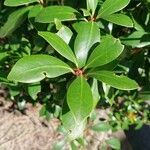
Ternstroemia gymnanthera
Japanese Ternstroemia · Japanese Cleyera · Cleyera
Description
Source: leafsnapTernstroemia gymnanthera, commonly known as Cinnamon Bark, is a small evergreen tree or shrub that belongs to the Theaceae family. Native to Southeast Asia, it can be found in countries such as Thailand, Malaysia, and Indonesia. The plant can grow up to 10 meters tall and features a dense crown of glossy green leaves that are oval-shaped with pointed tips. The bark of Ternstroemia gymnanthera is highly valued for its medicinal properties. It contains essential oils, such as cinnamaldehyde, which have anti-inflammatory characteristics. These can be used to treat various ailments, including arthritis, rheumatism, and digestive disorders. During the summer months, the plant produces small white flowers that bloom in clusters. These flowers are followed by small, red or black berries that are edible, though not commonly consumed due to their bitter taste. Ternstroemia gymnanthera prefers well-drained soil with moderate moisture levels but can tolerate drought conditions once established. It thrives in both full sun and partial shade environments, making it an ideal choice for landscaping purposes. Overall, Ternstroemia gymnanthera is a versatile plant with a range of uses, including medicinal applications and ornamental landscaping due to its attractive foliage and bark features.
💡 New growth on Japanese ternstroemia leaves often appears with reddish edges as they emerge. This effect is similar to that of the red-tip photinia, a favorite among many gardeners. However, Japanese ternstroemia grows much more slowly. As a result, it requires far less pruning than photinia.
🌳 Japanese ternstroemia is often neglected and may have untapped potential beyond its commonly recognized uses. Although not widely known for any particular application, it enhances garden appearance with its dense foliage and could help improve air quality. Research has not yet defined the full extent of its usefulness, possibly in horticulture or in urban green spaces because of its resilience and ability to thrive with minimal care.
Care Guide
💧 Water Every 7 days
Japanese ternstroemia flourishes in humid environments and prefers to have consistent moisture, needing to be watered every 1-2 weeks. As an evergreen plant, it keeps its leaves throughout the year, demonstrating an ability to conserve water effectively even during drier times.
☀️ Light Full sun
Native to areas where sunlight is constant, japanese ternstroemia does best when it receives sun for the entire day. It can survive with fewer rays for parts of the day, but insufficient light negatively affects its growth, causing its normally vigorous development to stall. Excessive exposure is not a problem, as japanese ternstroemia has an outstanding tolerance for sunlight.
What are the sunlight requirements for Japanese ternstroemia?
Japanese ternstroemia thrives in environments with abundant sunlight, requiring full sun exposure for more than 6 hours a day to ensure optimal growth. It can tolerate partial sun, which is about 3-6 hours of sunlight, but insufficient light can adversely affect its growth, causing stagnation. The plant is highly tolerant of sunlight, and overexposure is not a concern. It's crucial to watch how sunlight moves through your garden to find the perfect balance of light and shade, ensuring the plants' happiness.
How should artificial lighting be used for Japanese ternstroemia when natural sunlight is insufficient?
When natural sunlight is insufficient, particularly during winter or in less sunny spaces, artificial lighting becomes essential for the optimal growth of Japanese ternstroemia. Indoor plants benefit from LED lights, which can be customized to provide specific wavelengths needed by plants. Full sun plants require 30-50W/sq ft of artificial light, partial sun plants need 20-30W/sq ft, and full shade plants should have 10-20W/sq ft. The light source should be placed 12-36 inches above the plant to mimic natural sunlight, and plants generally need 8-12 hours of light per day.
What are the symptoms of light deficiency or overexposure in Japanese ternstroemia?
Japanese ternstroemia exhibits several symptoms in response to light deficiency or overexposure. Symptoms of light deficiency include small leaves, leggy or sparse growth, faster leaf drop, lighter-colored new leaves, and slower or no new growth. This indicates the plant's struggle in low light conditions. In contrast, symptoms of overexposure to sunlight include chlorosis, sunscald, leaf curling, wilting, and leaf scorching, which signify damage from too much direct sunlight. These symptoms reflect the plant's need for an optimal light balance.
What are the solutions for light-related issues in Japanese ternstroemia?
For indoor Japanese ternstroemia facing light deficiency, gradually move the plant to a sunnier location, aiming for at least 6 hours of direct sunlight daily. Use a south-facing window or invest in artificial grow lights for adequate light. For outdoor plants, transition them gradually to sunnier spots to avoid sunburn. If plants are located in areas with obstructions to sunlight, consider pruning obstructions or transplanting the plant to a location with ample sunlight and good drainage. Note that parts of the plant affected by insufficient sunlight might not recover, but new growth will be healthy with proper light exposure.
🌡️ Temperature 15–35°C
Japanese ternstroemia is a temperate woody plant that grows best in a temperature range of 15 to 35 ℃ (59 to 95 ℉). In its native habitat it requires moderate temperatures and can tolerate seasonal changes with only slight temperature adjustments.
What is Japanese ternstroemia and its preferred growing conditions?
Japanese ternstroemia, scientifically known as Ternstroemia gymnanthera, is a temperate woody plant that flourishes in temperature ranges of 15 to 35 °C (59 to 95 °F). It thrives in moderate temperatures and adapts well to the changing seasons, provided there are slight temperature adjustments. This plant has some cold tolerance and generally does not need additional protection if temperatures stay above -5°C. However, if temperatures are expected to drop below -5°C, temporary cold protection measures, such as wrapping the plant with plastic film, fabric, or other materials, should be employed and removed once the temperature rises again.
How does Japanese ternstroemia react to low temperatures?
Japanese ternstroemia exhibits moderate tolerance to low temperatures, preferring to stay above 15°C for optimal growth. When winter temperatures fall below -5°C, the plant manages well, but if temperatures dip below -10°C, the leaves may begin to droop. While there is a chance of recovery in mild cases, severe cold can cause leaves to wilt and eventually fall off. To mitigate frost damage, you can trim off the affected parts and use non-woven fabric or cloth wraps, as well as constructing wind barriers, to protect the plant from cold winds in anticipation of low temperatures.
What should be done if Japanese ternstroemia is exposed to high temperatures?
During the summer, it is crucial to ensure that Japanese ternstroemia does not experience temperatures above 35°C. Exposure to temperatures over 41°C can lead to symptoms like lighter leaf color, dry and withered leaf tips, curled leaves, and an increased risk of sunburn. To help the plant recover, trim away the sunburned and dried-up parts. Relocate the plant to a shaded area or use shade cloth to shield it from the midday and afternoon sun. Additionally, watering the plant in the morning and evening will help keep the soil moist and further protect it from heat stress.
💨 Humidity normal (40-60%)
This plant will thrive in moderate humidity, which is probably the level in your home. However, misting it a few times a week can be very beneficial. Make sure the room has good ventilation.
🪴 Soil 5-6
🌱 Fertilizer
Fertilize your Japanese ternstroemia in early spring to encourage healthy growth. Regular fertilization improves the plant’s overall health, producing vigorous growth, increased tolerance of challenging conditions, and enhanced resistance to pests and diseases. Keep a consistent fertilization schedule for your Japanese ternstroemia to maintain lush foliage with deep, vibrant color.
🪴 Pot & Repot 2-3 years
When repotting Japanese ternstroemia, select a pot 1-2 inches (2.5–5.1 cm) larger that has good drainage. Use a well-draining potting mix. Repot in spring or fall, making sure the root ball sits just below the rim of the flower pot. Water thoroughly after repotting and place the pot in a warm location with indirect sunlight.
✂️ Pruning
The Japanese ternstroemia is an evergreen shrub known for its glossy leaves. To keep the plant healthy and well-shaped, it's best to prune it from early to late winter. During this time, you should remove any dead branches to improve its overall health. Light pruning encourages the growth of dense foliage, while heavy pruning can stress the plant. Regular maintenance not only enhances the shrub's appearance but also supports vigorous growth in the spring.
🌿 Propagating
🐛 Diseases & pets
☠️ Toxicity
Characteristics
- Plant Type
- Shrub
- Life Cycle
- Perennial
- Genus
- Ternstroemia
- Family
- Pentaphylacaceae
- Hardiness Zone
- 8-10
- Mature Height
- 3.35 m
- Mature Spread
- 1.22 m to 1.83 m
- Leaf Color
- Green, Red, Yellow, Gold, Purple
- Leaf Type
- Evergreen
- Flower Color
- White
- Flower Size
- 2.03 cm
- Bloom Time
- Late spring, Early summer, Mid summer
- Planting Time
- Spring, Autumn
- Harvest Time
- Mid summer, Late summer
- Native Area
- Nepal, Sri Lanka, India, Indonesia, Cambodia, Vietnam, Myanmar, Japan, Bhutan, Bangladesh, Laos, South Korea, Brunei, Thailand, China