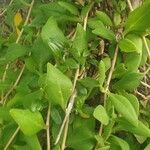
Tetragonia implexicoma
Description
Source: leafsnapTetragonia implexicoma, commonly known as bower spinach, is a species of plant in the Aizoaceae, or ice-plant family. A similar species is Tetragonia tetragonioides, however this species has larger leaves and a shorter flowering time.
Care Guide
💧 Water
Bower spinach is well-suited for arid regions due to its strong drought tolerance. It retains water efficiently, requiring watering only every 2 to 3 weeks. As an evergreen plant, bower spinach conserves water through its leaves all year round, making it an excellent choice for dry climates.
☀️ Light Full sun
Bower spinach grows best in locations that receive sunlight throughout the day. It also tolerates moderate light, so it can do well in partially lit areas while maintaining growth. Intense exposure typically does not harm it, but reduced light can limit vigorous growth. Having originated in fully sunlit climates, this leafy green is adapted to those conditions.
What are the sunlight requirements for Bower spinach?
Bower spinach requires full sun, which means it needs more than 6 hours of sunlight daily, but it can also tolerate partial sun, receiving about 3-6 hours of sunlight. It's important to watch how sunlight moves through your garden to find spots that provide a balance of light and shade, ensuring your plants thrive.
How does Bower spinach react to different lighting conditions?
Bower spinach thrives in areas that receive all-day illumination but can also grow in moderately lit areas, sustaining its growth even with a moderate amount of light. Although harsh direct exposure is not harmful, insufficient light might limit its robust growth. Originating from fully illuminated climates, this leafy green has adapted to such conditions. In contexts where natural sunlight is insufficient, artificial lighting, such as LED lights, can be used to provide the necessary wavelengths of light, promoting faster, healthier growth. Depending on the plant's needs, 30-50W/sq ft for full sun plants, 20-30W/sq ft for partial sun plants, and 10-20W/sq ft for full shade plants are recommended. The appropriate distance for the light source is 12-36 inches above the plant, and most plants need 8-12 hours of light per day.
What are the signs of insufficient light in Bower spinach?
Bower spinach can exhibit several symptoms when it's not receiving enough light, including small leaves, leggy or sparse growth, faster leaf drop, slower or no new growth, lighter-colored new leaves, chlorosis, sunscald, leaf curling, wilting, and leaf scorching. These symptoms vary from minor, such as smaller new leaves and extended spaces between leaves, to more severe, such as leaf scorching and wilting due to excessive sunlight.
How can I address lighting issues for Bower spinach?
To ensure optimal growth for indoor Bower spinach, gradually move plants to sunnier locations until they receive at least 6 hours of direct sunlight daily, using south-facing windows for natural light and keeping curtains open. For plants that are large or not easily movable, consider artificial lighting, keeping lamps on for at least 8 hours daily. For outdoor plants, gradually acclimate them to sunnier spots to prevent sunburn. If sunlight is blocked by trees or other obstructions, consider pruning or transplanting smaller plants during their dormant period for better light exposure. Note that parts of the plant already affected by insufficient sunlight may not recover, but new growth should be healthy with improved lighting.
🌡️ Temperature 15–37.8°C
Bower spinach naturally occurs in environments that favor temperatures around 15–38℃ (59–100°F), indicating a preference for moderate to slightly warm conditions. Seasonal adjustments may be needed to replicate these conditions for optimal growth.
What are the ideal growing conditions for Bower spinach?
Bower spinach, with its botanic name Tetragonia implexicoma, thrives best in moderate to slightly warm temperatures, specifically within a range of 15-38°C (59-100°F). This preference indicates that while it can adapt to different seasons, it might require adjustments to its growing environment to ensure optimal growth. Furthermore, Bower spinach possesses some level of cold tolerance, making it unnecessary to take additional protective measures when temperatures are above -5°C. However, if temperatures are expected to drop below this threshold, temporary protections like wrapping the plant in plastic film, fabric, or similar materials are advisable. It's crucial to remove these protections once the temperature rises to prevent any potential damage to the plant.
How does Bower spinach react to low temperatures?
Bower spinach demonstrates a moderate tolerance to low temperatures, optimal growth occurring when conditions remain above 15°C. During winter, ensuring the plant's environment does not drop below -5°C is key to its survival. Should the temperature fall beneath -10°C, Bower spinach's leaves may begin to droop, indicating the onset of stress. While some instances may see a recovery, more severe cases will result in leaves wilting and eventually detaching from the plant. To avoid such damage, it's recommended to trim away any frost-affected areas and prepare the plant for colder conditions by wrapping it with non-woven fabric or cloth and setting up a wind barrier for extra protection.
How should Bower spinach be cared for during high temperatures?
In the summer months, when temperatures can climb above optimal conditions, Bower spinach needs protection to prevent overheating, especially when the mercury surpasses 38°C. If the temperature reaches over 43°C, the plant may exhibit stress signs such as a paler leaf color, dry and withered leaf tips, leaf curling, and an increased risk of sunburn. To mitigate these effects, it's advisable to remove the damaged portions of the plant and relocate it to a shaded area or utilize a shade cloth to shield it from the intense midday and afternoon sun. Adequate watering in the morning and evening hours will also help in maintaining soil moisture, which is crucial for the plant's health under high temperature conditions.
💨 Humidity
🪴 Soil 6-7
🌱 Fertilizer
To get the highest yield, Bower spinach does best with regular applications of a balanced fertilizer, especially one high in nitrogen. Apply fertilizer before planting, at planting, and when seedlings are 2 inches tall. Adding compost or manure also gives a steady supply of nutrients. If the soil lacks nutrients, leaves and stems remain underdeveloped, flavors are poor, stems are thin, and the taste can become bitter.
🪴 Pot & Repot
✂️ Pruning
Bower spinach benefits from pruning between early and late winter. This process involves trimming overgrown stems and removing damaged leaves to promote healthy growth. Pruning not only improves the plant's shape and density, making it ideal as ground cover or a climbing plant, but also ensures that clean cuts made above leaf nodes help maintain its vitality.
🌿 Propagating
🐛 Diseases & pets
☠️ Toxicity
Characteristics
- Plant Type
- Shrub
- Life Cycle
- Perennial
- Genus
- Tetragonia
- Family
- Aizoaceae
- Hardiness Zone
- 8-11
- Mature Height
- 20 cm
- Mature Spread
- 91 cm
- Leaf Color
- Dark Green
- Leaf Type
- Evergreen
- Flower Color
- Yellow
- Flower Size
- 0.51 cm to 1.02 cm
- Bloom Time
- Mid fall, Late fall, Early winter
- Planting Time
- Spring, Summer, Autumn
- Harvest Time
- Mid winter, Late winter, Early spring
- Native Area
- New Zealand