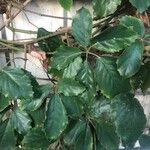
Tetrastigma voinierianum
Chestnut vine · Lizard plant · Giant Grape Ivy
Description
Source: leafsnapTetrastigma voinierianum, a species of climbing vine from the Vitaceae (grape) family, is native to Southeast Asia, particularly Thailand, Malaysia, and Indonesia. This plant features a woody stem that can extend up to 20 meters and produces tendrils, enabling it to climb trees or other structures. The large, glossy leaves of Tetrastigma voinierianum have a heart-shaped base and can grow up to 30 cm in length. Each leaf is divided into five lobes with toothed edges. During the summer, the plant produces small clusters of greenish-yellow flowers. Tetrastigma voinierianum is popularly used as an ornamental plant due to its attractive foliage and its ability to cover walls or trellises quickly. Additionally, it holds medicinal value, as its roots are utilized in traditional medicine to treat various ailments such as fever, coughs, asthma, and rheumatism. For optimal growth, the plant prefers well-drained soil with partial shade to full sun exposure. It requires regular watering during the growing season, but the soil's surface should be allowed to dry slightly between watering sessions. Overall, Tetrastigma voinierianum is a visually appealing climbing vine that enhances indoor and outdoor spaces. Moreover, it provides medicinal benefits, continuing a tradition of use in Southeast Asia where it is native.
Care Guide
💧 Water Every 7 days
This tropical plant can withstand frequent watering to near-drought conditions. However, it’s best to keep your Chestnut Vine well-watered throughout its growing season. Cut back on watering from fall to winter.
☀️ Light Partial sun
The lizard plant comes from habitats like forest understories and rocky areas, where it grows in natural shade. It prefers partial sun but can adjust to full sun or full shade, showing its adaptable, hardy nature.
🌡️ Temperature 15–41.1°C
Lizard plant comes from tropical areas, where the weather is usually warm and humid. Consequently, it is adapted to higher temperatures and moisture. It is sensitive to sudden temperature shifts and prefers a consistent temperature, so avoiding indoor temperature fluctuations is important. It typically does not tolerate cold and needs warmer conditions to grow. If ambient temperatures fall too low, the plant may stop growing or even die.
💨 Humidity
🪴 Soil 6-7
🌱 Fertilizer
Fertilization is vital for the care of the Lizard plant. Consistent feeding throughout the growing season keeps up the energy needed for its showy leaves and promotes overall growth. Skipping fertilization can lead to unhealthy leaves, reduced decorative quality, and stunted or weak growth that is likely to break.
🪴 Pot & Repot Every 12 months
✂️ Pruning
To ensure your lizard plant thrives, strategic pruning is essential. Begin by removing any dead or overcrowded stems to improve airflow. For best results, prune in early spring using clean tools to support the plant's health, shape, and resistance to disease. Regular pruning not only boosts the plant's vitality but also enhances its aesthetic appeal.
🌿 Propagating
🐛 Diseases & pets
☠️ Toxicity
Characteristics
- Plant Type
- Vine
- Life Cycle
- Perennial
- Genus
- Tetrastigma
- Family
- Vitaceae
- Hardiness Zone
- 8-13
- Mature Height
- 7.92 m
- Mature Spread
- 91 cm
- Leaf Color
- Green
- Leaf Type
- Evergreen
- Flower Color
- Yellow, Green
- Flower Size
- 2.54 cm
- Bloom Time
- Early summer, Mid summer
- Planting Time
- Spring, Summer, Autumn
- Harvest Time
- Late summer, Early fall
- Native Area
- Vietnam, Laos