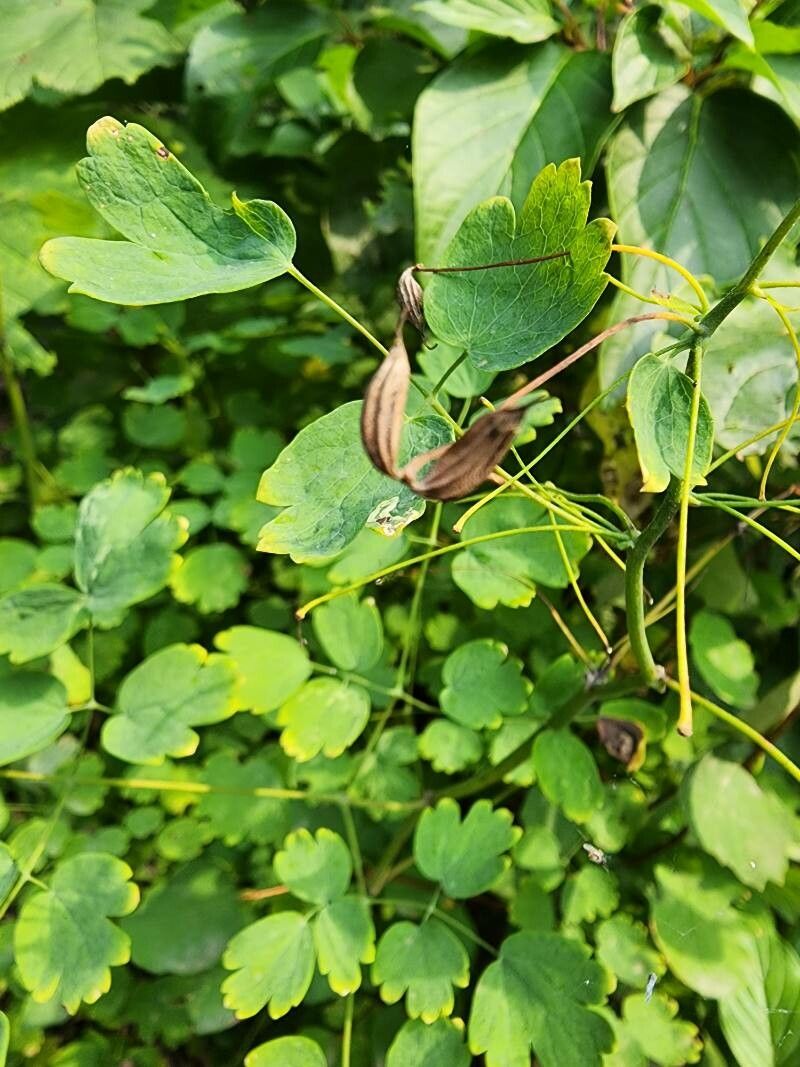
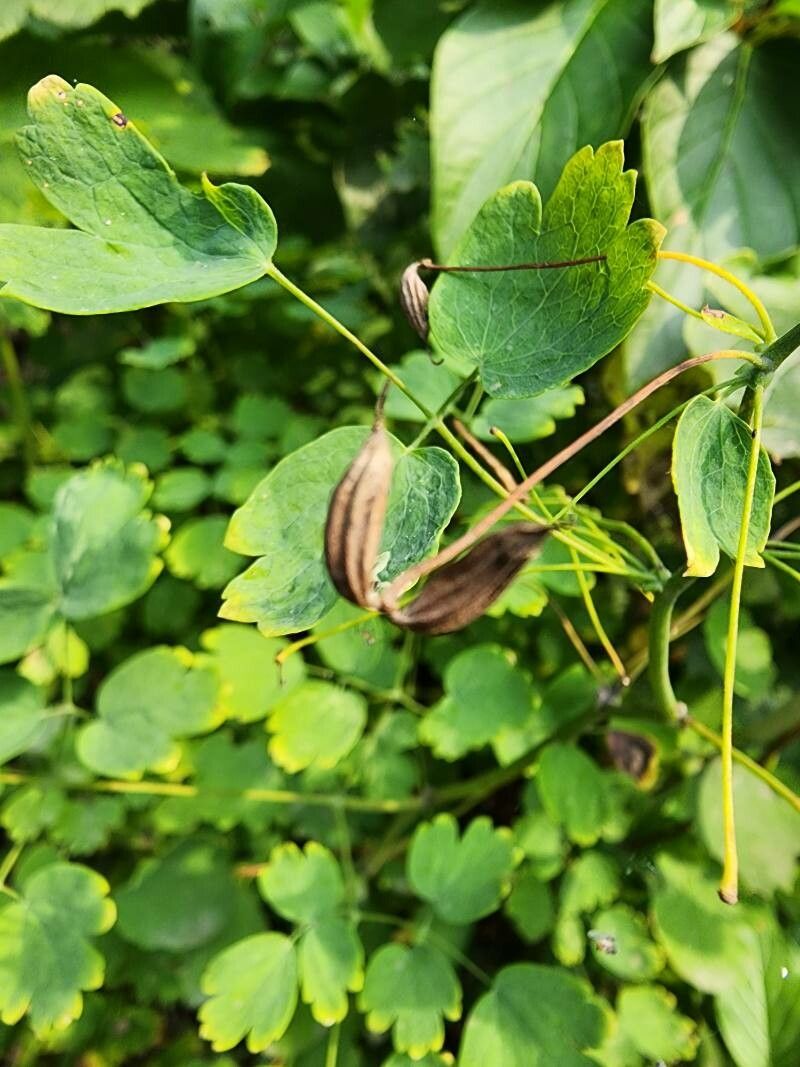
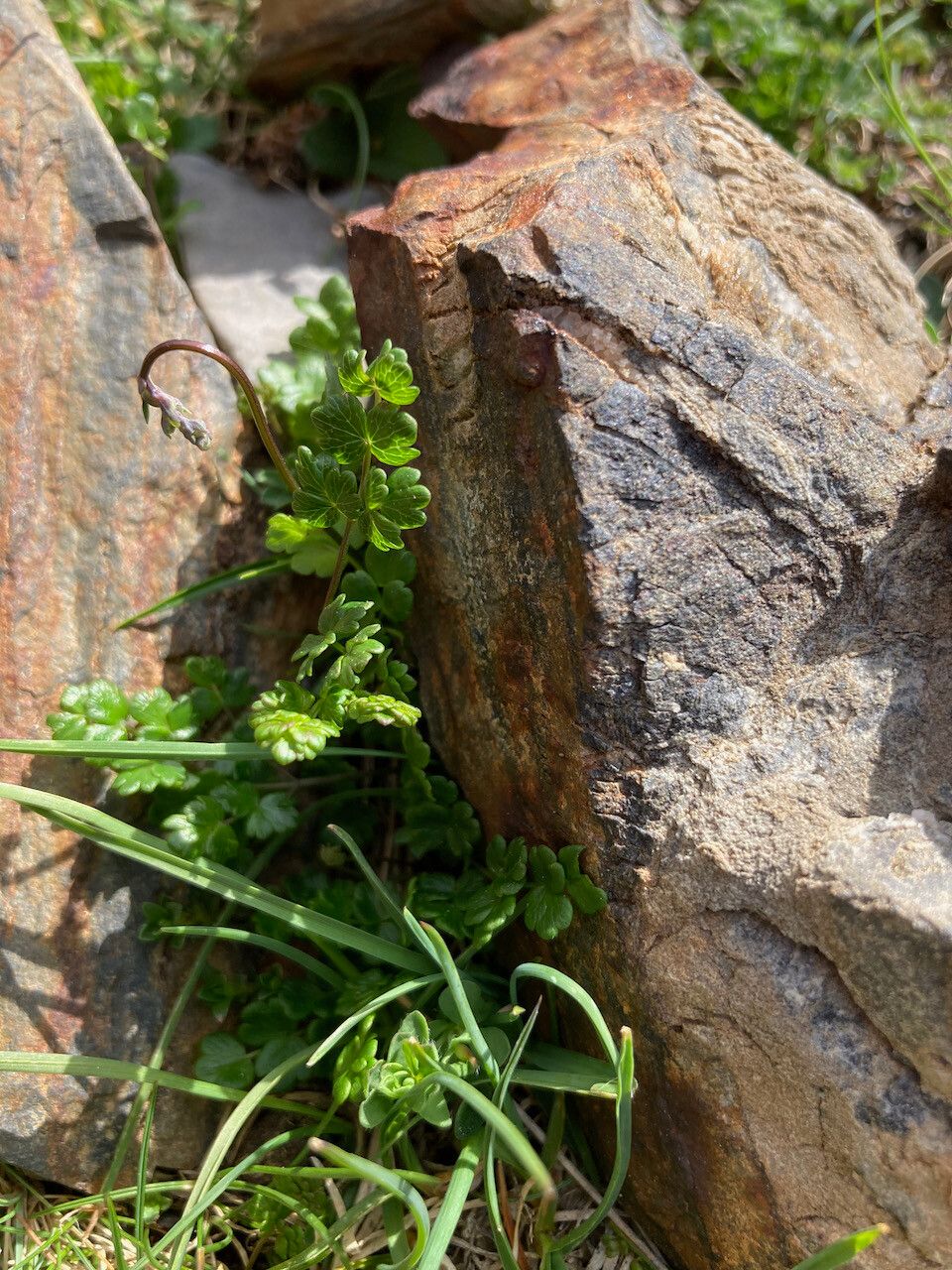
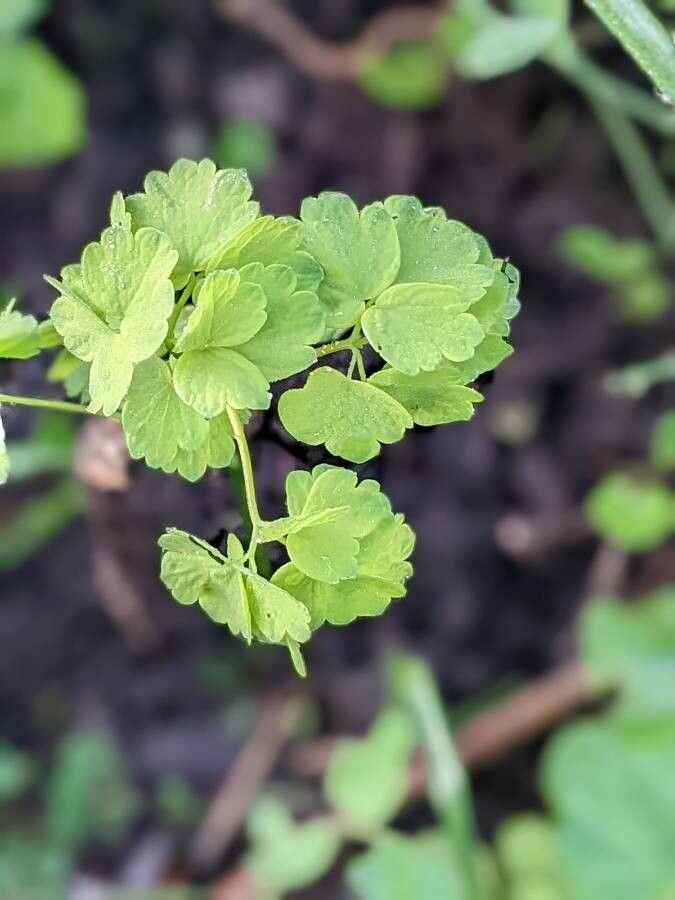
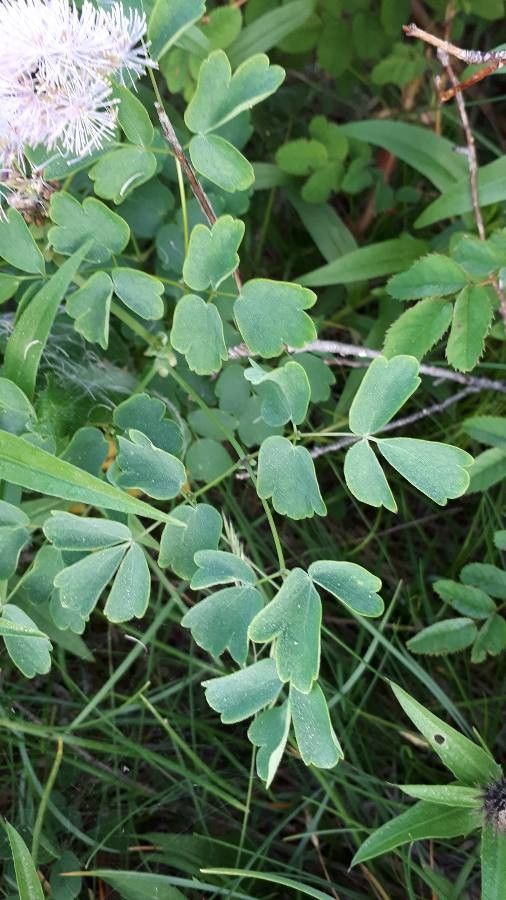
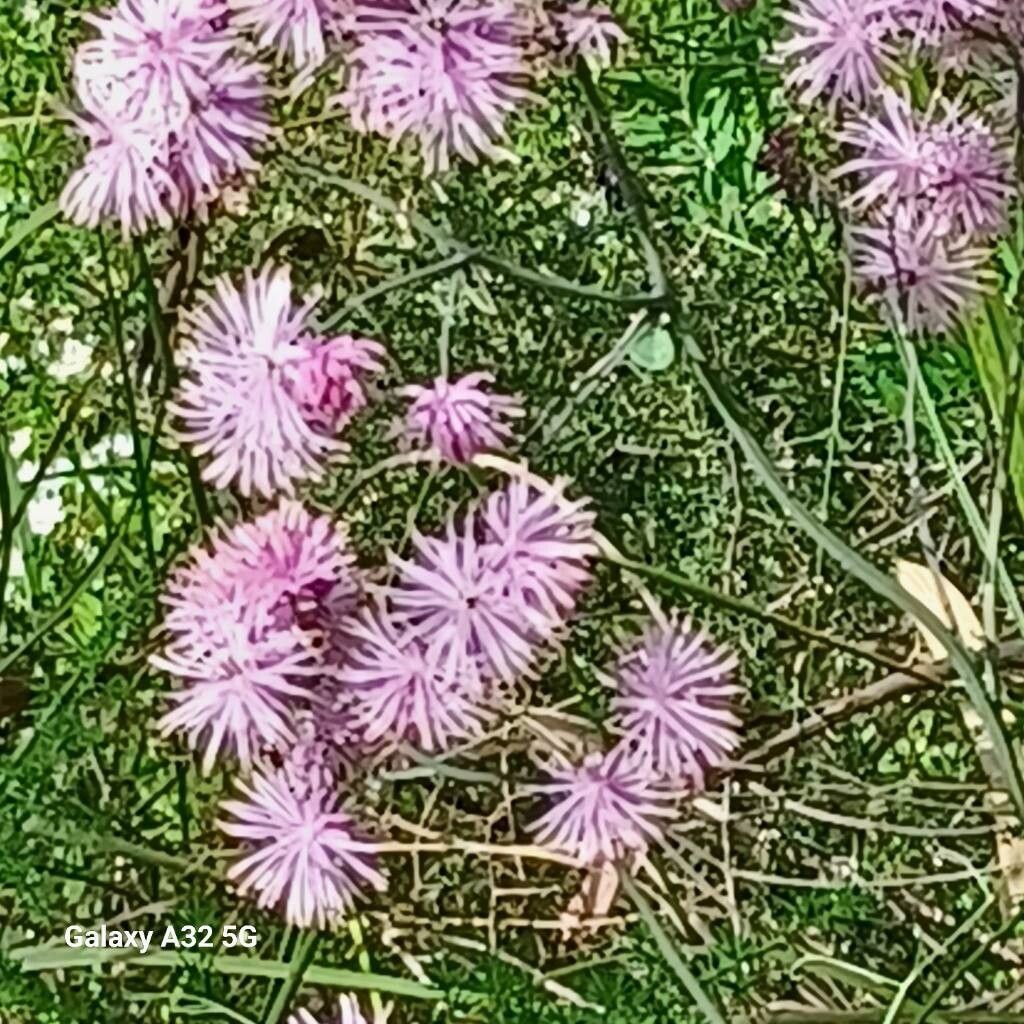
Thalictrum occidentale is a species of flowering plant in the buttercup family known by the common name western meadow-rue. It is native to northwestern North America from Alaska and western Canada to northern California to Wyoming and Colorado, where it grows in shady habitat types such as forest understory and more open, moist habitat such as meadows.
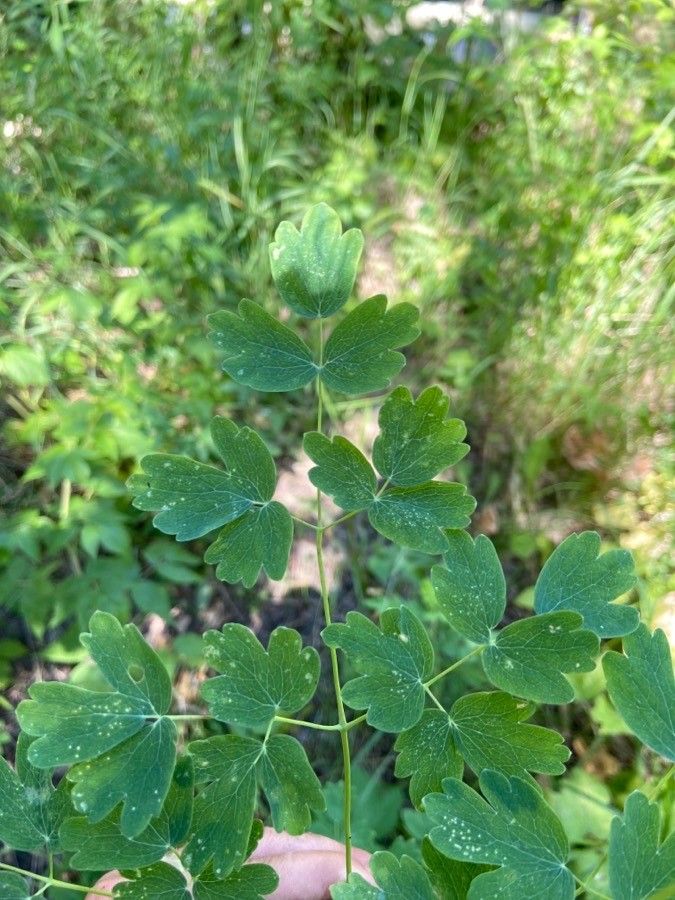
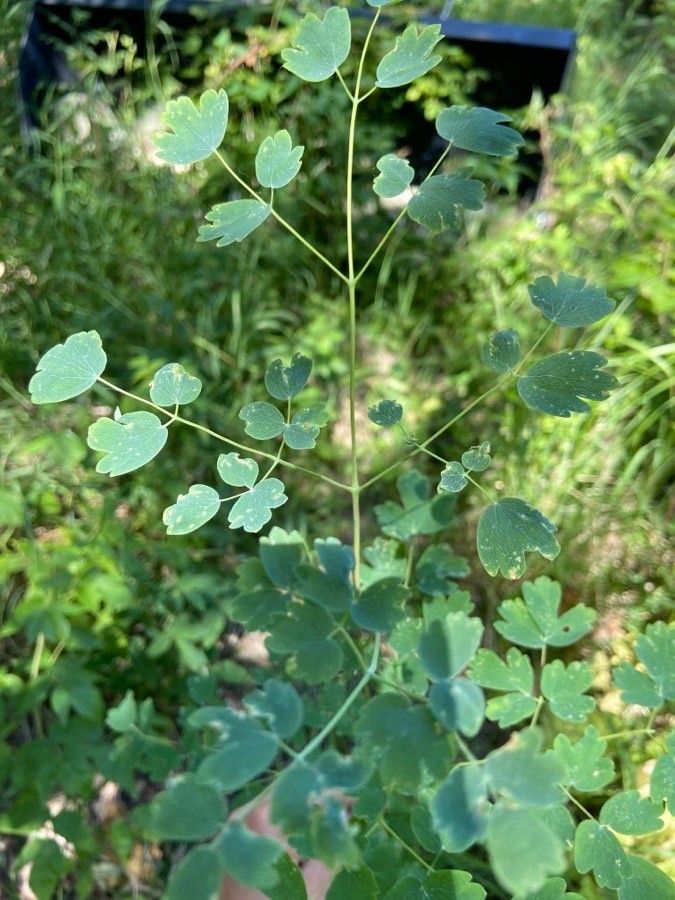
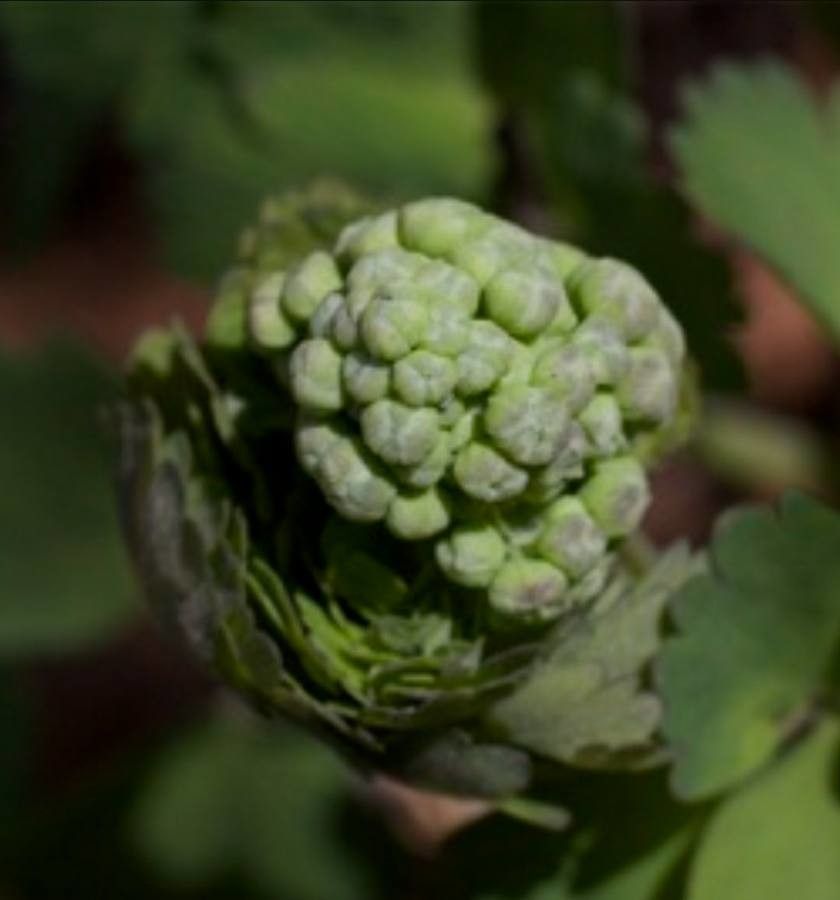
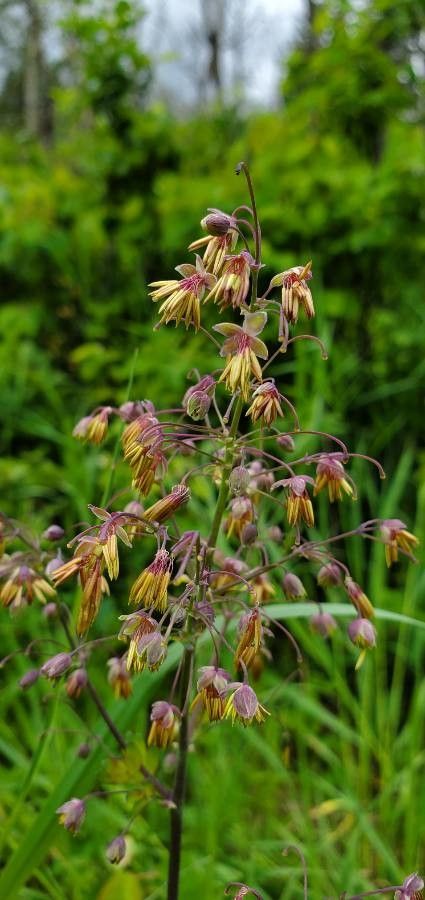
Thalictrum occidentale is a perennial herb growing erect to a maximum height around a meter. It is hairless to lightly hairy and glandular. The leaves have compound blades divided into a few or many segments, often with three lobes, and are borne on long, slender petioles. The inflorescence is an upright or arching panicle of flowers with leaflike, lobed bracts often growing at the base. The species is dioecious, with male and female flowers occurring on separate plants, and is wind pollinated. The male flower has a bell-shaped calyx of four sepals in shades of greenish white or purple. From the calyx dangle many long, purple stamens tipped with large anthers. The female flower has a cluster of immature fruits tipped with styles in shades of purple. A cluster has 4 to 9, at times up to 14, fruits.
Western meadow-rue has good disease resistance and is generally not very susceptible to illnesses. However, it can be affected by pests and diseases present in its surroundings. Such infections are typically minor. In terms of care, this plant requires moderate maintenance. Regular pruning is needed to preserve an attractive appearance and support healthy growth. Fertilizing can also help encourage flowering. Western meadow-rue is suitable for anyone with an outdoor area, such as a garden or patio, and does not require extensive gardening experience. It may need more attention when grown indoors.
How to keep Thalictrum Occidentale.
Light
Western meadow-rue thrives in locations that receive full sun each day for healthy growth. Coming from open, sunlit habitats, it may become stunted if it does not get enough light. However, too much sun does not present a significant threat to the plant.
Water
Western meadow-rue thrives in the humid environments of moist woodlands and requires a balanced watering schedule of once per week. It adapts well to different climates and can flourish both indoors and outdoors. However, during the growing season, it's important to carefully monitor its hydration to ensure optimal growth.
Temperature
Western meadow-rue grows best in its native temperate climate, with temperatures ranging from 32 to 77 °F (0 to 25 °C). It prefers cooler conditions, so making seasonal temperature adjustments when feasible can help mimic its natural habitat.
Fertilizer
Generally one fertilizer application in spring is sufficient for Western meadow-rue, but multiple feedings can maximize growth. Feed once every month to a month and a half. Fertilization improves the leaves' appearance and function, promoting consistent color and a healthy texture. It also encourages root growth and nutrient uptake to support long-term plant health.
Pruning
Western meadow-rue is a delicate perennial known for its airy foliage and wispy flowers. To care for it, prune from early to late spring by removing dead stems and thinning out dense areas to improve air circulation. Deadheading the plant encourages more blooms, and regular pruning helps maintain its vigor. For the best care practices, consult resources such as the Royal Horticultural Society.
Botanical profile.
- Plant Type
- Herb
- Life Cycle
- Perennial
- Genus
- Thalictrum
- Family
- Ranunculaceae
- Hardiness Zone
- 2-5
- Mature Height
- 0.3 m to 1.07 m
- Mature Spread
- 30 cm to 91 cm
- Leaf Color
- Light Green, Medium Sea Green
- Leaf Type
- Deciduous
- Flower Color
- White
- Flower Size
- 0.76 cm
- Bloom Time
- Late spring, Early summer
- Planting Time
- Spring
- Harvest Time
- Mid summer, Late summer
- Native Area
- Mexico
Other names.
Reader questions.
What are the sunlight requirements for Western meadow-rue?
Western meadow-rue thrives with full sunlight exposure of above 6 hours daily. It's essential to observe the movement of sunlight through your garden to select optimal spots providing a perfect balance of light and shade for plant health. Insufficient sunlight can stunt the plant's growth, although it's notably resilient against overexposure.
What is the best environment for growing Western meadow-rue?
Western meadow-rue, or Thalictrum occidentale, thrives in its native temperate environments, where temperatures range between 32 to 77 °F (0 to 25 °C). The plant prefers cooler conditions, and it is beneficial to adjust seasonal temperatures to mimic its natural habitat. It is notably cold-tolerant and does not require extra frost protection during winter. However, it is advised to water the plant generously before the first freeze in autumn to maintain soil moisture and prevent drought and water scarcity throughout the winter and early spring months.
How important is lighting for the growth of Western meadow-rue indoors?
Adequate lighting is crucial for the growth of Western meadow-rue indoors, especially when natural sunlight is limited during winter or in less sunny areas. Artificial lighting, such as LED lights, can supplement the lack of natural light. For healthy indoor plant growth, consider providing 30-50W/sq ft for full sun plants, 20-30W/sq ft for partial sun plants, and 10-20W/sq ft for full shade plants. The artificial light source should be placed 12-36 inches above the plant and turned on for 8-12 hours per day to mimic natural daylight hours.
How does Western meadow-rue handle cold temperatures?
Western meadow-rue is extremely cold-tolerant and can survive winter temperatures well above -40°C. Despite this tolerance, if temperatures fall below -40°C, the plant may encounter issues such as reduced sprouting or failure to sprout in spring. To manage any adverse effects from extreme cold, remove parts of the plant that have failed to sprout in spring.
What symptoms indicate insufficient light for Western meadow-rue?
Symptoms of insufficient light in Western meadow-rue include smaller new leaves, leggy or sparse growth due to longer spaces between leaves or stems, faster leaf drop to conserve resources, slower or halted growth indicating a survival mode, and lighter-colored or irregularly colored new leaves. Additionally, chlorosis (yellowing of leaves) and sunscald can occur from inadequate or excessive sunlight, respectively. Other signs include leaf curling as a defense against intense sunlight, wilting from excessive water loss, and leaf scorching marked by brown, crispy leaf edges.
What should I do if Western meadow-rue is exposed to high temperatures?
Western meadow-rue struggles in high temperatures, specifically when temperatures rise above 25°C. Under such conditions, the plant's growth halts, and it becomes prone to rot. To protect the plant, trim away any parts that have been sunburned or dried out. Relocating the plant to a shadier spot or using a shade cloth can provide relief from the harsh midday and afternoon sun. Additionally, watering the plant during the cooler morning and evening hours can help keep the soil adequately moist.
How can you address insufficient light for Western meadow-rue?
To address insufficient light for Western meadow-rue, gradually move plants to sunnier locations each week until they receive at least 6 hours of direct sunlight daily, ideally near a south-facing window. If moving the plant isn't feasible, consider using artificial lights like desk lamps or professional grow lights for at least 8 hours daily. For outdoor plants, transitions to sunnier spots should also be gradual to prevent sunburn. If trees obstruct sunlight, prune them to let more light through. For smaller plants needing relocation, transplant them during their dormant period, ensuring ample sunlight and good drainage at the new site.