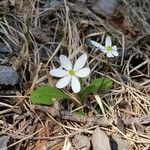
Thalictrum thalictroides
Rue anemone · Windflower · Anemone meadow-rue
Description
Source: leafsnapThalictrum thalictroides, synonym Anemonella thalictroides, the rue-anemone, is a herbaceous perennial plant native to woodland in eastern North America. It has white or pink flowers surrounded by a whorl of leaflets, and it blooms in spring.
🎭 Recovery, Wellness, Mental Abilities
Care Guide
💧 Water
Rue-anemone thrives in environments with moderate moisture and does best in well-drained soil. It should be watered consistently every 1-2 weeks. This plant also flourishes in dappled light and benefits from the humidity typically found in woodland habitats. These conditions make it ideal for outdoor cultivation, where it can benefit from natural rainfall.
☀️ Light Partial sun
Rue-anemone prefers locations with moderate light exposure, much like the conditions in speckled shade environments. Yet, it can adapt to places with substantially lower light levels, reflecting its native habitat beneath forest tree canopies. Both too much or too little light can hinder the best growth of rue-anemone, affecting the general health of the plant.
What are the sunlight requirements for Rue-anemone?
Rue-anemone thrives under specific sunlight conditions, necessitating about 3-6 hours of sunlight, categorized as partial sun. It can also grow in full shade environments, which means it receives less than 3 hours of sunlight daily. It's crucial to observe how sunlight moves through your garden to find spots that provide an ideal balance of light and shade, as this will ensure the plants grow healthy and happy.
What are the essential light conditions for Rue-anemone?
Rue-anemone prefers light conditions that are not too intense, favoring dappled shade environments that mimic its natural forest canopy habitat. While it can adapt to areas with less light, both excessive or insufficient light can negatively impact its growth and overall health. For indoor plants requiring more light, artificial lighting can be a valuable solution, especially during less sunny seasons or in spaces that do not receive enough natural sunlight. The right type of artificial lighting, proper distance, and duration of exposure are critical for mimicking natural sunlight and promoting optimal plant growth.
What are the symptoms of insufficient light in Rue-anemone?
When Rue-anemone is grown indoors and does not receive sufficient light, several symptoms may arise. These include smaller new leaves, leggy or sparse growth, faster leaf drop, delayed or halted growth, and leaves developing lighter colors or patterns indicating a lack of chlorophyll. Additionally, chlorosis or yellowing of leaves, sunscald, leaf curling, wilting, and leaf scorching can occur, indicating either excessive sunlight or a severe lack of it. These symptoms highlight the importance of providing the right amount of light to maintain plant health.
What solutions are recommended for Rue-anemone facing insufficient sunlight?
For Rue-anemone not receiving enough sunlight, gradually shifting them to sunnier spots or using artificial light can be effective strategies. Indoors, moving the plant to receive 3-6 hours of direct sunlight or using desk, ceiling lamps, or professional grow lights for at least 8 hours a day can help. Outdoors, it's crucial to transition plants gradually to sunnier locations to avoid sunburn. Additionally, reducing obstructions like overhanging branches or relocating plants to sunnier spots with good drainage can improve sunlight access. It's important to note that while affected parts of the plant may not recover, new growth should be healthy after adjusting light conditions.
🌡️ Temperature 5–35°C
Rue-anemone possesses the capability to adjust to diverse temperature environments, however, certain mixtures of heat and water conditions may still restrict its distribution. It flourishes optimally in summer climates that are hot and have sufficient rainfall or irrigation. Long-lasting bouts of overcast and wet weather, as well as extended high temperatures, could raise the chances of Rue-anemone perishing. During the winter months, adequate cold protection can enhance the plant's chances of survival.
💨 Humidity
🪴 Soil 5-6
🌱 Fertilizer
The optimal period for fertilizing Rue-anemone is at the start of spring when the flowers start to develop. Correctly chosen fertilizer promotes superior blossoms and assists Rue-anemone in generating beautiful flowers. Applying fertilizer in the early spring secures remarkable flowers for the season and supplies power for the dormant growth stages.
🪴 Pot & Repot
✂️ Pruning
Rue-anemone is a delicate perennial with white or pink blooms. To keep it healthy and vibrant, prune it from early to late spring. This helps remove dead stems, encouraging growth and improving air circulation. Minimal pruning will maintain its tidy appearance, promote blooming, and reduce the risk of disease, resulting in vibrant flowers.
🌿 Propagating
🐛 Diseases & pets
☠️ Toxicity
Characteristics
- Plant Type
- Herb
- Life Cycle
- Perennial, Annual
- Genus
- Thalictrum
- Family
- Ranunculaceae
- Hardiness Zone
- 5-8
- Mature Height
- 10 cm to 30 cm
- Mature Spread
- 15 cm to 25 cm
- Leaf Color
- Green, Variegated
- Leaf Type
- Deciduous
- Flower Color
- White, Pink
- Flower Size
- 2.54 cm
- Bloom Time
- Spring
- Planting Time
- Winter
- Harvest Time
- Late spring, Early summer
- Native Area
- Eastern North America