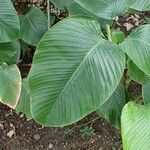
Thaumatococcus daniellii
Miracle fruit · Miracle berry · Katemfe
Description
Source: leafsnapThaumatococcus daniellii is a plant species from Africa, known for being the natural source of thaumatin, an intensely sweet protein which is of interest in the development of sweeteners. When the fleshy part of the fruit is eaten, this molecule binds to the tongue's taste buds, causing a sweet sensation that slowly builds and leaves a lingering aftertaste. It is a large, rhizomatous, flowering herb native to the rainforests of western Africa from Sierra Leone to Democratic Republic of the Congo. It is also an introduced species in Australia and Singapore.Thaumatococcus daniellii grows three to four meters in height, and has large, papery leaves up to 46 centimeters long. It bears pale purple flowers and a soft fruit containing a few shiny black seeds. The fruit is covered in a fleshy red aril, which is the part that contains thaumatin. In its native range, the plant has a number of uses besides flavoring. The sturdy leaf petioles are used as tools and building materials, the leaves are used to wrap food, and the leaves and seeds have a number of traditional medicinal uses.Common names for this species include katamfe or katempfe, Yoruba soft cane, and African serendipity berry. It is also sometimes known as miracle fruit or miracle berry (but the unrelated species Synsepalum dulcificum is better known by that name) A gene from Thaumatococcus daniellii has been inserted into a cucumber plant to increase its perceived sweetness in human eaters by the Warsaw University of Life Sciences.
Care Guide
💧 Water
Thriving in tropical rainforests, miracle fruit flourishes in environments with high humidity and consistent moisture. To mimic its natural habitat, it should be watered weekly, as it exhibits moderate drought tolerance. When grown indoors, maintaining stable temperatures and balanced soil moisture is essential for preserving its delicate health.
☀️ Light Full sun
Miracle fruit does best with prolonged sun exposure, though it can also tolerate reduced light levels. Sunlight fuels its vigorous growth, especially during propagation. The abundant sunlight of its native habitat determines its need for considerable solar radiation. Excessive exposure and insufficient light can, respectively, cause scorching or inhibited growth.
What are the sunlight requirements for Miracle Fruit?
Miracle Fruit requires extensive exposure to sunlight for vigorous growth, particularly important during the propagation stage. Its need for substantial solar radiation is influenced by its original habitat's generous sunlight conditions. It thrives in full sun, which means it needs above 6 hours of sunlight daily, but it can also tolerate partial sun, about 3-6 hours of sunlight. However, it's crucial to watch how sunlight moves through your garden to choose spots that provide the right balance of light and shade, ensuring the plants' happiness.
Can Miracle Fruit grow under artificial lighting?
Yes, Miracle Fruit can grow under artificial lighting, especially beneficial in winter or less sunny spaces where natural sunlight is insufficient. Artificial lights, like LED lights, are popular for indoor plants because they can be customized to provide specific wavelengths that the plants need. The general guideline suggests that full sun plants require 30-50W/sq ft of artificial light, partial sun plants need 20-30W/sq ft, and full shade plants need 10-20W/sq ft. The artificial light should be placed 12-36 inches above the plant, and most plants need 8-12 hours of light per day to mimic natural daylight hours.
What are the signs of light deficiency in Miracle Fruit?
Signs of light deficiency in Miracle Fruit include smaller new leaves, leggy or sparse growth, faster leaf drop, slowed or halted growth, lighter-colored new leaves, chlorosis (leaves turning yellow), sunscald (damage from intense sunlight exposure), leaf curling, wilting, and leaf scorching. These symptoms indicate that the plant is not receiving adequate sunlight, leading to a range of health issues.
How can you address light deficiency for indoor and outdoor Miracle Fruit plants?
To address light deficiency, gradually move your Miracle Fruit plants to sunnier locations each week until they receive at least 6 hours of direct sunlight daily. For indoor plants, use a south-facing window and keep curtains open during the day for maximum exposure. If the plant is large or not easily movable, consider using artificial light, keeping a desk or ceiling lamp on for at least 8 hours daily or investing in professional plant grow lights. Outdoors, avoid sudden changes in light intensity to prevent sunburn. Note that parts of the plant affected by insufficient light may not recover, but new growth will be healthy.
What steps can be taken to minimize obstructions and improve sunlight exposure for Miracle Fruit?
To minimize obstructions and improve sunlight exposure for your Miracle Fruit, start by observing the environment and identifying areas blocking sunlight. If trees are the culprits, consider pruning branches and leaves to let sunlight through. For smaller plants, transplanting during their dormant period, typically late winter or early spring, to a location with ample sunlight and good drainage can be beneficial. This helps ensure that your plants receive the necessary sunlight for optimal growth.
🌡️ Temperature 20–37.8°C
Miracle fruit originates in warm, tropical regions where temperatures range from 68 to 100°F (20 to 38°C). It favors a temperate climate and can acclimate seasonally if measures are taken to minimize cooler conditions.
What is the native climate for Miracle Fruit?
Miracle fruit is native to warm, tropical climates where temperatures range between 68 to 100°F (20 to 38°C). It thrives in temperate conditions and is capable of adjusting to seasonal variations with appropriate care to mitigate cooler conditions. This heat-loving plant requires careful attention during colder months to ensure its health and productivity.
How should I care for Miracle Fruit during colder seasons?
During the colder seasons, particularly in the autumn, it's recommended to bring Miracle fruit plants that are grown outdoors indoors to protect them from the cold. Placing them near a bright window will ensure they receive ample sunlight, but it's crucial to keep them at a safe distance from heaters to avoid damage. Keeping the temperature above 20°C (68°F) during winter is beneficial for the plant's growth, and temperatures nearing 5°C (41°F) can be harmful.
What are the symptoms of low temperature exposure in Miracle Fruit?
Miracle fruit shows a clear preference for warm temperatures and struggles with cold. If temperatures drop below 20°C (68°F), you may notice the leaves lightening in color, a sign of distress. Temperatures below 1°C (34°F) can lead to frost damage, causing leaves to brown or blacken and exhibit symptoms like wilting and drooping. Immediate action is required to mitigate these effects and ensure the plant's survival.
What are the solutions for low temperature exposure in Miracle Fruit?
To counteract the effects of low temperature exposure in Miracle Fruit, the frost-damaged parts of the plant should be trimmed off immediately. Moving the plant to a warmer indoor environment, preferably near a south-facing window for ample sunlight, is crucial. Additionally, it's important to keep the plant away from heaters or air conditioning vents to avoid dry air that could further stress the plant.
What are the symptoms and solutions for high temperature exposure in Miracle Fruit?
In high temperatures, specifically above 43°C (109°F), Miracle fruit leaves may lighten, indicating the plant is more prone to sunburn. To address this, trim away the sunburned and dried-up parts of the plant. Relocating the plant to provide shade during the intense midday and afternoon sun is advisable, along with watering the plant in the morning and evening to maintain soil moisture and support the plant's well-being in extreme heat.
💨 Humidity
🪴 Soil 6-7
🌱 Fertilizer
Use organic fertilizers (for example, fish emulsion or compost) instead of chemical fertilizers for Miracle fruit. Give young plants higher levels of nitrogen and phosphorus in spring. Mix compost or fertilizer into the soil before or after planting. For mature plants, apply a balanced fertilizer in spring or one aimed at specific nutrient deficiencies. Nutrient deficiency results in small leaves, short branches, yellow or bronze foliage, acidic fruit, premature fruit drop, and splitting.
🪴 Pot & Repot Every 12 months
✂️ Pruning
Miracle fruit is a tropical perennial plant characterized by its large leaves and edible fruits. To encourage growth and fruit production, it is best to prune the plant in early spring. During pruning, remove any damaged leaves and thin out crowded stems. Be sure to use clean tools and avoid making large cuts, as these can stress the plant. Proper pruning will help enhance the plant's vitality.
🌿 Propagating
🐛 Diseases & pets
☠️ Toxicity
Humans and animals are not harmed by the Sweet Prayer Plant. In fact, its fruits are historically used to sweeten bread, palm wine, and sour foods in West Africa. Its fruit contains thaumatin, a non-toxic, extremely sweet protein that is at least 3,000 times sweeter than sucrose. The food and confectionary industries have used thaumatin as a sweetener and flavor enhancer since the mid-1990s.
Characteristics
- Plant Type
- Herb
- Life Cycle
- Perennial
- Genus
- Thaumatococcus
- Family
- Marantaceae
- Hardiness Zone
- 10-12
- Mature Height
- 3.05 m to 3.35 m
- Mature Spread
- 2.13 m
- Leaf Color
- Dark Green
- Leaf Type
- Deciduous
- Flower Color
- Pink
- Flower Size
- 2.03 cm
- Bloom Time
- Summer, Early fall
- Planting Time
- Spring, Summer, Autumn, Winter
- Harvest Time
- Late summer, Fall
- Native Area
- Burkina Faso, Angola, Equatorial Guinea, Cameroon, Liberia, Togo, Ghana, Côte d'Ivoire, Nigeria, Guinea, Gabon, Congo (DRC), Central African Republic, Congo