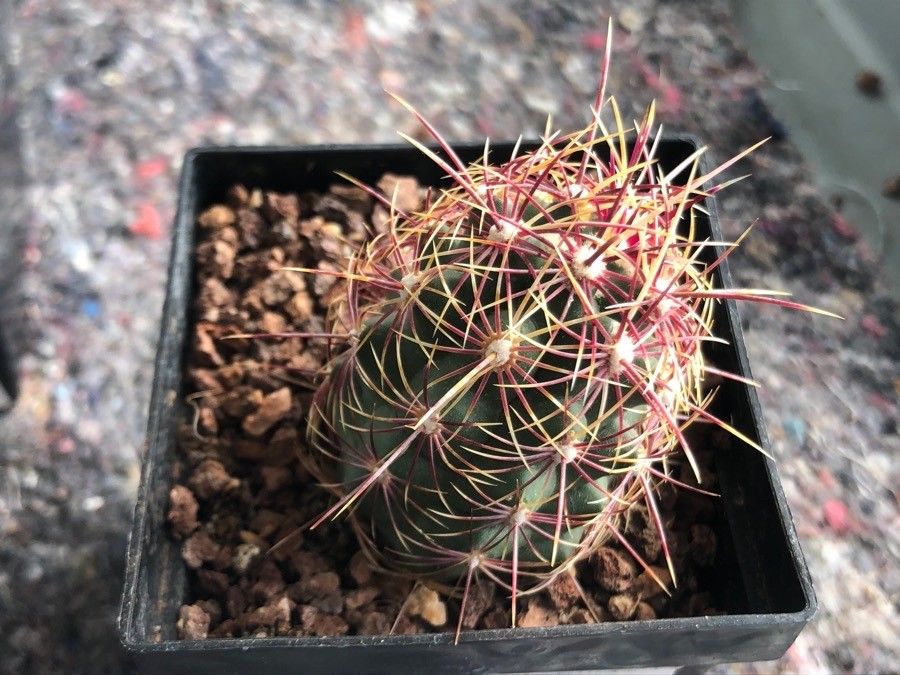
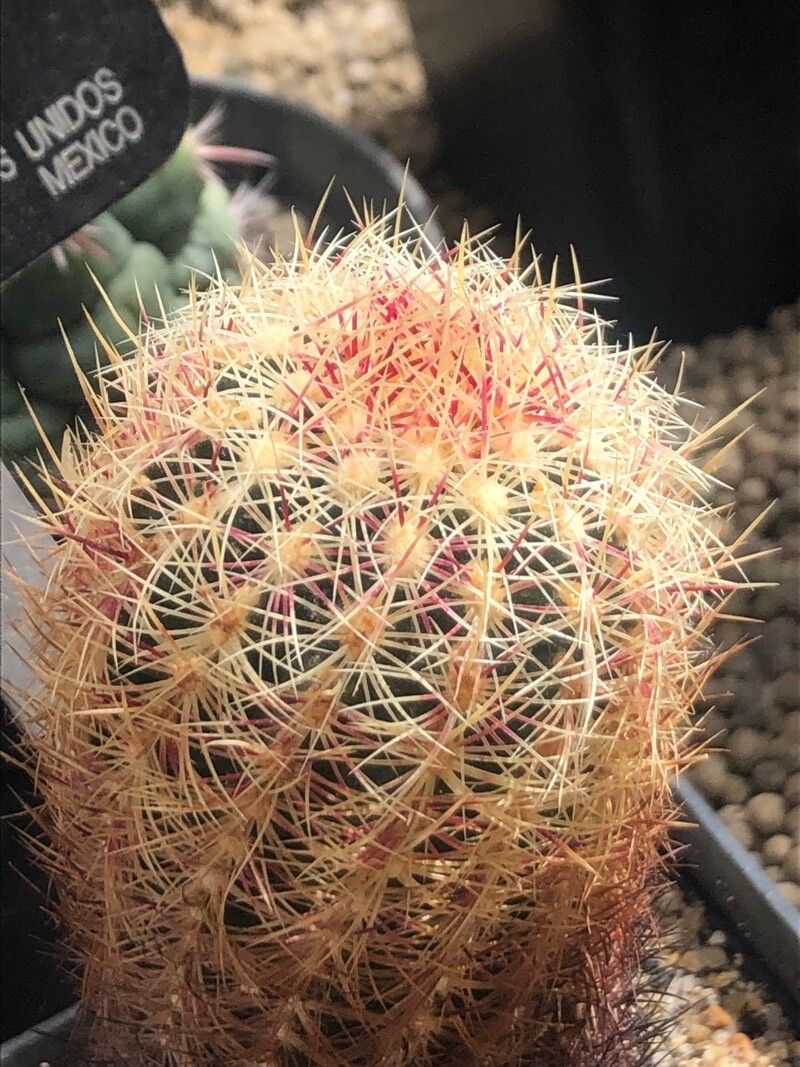
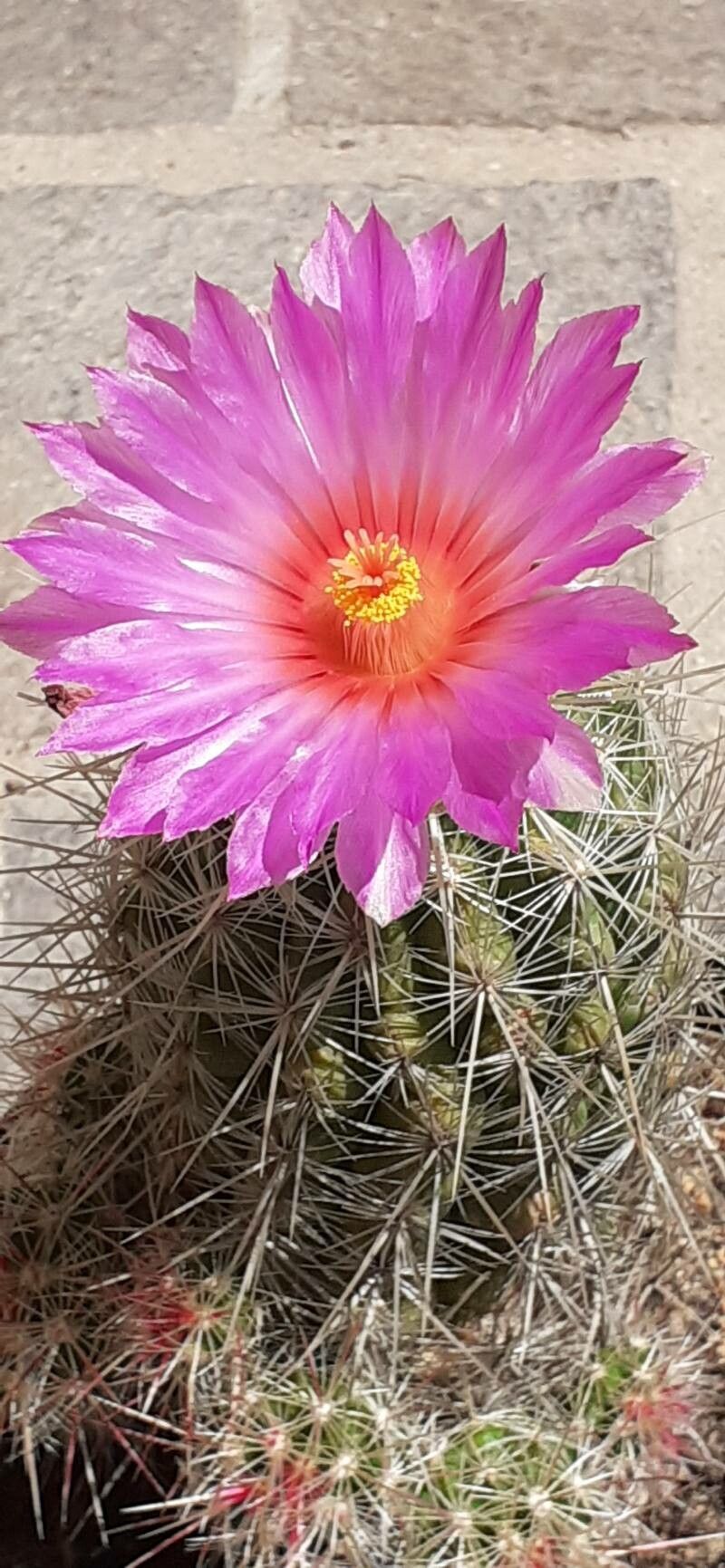
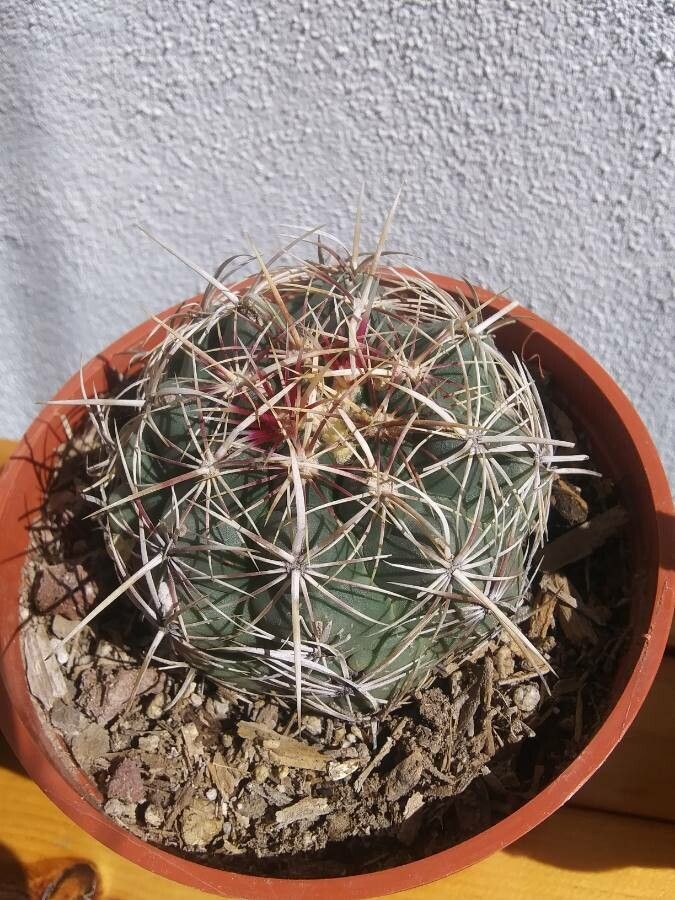
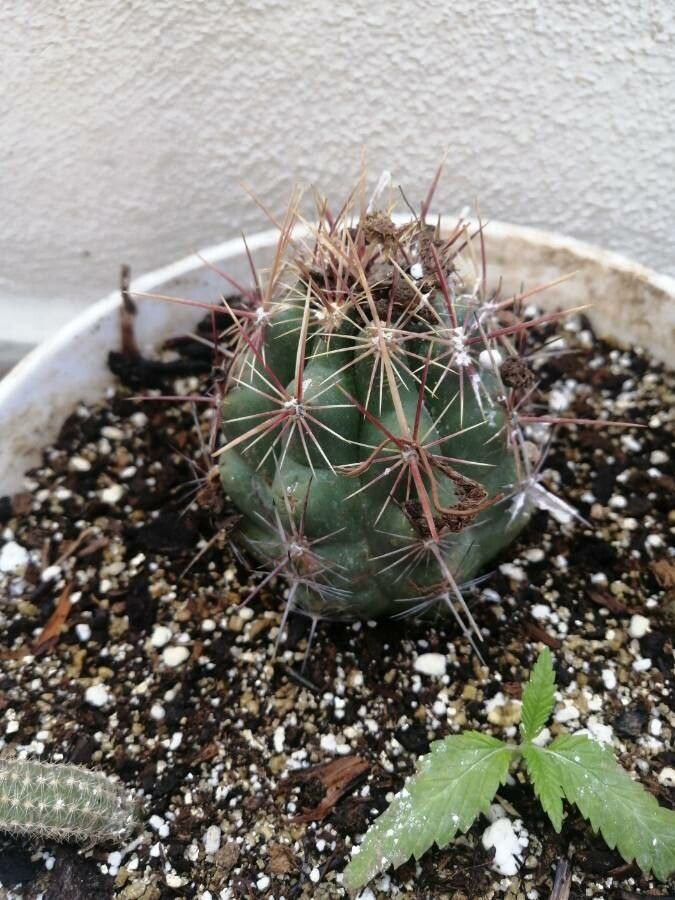
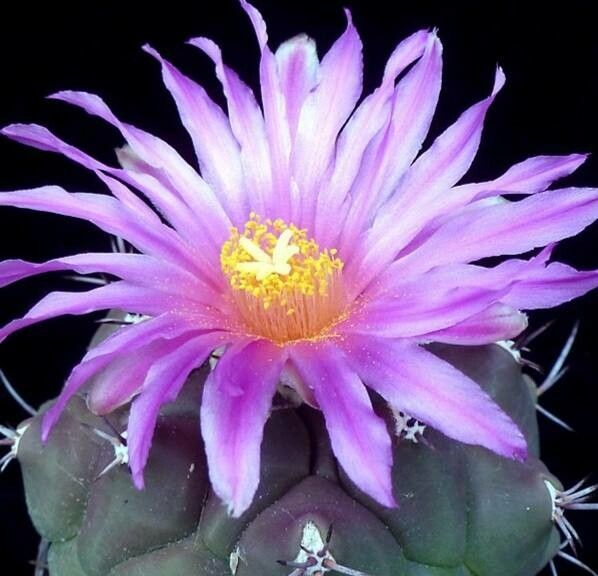
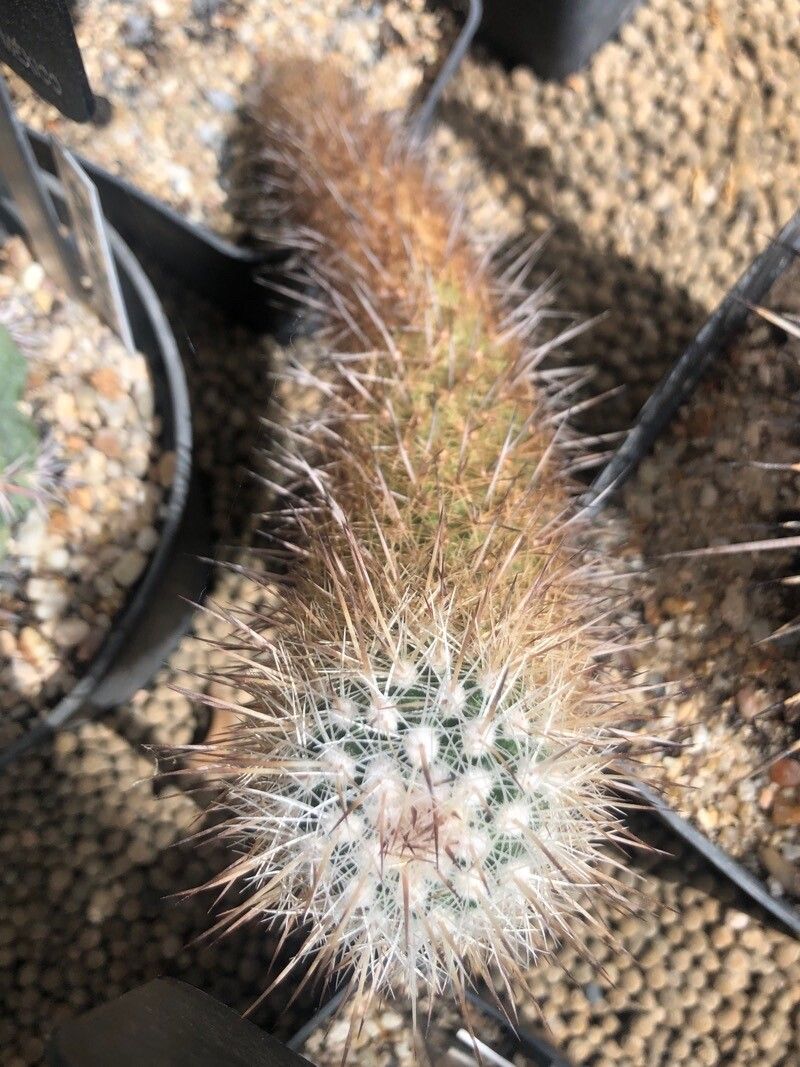
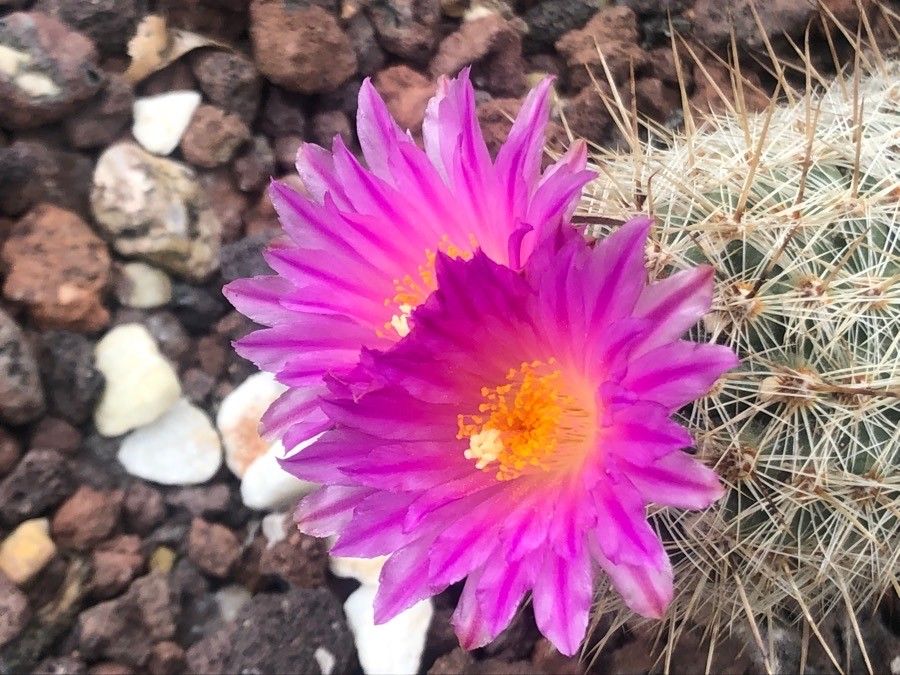
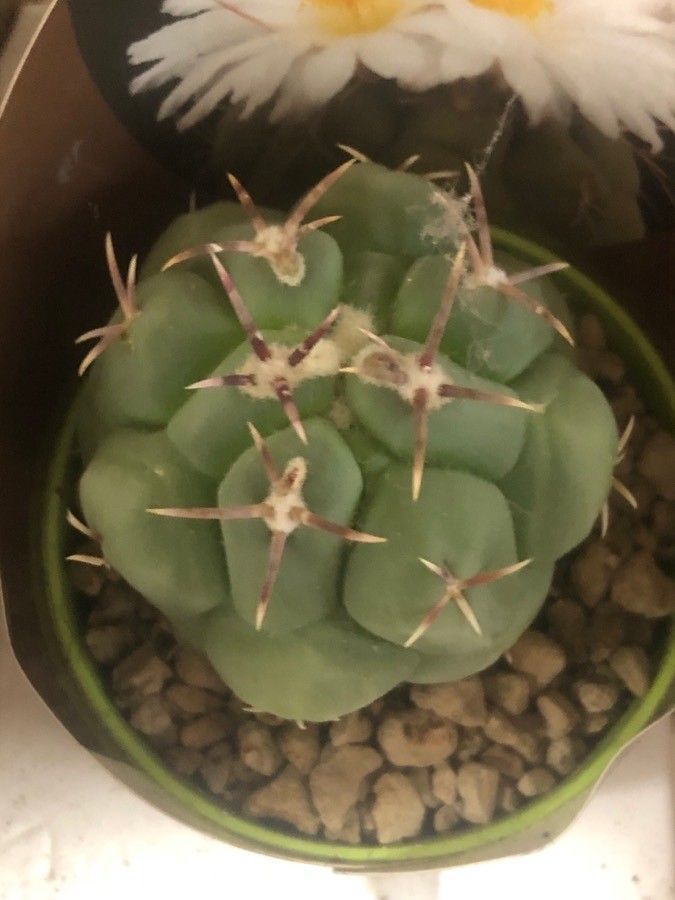
Thelocactus bicolor, the glory of Texas, is a species of flowering plant in the cactus family, widely distributed in the northern Chihuahuan Desert of the USA (Texas) and Mexico. Plants are usually solitary, but may form clumps. Growing to 50 cm (20 in) tall, it is a perennial with spiny, ribbed, succulent stems. Large daisy-like flowers, up to 8 cm (3.1 in) in diameter, are borne in summer. The petals are purplish-pink, fading to white. The inner petal tips form a circle of red surrounding a prominent yellow boss. This cactus is grown as an ornamental. A warm, dry, sunny spot in sharply-drained specialist cactus compost must be provided. It has gained the Royal Horticultural Society’s Award of Garden Merit.
Glory of texas has strong disease resistance and tolerates normal care without becoming sick easily. That said, it can be vulnerable to mealybugs, which may cause some harm but are usually not a major problem. Regarding care, Glory of texas is drought-tolerant and does not need frequent watering. It can endure extended periods without water and requires little fertilizer. However, it is very prone to root rot if lighting is poor and it is overwatered. In general, Glory of texas is a good choice for people who prefer to spend less time on plant care, though it is important to know and meet its basic needs. It is especially suitable for those who are often away for long stretches and might forget to water their plants regularly.
How to keep Thelocactus Bicolor.
Light
For optimal growth, glory of texas generally prefers ample sunlight, as is typical in its natural environment. Too much light can scorch it, while too little may cause slower growth. However, it is able to adapt to various degrees of sun exposure.
Water
The Glory of Texas plant thrives in arid environments and requires minimal watering, needing hydration only about once every three weeks. It prefers well-draining soil to prevent root rot, which mimics its native sandy terrain in desert climates.
Temperature
Glory of Texas occurs naturally in environments where temperatures range from 68 to 100 °F (20 to 38 ℃). It is highly adaptable, but prefers slightly cooler temperatures during winter. Any major temperature changes may stress the plant.
Fertilizer
For Glory of texas, light applications of fertilizer once or twice a year during the growing season are sufficient. Avoid fertilizing in winter and summer when the plant is dormant. Use less fertilizer on repotted plants and wait a couple of months after repotting before applying fertilizer. Fertilizing supports healthy growth and encourages blooms.
Pruning
The glory of Texas plant requires minimal pruning. However, it is important to remove any withered flowers and branches. This practice allows the plant to direct its nutrients towards healthy growth.
Pot & Repot
Repot Glory of texas in spring or summer, choosing a pot slightly larger than the current one that provides good drainage. Use a well-draining, sandy or gritty cactus mix. Handle the plant carefully to avoid its spikes. Let the cactus dry out before repotting to help prevent root rot. After repotting, wait a week before watering so the roots can heal.
Botanical profile.
- Plant Type
- Succulent
- Life Cycle
- Perennial
- Genus
- Thelocactus
- Family
- Cactaceae
- Hardiness Zone
- 9-11
- Mature Height
- 49 cm
- Mature Spread
- 10 cm
- Leaf Color
- Green
- Leaf Type
- Evergreen
- Flower Color
- Purple, Pink
- Flower Size
- 5.08 cm to 6.35 cm
- Bloom Time
- Mid spring, Late spring, Summer
- Planting Time
- Spring, Summer
- Harvest Time
- Summer, Early fall, Mid fall
Other names.
Reader questions.
What are the sunlight requirements for Glory of Texas?
Glory of Texas thrives under liberal sun exposure, reflecting its native habitat's conditions, requiring more than 6 hours of sunlight daily. Despite its adaptability to varying sun exposure levels, it's crucial to ensure it does not receive excessive light, which can scorch it, nor too little, which might slow its growth. Observing the movement of sunlight in your garden helps in choosing spots that balance light and shade, promoting the plant's health. Artificial lighting can be a viable alternative, especially for indoor plants, with LED lights being recommended due to their customizability. The required wattage varies by the plant's sunlight needs, and the distance and duration of exposure should mimic natural conditions to ensure optimal growth.
What are the ideal temperature conditions for Glory of texas?
Glory of texas thrives in environments where temperatures range from 68 to 100 °F (20 to 38 °C), showing a preference for the higher temperatures within this range. It's quite adaptable to different conditions, although it prefers slightly cooler temperatures during winter for optimal growth. The plant enters a dormant state in winter, stopping its growth when outdoor temperatures fall below 32°F (0°C). It's important to move the plant indoors if temperatures are expected to drop below this point, placing it near a south-facing window to ensure it receives as much sunlight as possible. Supplemental lighting can be used if the natural light is insufficient. When temperatures drop below 68°F (20°C), the plant’s growth slows, and watering should be reduced or halted to avoid root rot. Outdoor plants should not be watered in low temperatures, and taking measures such as setting up a temporary greenhouse for insulation is recommended.
What are the symptoms of inadequate lighting for Glory of Texas?
Inadequate lighting can lead to several issues for Glory of Texas, including smaller new leaves, leggy or sparse growth, faster leaf drop, halted or no new growth, pale or irregularly colored new leaves, and chlorosis. Sunscald, leaf curling, wilting, and leaf scorching are also common symptoms of either excessive sunlight or insufficient light. These symptoms reflect the plant's struggle to adapt to suboptimal lighting conditions, impacting its health and growth significantly.
How does low temperature affect Glory of texas and what are the solutions?
Glory of texas is not tolerant of low temperatures, requiring an environment where it's consistently above 68°F (20°C). During winter, it's crucial to keep it above 32°F (0°C) to prevent stress and damage. Exposure to temperatures below 23°F (-5°C) can weaken the plant, causing wilting and increasing the risk of root rot. Mild frost damage might not show immediate symptoms, but the plant may gradually wither about a week later. The recommended solution for frost damage includes trimming off frostbitten areas and checking for root rot. If the roots are rotted, they should be cut off, and the plant might need propagation through cuttings. Moving the plant indoors to a warmer environment and ensuring it has ample sunlight by placing it near a south-facing window, or using supplemental light if necessary, can help in recovery.
How can I address lighting issues for my Glory of Texas plant?
For indoor plants, gradually increasing sunlight exposure to at least 6 hours daily or using artificial lighting like plant grow lights can remedy light issues. Outdoor plants benefit from a gradual move to sunnier locations, avoiding sudden changes to prevent sunburn. Addressing ground plant solutions involves minimizing obstructions, such as pruning trees to let sunlight through, and transplanting to better-lit areas during the plant's dormant period. While parts of the plant damaged by insufficient sunlight might not recover, new growth should be healthy following these adjustments.
How does high temperature affect Glory of texas and what are the solutions?
During the summer months, it's important to ensure that the temperature around Glory of texas does not exceed 100°F (38°C). Exposure to temperatures above 109°F (43°C) can halt its growth, resulting in water loss, wilting, and an increased risk of sunburn. To aid a plant affected by high temperatures, first remove any sunburned or rotten parts. Then, protect the plant from the harsh afternoon sun until it shows signs of recovery and resumes growth. In cases where the plant suffers from root rot due to excessive heat, watering should be stopped until new roots form to help in the recovery process.