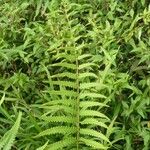
Thelypteris interrupta
Willdenow's maiden fern · Hottentot fern · Spready tri-vein fern · Willdenow's fern
Care Guide
💧 Water
☀️ Light Partial sun
The hottentot fern performs well with a considerable amount of sunlight. Native to sunnier habitats, this light encourages its health and growth. However, too much exposure can be harmful, because the hottentot fern is not tolerant of extreme light. Conversely, too little light can lead to poor plant health and development.
🌡️ Temperature 15–35°C
Hottentot fern grows best in temperate conditions, preferring temperatures of 59 to 95 °F (15 to 35 ℃). In colder seasons, consider increasing indoor ambient temperature to support its growth.
💨 Humidity
🪴 Soil 6-7
🌱 Fertilizer
Typically, a single fertilizer application in spring is enough for Hottentot fern, though repeated feedings can enhance growth. Apply fertilizer about every one to one and a half months. Fertilization improves the leaves' appearance and function, helping maintain even color and a healthy texture. It also promotes root development and nutrient uptake, supporting the plant's long-term health.
🪴 Pot & Repot
✂️ Pruning
🌿 Propagating
🐛 Diseases & pets
☠️ Toxicity
Characteristics
- Plant Type
- Herb
- Life Cycle
- Perennial
- Genus
- Thelypteris
- Family
- Aspleniaceae
- Hardiness Zone
- 8-10
- Mature Height
- 91 cm
- Mature Spread
- 49 cm to 91 cm
- Leaf Color
- Light Green, Green
- Leaf Type
- Evergreen
- Planting Time
- Spring, Summer, Autumn
- Native Area
- Sri Lanka, India, Malaysia, Angola, Mexico, Guatemala, Vanuatu, Madagascar, Rwanda, Kenya, Uganda, Tanzania, Zimbabwe, Niger, Jamaica, Fiji, Cuba, Indonesia, Cambodia, Burundi, Liberia, Mozambique, Venezuela, Brazil, Ethiopia, South Korea, Congo, Nepal, Malawi, Central African Republic, Honduras, Peru, Philippines, Zambia, Sudan, Bangladesh, Laos, Guinea, Panama, New Zealand, Chad, China, Colombia, Bolivia, Vietnam, Myanmar, Japan, Guyana, El Salvador, Senegal, Singapore, Nicaragua, Ecuador, Costa Rica, Côte d'Ivoire, Gambia, Congo (DRC), Thailand