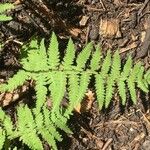
Thelypteris palustris
Marsh fern · Eastern Marsh Fern · Meadow Fern
Description
Source: leafsnapThelypteris palustris, the marsh fern, or eastern marsh fern, is a species of fern native to eastern North America and across Eurasia. It prefers to grow in marshy situations in full sun. The species epithet palustris is Latin for "of the marsh" and indicates its common habitat. It is the only known host plant for Fagitana littera, the marsh fern moth.
🎭 Captivation, Genuineness, Enchantment
Care Guide
💧 Water Twice per week
The Eastern marsh fern flourishes in moist and saturated soil. To prevent root rot, it needs to be watered twice a week. This fern prefers humid environments, making it ideal for outdoor cultivation where it can benefit from natural rainfall. To encourage healthy growth, keep the soil consistently damp, but be careful to avoid waterlogging during the growing season.
What do I do if I give my Eastern marsh fern too much or too little water?
The Eastern marsh fern can be overwatered if it sits in a pool of water or if the planter lacks drainage holes. This can lead to the roots being unable to take up nutrients and moisture, as well as the development of fungal or bacterial diseases. Signs of overwatering include wilted and yellow leaves, drooping or mushy stems. However, it's important to check for other causes since it's difficult to give this plant too much water. On the other hand, the Eastern marsh fern can also be underwatered if not monitored closely, unless using a self-watering planter. In dry conditions, the plant can quickly turn from lush and green to brown and crispy. In extreme cases, it may appear that there are no living fronds left, but if some roots are still healthy, the plant can be saved. By cutting off dry and dead stems, thoroughly watering, and returning the plant to its usual location, it can recover and produce new fronds. It may take several months to fully regrow, but with proper care, it is possible.
How should I water my Eastern marsh fern correctly?
To keep your Eastern marsh fern healthy, make sure to maintain consistently moist soil that reflects its natural habitat. This may require watering every one or two days and avoiding any instance of the soil drying out. Once you notice even the slightest dryness on the top layer of soil, it's time to water again. It's essential to thoroughly moisten the soil, allowing water to drain from the bottom of the pot. Afterward, be sure to remove any excess water to prevent the pot from sitting in a puddle. Following this method will ensure that the soil remains adequately moist and never becomes too dry.
What do I need to think about when watering my Eastern marsh fern?
The amount of humidity in the air affects how often you should water your Eastern marsh fern. Higher humidity means less frequent watering. Be careful not to place the plant near a heating or cooling vent, as it will dry out quickly. The fern prefers dappled and indirect sunlight and temperatures between 55-80 degrees F (13-27 degrees C). Avoid placing it in a warm and sunny spot on a windowsill, as it can dehydrate quickly. If possible, use rainwater or distilled water, but tap water usually works fine. Tap water may contain minerals and chemicals that can cause brown leaf tips, especially since the fern has delicate leaves. Small pots can cause issues because they hold less potting medium and dry out faster. It's better to give the plant more space in the pot. Consider using a self-watering planter for the fern. This type of pot has a wicking system that continuously provides moisture to the soil from a central reservoir. It reduces the need for frequent watering and benefits the roots by maintaining a consistent moisture level.
☀️ Light Full shade
The eastern marsh fern tolerates a range of sunlight levels, preferring intermittent sun exposure. It can also withstand a full day of sun or remain healthy in deep shade. Excess sunlight may scorch its leaves, while too little light can cause stunted growth or pale foliage. Its original habitat includes a variety of light conditions.
What are the sunlight requirements for Eastern marsh fern?
The Eastern marsh fern is adaptable to various lighting conditions, thriving in partial to full sunlight as well as in heavy shade. It prefers to receive light indirectly or in a dappled manner but can also sustain a full day of sunlight or grow in significantly shaded areas. While too much sunlight might cause leaf burn, insufficient sunlight can lead to stunted growth or pale foliage. When planning your garden, it's critical to observe how sunlight moves across the area to ensure plants receive the right amount of light, balancing between light and shade to maintain the plants' health.
How can artificial lighting be used for indoor Eastern marsh ferns?
Artificial lighting becomes crucial for the growth of indoor Eastern marsh ferns when natural sunlight is insufficient, such as during winter or in less sunny indoor locations. LED lights are recommended due to their adaptability in providing specific wavelengths needed by plants. The intensity required varies by plant type: full sun plants need about 30-50W per square foot, partial sun plants require 20-30W per square foot, and full shade plants need 10-20W per square foot. The artificial light source should be placed 12-36 inches above the plant to simulate natural sunlight conditions and should be on for 8-12 hours daily to mimic the natural daylight hours most plants need for optimal growth.
What are the signs of improper lighting in Eastern marsh ferns?
Signs of improper lighting in Eastern marsh ferns include smaller new leaves, leggy or sparse growth, faster leaf drop, slower or no new growth, and appearance changes such as lighter-colored leaves, chlorosis, sunscald, leaf curling, wilting, and leaf scorching. Small new leaves, leggy growth, and faster leaf drop indicate low light conditions, while chlorosis, sunscald, leaf curling, wilting, and leaf scorching are signs of excessive sunlight exposure. These symptoms highlight the importance of providing the right amount of light to maintain plant health and vitality.
How can you address light-related issues in Eastern marsh ferns?
To address light-related issues in Eastern marsh ferns, it's crucial to gradually adjust their exposure to sunlight by moving them to sunnier or shadier spots each week. For indoor plants, use artificial lighting such as desk lamps or grow lights for at least 8 hours a day to supplement natural light. For outdoor plants, gradual relocation helps prevent sunburn. If trees or structures block sunlight, consider pruning or relocating smaller plants to areas with ample sunlight and good drainage. It is important to note that affected parts of the plant may not recover, but new growth should be healthy with improved lighting conditions.
🌡️ Temperature 0–35°C
Eastern marsh fern is naturally adapted to climates with temperatures between 32 and 95 °F (0 to 35 ℃). In its native range, this fern flourishes in temperate environments. For best growth, reproduce these conditions, especially in locations that are seasonally colder.
What are the optimal growth conditions for Eastern marsh fern?
Eastern marsh fern, botanically known as Thelypteris palustris, is adapted to climates with temperatures ranging from 32 to 95 °F (0 to 35 °C), thriving in temperate conditions. For optimal growth, it's important to replicate these conditions, especially in seasonally colder settings. The fern has strong cold resistance, meaning special frost protection measures are usually not necessary during winter. However, in regions where winter temperatures are expected to drop below -35°C, providing cold protection by covering the plant with soil or straw is advisable. Additionally, watering the plant abundantly before the first freeze in autumn to ensure the soil remains moist can prevent drought and water scarcity during the winter and early spring.
How does Eastern marsh fern respond to low temperatures?
Eastern marsh fern is remarkably cold-tolerant, best thriving when temperatures stay above 0°C. Throughout the winter, keeping temperatures above -30°C is ideal. If temperatures dip below -35°C, there might not be visible changes during the winter, but the plant may exhibit decreased sprouting or no sprouting at all come springtime. To manage this, it's recommended to remove any parts of the plant that have failed to sprout in the spring.
What should be done if the Eastern marsh fern experiences high temperatures?
During the summer, it's beneficial for the Eastern marsh fern to be kept in conditions below 35°C. Exposure to temperatures over 38°C can lead to the fern's leaves becoming lighter in color, prone to curling, and more susceptible to sunburn. If this occurs, it's advisable to trim away the sunburned and dried-up portions of the plant. Additionally, moving the plant to a shadier location or using a shade cloth to mitigate the midday and afternoon sun is recommended. To maintain optimal soil moisture, water the plant during the cooler morning and evening hours.
💨 Humidity
🪴 Soil 5-6
🌱 Fertilizer
Why should I put fertilizer on my Eastern marsh fern?
Fertilizing Eastern marsh fern is important for a few reasons. Firstly, your plant requires the additional nutrients for healthy new growth. Secondly, these nutrients also support the health of old growth and help the plant defend against diseases and pests.
When should I fertilize my Eastern marsh fern?
The feeding schedule of the Eastern marsh fern depends on its growing location. Although it doesn't require excessive nutrients, it does need some extra nourishment. Outdoor plants only need fertilizing in the spring, whereas indoor specimens should be fed monthly from spring to summer.
When is the best time to not add fertilizer to my Eastern marsh fern?
To ensure optimal growth and prevent any issues, it is recommended to avoid fertilizing after early autumn. Fertilizing Eastern marsh fern during hot and dry periods is also discouraged as dry soil tends to be less effective at delivering fertilizer. Additionally, fertilizing during these times can stimulate growth that requires additional water, which may not be readily available. It is advisable to reserve fertilizer applications for earlier in the season when temperatures are cooler. Lastly, it's important to be cautious about inadvertently giving ferns a double-dose of fertilizer, as Eastern marsh fern can absorb fertilizer applied to nearby plants or lawns.
What fertilizer does my Eastern marsh fern need?
When choosing a fertilizer for Eastern marsh fern, you have two main options: one for outdoor plants and another for indoor plants. For outdoor plants, adding a layer of mulch or compost will help them thrive. Indoor plants, on the other hand, benefit from a fertilizer with an N-P-K ratio of 3-1-2. However, in some cases, a general-purpose fertilizer with a balanced blend of nutrients can also work well. Just make sure that the ratio numbers representing the volume of each nutrient are at 3 or lower, even when using a balanced fertilizer.
How can I make my Eastern marsh fern grow better?
Depending on where it is growing, fertilizing Eastern marsh fern can be done in different ways. For outdoor garden plants, it is best to add a layer of mulch or compost to the soil, making sure it is around the base of the plant. As for indoor plants, a diluted liquid fertilizer should be applied before watering, ideally once a month in the spring and summer.
🪴 Pot & Repot
✂️ Pruning
The eastern marsh fern flourishes in wetland environments and benefits greatly from pruning in early spring. By removing old fronds, you encourage new growth, lower the risk of disease, and improve air circulation. To ensure the fern remains healthy and vibrant throughout the growing season, use clean, sharp tools for pruning.
🌿 Propagating
🐛 Diseases & pets
☠️ Toxicity
Characteristics
- Plant Type
- Fern
- Life Cycle
- Perennial
- Genus
- Thelypteris
- Family
- Aspleniaceae
- Hardiness Zone
- 3-9
- Mature Height
- 34 cm to 61 cm
- Mature Spread
- 61 cm
- Leaf Color
- Green
- Leaf Type
- Deciduous
- Planting Time
- Spring
- Harvest Time
- Mid summer, Late summer