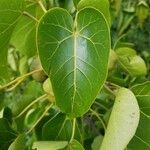
Thespesia populnea
Portia-Tree · Indian tuliptree · Pacific rosewood · Polynesian rosewood · Seaside Mahoe
Description
Source: leafsnapThespesia populnea, commonly known as the Portia tree or Indian tulip tree, is a species of flowering plant belonging to the Malvaceae family. Native to coastal regions of the Indian Ocean and Pacific Ocean, it is found in parts of Africa, Asia, and Australia. The Portia tree can reach up to 20 meters in height, featuring a broad canopy with large leaves that are green on top and silvery-white underneath. Its yellow flowers, adorned with maroon centers, bloom in clusters from late spring to early summer. For centuries, indigenous communities have utilized the Portia tree for various medicinal purposes. The bark of the tree contains compounds with demonstrated anti-inflammatory properties and efficacy against certain types of bacteria. Beyond its medicinal uses, Thespesia populnea is valued for its wood, which is both strong and lightweight, making it suitable for boat building and furniture making. Additionally, its brightly colored flowers are popular among gardeners. However, Thespesia populnea faces threats from habitat loss due to urbanization and overexploitation by humans. These factors have resulted in the species being listed as "Least Concern" on the IUCN Red List. Conservation efforts, such as reforestation programs, are essential to protect this valuable plant species from further population declines.
Care Guide
💧 Water Every 7 days
The Portia tree thrives in coastal environments and can withstand both salt spray and drought. Although it prefers consistent moisture and should be watered every two weeks, its evergreen nature allows it to retain water in its leaves. This adaptation is crucial for surviving the variable rainfall in its natural habitat.
How should I water my Portia Tree?
You can water your Portia Tree using various common watering tools such as watering cans, hoses, or cups. It is important to directly apply the water to the soil and make sure all areas receive equal moisture to support the entire root system. Using filtered water is recommended to avoid harmful particles from tap water. Additionally, it is best to use water at or slightly above room temperature, as extremely cold or hot water may shock the Portia Tree. However, the tree generally responds well to any type of water.
What should I do if I give my Portia Tree too much water or too little water?
Outdoor plants, especially newly planted ones or seedlings, are prone to lack of watering. It's important to remember to water them regularly for the first few months, even when they are small or just planted. Once the roots are established, Portia Trees can usually rely on rain most of the time. When Portia Trees are planted in pots, overwatering is more likely. If you accidentally overwater your Portia Tree, it's important to take immediate action to remedy the situation. First, stop watering the plant right away to minimize the negative effects of overwatering. Then, remove the tree from its pot and inspect the roots. If you find that none of the roots have developed root rot, you can return the tree to its container. But if you discover signs of root rot, trim away any affected roots and consider applying a fungicide to prevent further damage. Lastly, repot the Portia Tree in well-draining soil. On the other hand, underwatering is a more simple problem to fix. If you underwater, the leaves of the plant will droop, dry out, and fall off. However, once you provide sufficient watering, the leaves will quickly return to their fullness. It's important to correct your watering frequency as soon as you notice underwatering.
How many times should I water my Portia Tree?
If your outdoor plants receive sufficient rainfall, they can typically grow normally without additional watering. However, if your area lacks rainfall, you should water your plants every 2 weeks in spring and fall, and more frequently in the summer. In winter, when growth slows down and plants require less water, you should water them sparingly or even not at all. If you have a young or recently planted Portia Tree, it's important to water it more frequently to aid its establishment and growth. For potted Portia Trees, there are two main approaches to determine watering frequency. The first is to follow a predetermined schedule, such as watering once every week or every other week. However, this method may not always account for the unique growing conditions of your Portia Tree. Another option is to gauge watering based on the moisture in the soil. Generally, it's best to wait until the top two to four inches of soil have completely dried out before watering again. This typically corresponds to about ⅓ to ½ of the pot's depth.
How much water does my Portia Tree require?
To water your Portia Tree effectively, you don't always need a large amount of water. If only a few inches of soil have dried since your last watering, give it about five to ten ounces of water each time. You can also gauge the amount of water based on the moisture of the soil. Take note of how many inches have dried out between waterings. To ensure the tree receives enough moisture, water until all layers of dry soil are moistened. If over half of the soil is dry, consider giving extra water until you see excess water draining from the pot. If your Portia Tree is in an area with sufficient rain, additional watering may not be necessary. When the tree is young or still establishing, it should receive 1-2 inches of rain per week. As it continues to grow, it can rely on rainwater alone. Only in hot weather with no rainfall for 2-3 weeks, should you consider a thorough watering to avoid stress for the tree.
How do I know if I am giving enough water to my Portia Tree?
The Portia Tree is often overwatered, and there are clear signs to watch for. When overwatered, the leaves turn yellow and may fall off. Overwatering can also cause the plant to shrivel and lead to root rot. On the other hand, an underwatered tree will wilt and have brown or brittle leaves. If you notice signs of either issue, it's important to take action to restore your Portia Tree's health.
☀️ Light Full sun
Portia Tree prefers spots where it can receive full sun throughout the day. Enough sunlight promotes healthier growth and vigor. Too little or too much light can affect its health, although originating from sun-rich habitats has given it some resilience.
What are the sunlight requirements for a Portia Tree?
The Portia Tree thrives when exposed to full sunlight, which means it requires above 6 hours of sunlight daily. It's essential to monitor the sunlight's movement through your garden to find the ideal balance of light and shade, ensuring the plant maintains its health and vitality. Adequate exposure to sunlight is vital, as insufficient or excessive light could negatively affect its well-being. Originating from sunny habitats has made the Portia Tree resilient, but it still needs a proper amount of sunlight to flourish.
How important is artificial lighting for indoor Portia Trees?
Artificial lighting becomes crucial for Portia Trees when they are grown indoors, especially in spaces with insufficient natural sunlight or during the winter. These plants require adequate lighting for optimal growth, with the recommendation of LED lights due to their ability to provide specific wavelengths needed by plants. For full sun plants like the Portia Tree, 30-50W per square foot of artificial light is needed. The artificial light source should be placed 12-36 inches above the plant and kept on for about 8-12 hours per day to mimic natural sunlight conditions.
What are the key symptoms of inadequate lighting in Portia Trees?
Portia Trees can show several symptoms when they don't receive enough light, including smaller new leaves, leggy or sparse growth, faster leaf drop, paused or nonexistent new growth, and lighter-colored or chlorotic new leaves. Excessive sunlight could lead to chlorosis, sunscald, leaf curling, wilting, and leaf scorching—indicating damage and stress due to improper light conditions. These symptoms highlight the importance of providing balanced light to maintain the plant's health.
How can I address lighting issues for my Portia Tree?
To promote healthy growth in Portia Trees, gradually move them to sunnier spots to ensure they get at least 6 hours of direct sunlight daily. Indoors, consider using artificial light if moving the plant isn't feasible. Keep a desk or ceiling lamp on for at least 8 hours daily, or invest in professional grow lights. Outdoors, acclimatize your plants to avoid sunburn by progressively moving them to brighter locations each week. Also, minimize obstructions like overhanging branches. Transplant smaller plants to sunnier areas if needed, ensuring ample light and good drainage. Remember, parts of the plant affected by sunlight deprivation may not recover, but new growth will be healthy with improved light exposure.
🌡️ Temperature 20–37.8°C
The Portia Tree is native to warm regions and favors temperatures of 68 to 100 °F (20 to 38 ℃). When seasons shift, especially in locations outside its natural range, you should adjust temperatures to replicate its native environment. Make sure to shield it from frost in colder months.
What is the Portia Tree and where is it indigenous to?
The Portia Tree, botanically known as Thespesia populnea, is indigenous to warm climates. It thrives in temperatures ranging between 68 to 100°F (20 to 38°C), preferring conditions that mimic its native habitat, especially in regions outside its indigenous area. To ensure its health and growth, adjustments to the environment to replicate these warmer conditions are essential, particularly in colder months.
How should the Portia Tree be cared for in colder months?
During colder months, it's essential to protect the Portia Tree from frost as it is extremely heat-loving and susceptible to cold temperatures. In the autumn, if the tree is grown outdoors, it's recommended to bring it indoors and place it near a bright window while keeping it away from heaters to avoid excessive dryness. Maintaining indoor temperatures above 20°C during winter benefits the plant's growth and helps prevent damage from temperatures approaching or dropping below 5°C.
What are the symptoms of a Portia Tree being exposed to low temperatures, and how can they be mitigated?
Exposure to low temperatures can be detrimental to a Portia Tree, which thrives best above 20°C and needs to be kept above 5°C during winter. Symptoms of cold stress include leaves lightening in color when temperatures fall below 1°C, gradual discoloration to brown or black, and wilting or drooping after frost damage. To mitigate these symptoms, trim off frost-damaged parts and move the tree indoors to a warm environment, ideally near a south-facing window for ample sunlight, while avoiding proximity to heaters or air conditioning vents to prevent air dryness.
What are the symptoms of a Portia Tree exposed to high temperatures, and what are the solutions?
The Portia Tree should be kept below 38°C during the summer to avoid stress from high temperatures. Symptoms of exposure to excessive heat include leaves becoming lighter in color and the plant being more susceptible to sunburn when temperatures exceed 43°C. To care for a tree that has suffered from high temperature or sunburn, trim away the sunburned and dried-up parts. Relocate the plant to a shaded area to protect it from midday and afternoon sun, and ensure the soil remains moist by watering the plant in the morning and evening.
💨 Humidity
🪴 Soil 6-7
🌱 Fertilizer
The best time to fertilize a Portia Tree is in early spring, when it breaks dormancy. This encourages overall growth and flower development. Fertilizing improves the foliage, stems, and branches, and supports the production of large, vibrant, long-lasting flowers. It helps move nutrients from the roots to the flowers and enhances the plant’s health and resistance to disease.
Why should I put fertilizer on my Portia Tree?
Proper fertilization is crucial for the overall health and well-being of your Portia Tree. It ensures a healthy growth of foliage, sturdy stems, and branches. Moreover, the flowers of the Portia Tree are highly valued by gardeners. Thankfully, fertilization also plays a key role in producing large, vibrant, and long-lasting flowers. This is achieved by using the right fertilizer, which facilitates the efficient transfer of nutrients from the roots to the flowers through the stems. Additionally, proper fertilization keeps the plant in good general condition, enhancing its ability to resist diseases.
What is the right time to put fertilizer on my Portia Tree?
The best time to fertilize a Portia Tree is in early spring after it has come out of its dormant phase. This will provide the plant with the energy it needs for growth and flower development. However, it is also beneficial to give it another feeding in the fall, although it doesn't need to be as large as the spring feeding. Some gardeners also choose to fertilize the tree when planting it, but this is not always necessary.
When is it best to not add fertilizer to my Portia Tree?
You don't need to fertilize your Portia Tree in winter because it's in a dormant phase, meaning it doesn't require much energy from the soil for new growth. Fertilizing during winter increases the risk of overfertilizing, which can have negative consequences. The best times to feed a Portia Tree are in early spring and fall. This means that for most of spring and summer, the plant doesn't need fertilizer. It's also a good idea to avoid feeding if the plant is experiencing excessively hot or dry conditions.
What kind of fertilizer does my Portia Tree need?
When fertilizing Portia Tree plants, it is typically acceptable to use a general-purpose fertilizer with even amounts of nitrogen, phosphorus, and potassium. However, for optimal growth, Portia Trees tend to benefit from a specific type of fertilizer. Nitrogen and phosphorus are usually the most crucial nutrients for these trees, so it is recommended to use a fertilizer with higher levels of these nutrients compared to potassium. A fertilizer with an N-P-K ratio of 10-10-8, or something similar, should work well. Additionally, applying organic material like compost during one of the annual feedings can also be advantageous. If you choose to use fertilizer, granular fertilizer is the most common choice for Portia Trees.
How do I make my Portia Tree grow better?
Feeding your Portia Tree with fertilizer is an easy task for any gardener, even if they have little experience. To use granular fertilizer, simply sprinkle it on the soil after moistening it with water. You can also improve the soil by adding organic materials like compost or manure. Place some of the material on top of the soil and use a hand rake to gently work it into the first few inches of soil without disturbing the roots.
🪴 Pot & Repot Every 12 months
✂️ Pruning
The Portia Tree is known for its heart-shaped leaves and vibrant yellow flowers. To maintain its health and appearance, prune the tree from early to late spring. Begin by removing any dead or diseased wood and then trim the branches to improve airflow. This process encourages healing, supports growth, controls the tree's size, and enhances flowering. For more detailed care instructions, refer to garden guides.
🌿 Propagating
🐛 Diseases & pets
☠️ Toxicity
Characteristics
- Plant Type
- Tree, Shrub
- Life Cycle
- Perennial
- Genus
- Thespesia
- Family
- Malvaceae
- Hardiness Zone
- 10-12
- Mature Height
- 6.1 m to 10.06 m
- Mature Spread
- 10.06 m to 14.94 m
- Leaf Color
- Dark Green
- Leaf Type
- Evergreen
- Flower Color
- Yellow, White
- Flower Size
- 5.08 cm to 7.62 cm
- Bloom Time
- All year round
- Planting Time
- Spring, Autumn
- Harvest Time
- All year round
- Native Area
- Sri Lanka, Somalia, Belize, India, Malaysia, Mexico, Guatemala, Madagascar, Eritrea, Pakistan, Nigeria, Yemen, Kenya, Fiji, Tanzania, Jamaica, Benin, Cuba, Indonesia, Cambodia, Cameroon, Mozambique, Venezuela, Oman, Ghana, Honduras, Philippines, Sudan, Bangladesh, Guinea, Panama, China, Colombia, Bolivia, Vietnam, Myanmar, Japan, Togo, Guyana, Senegal, Singapore, Nicaragua, Iran, Costa Rica, Thailand