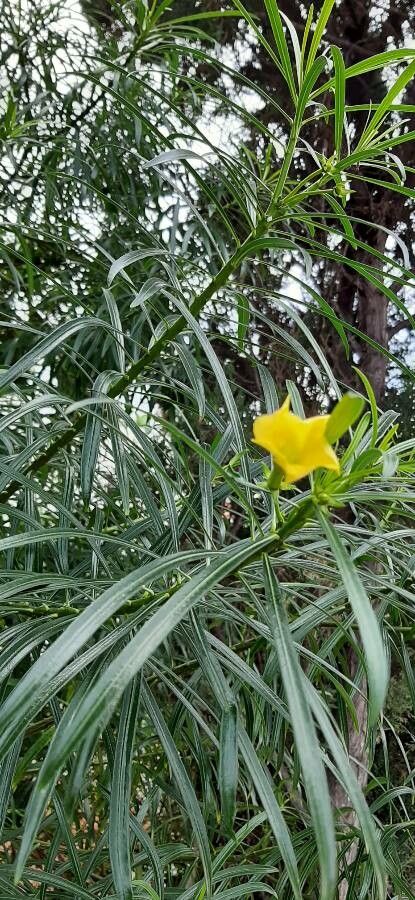
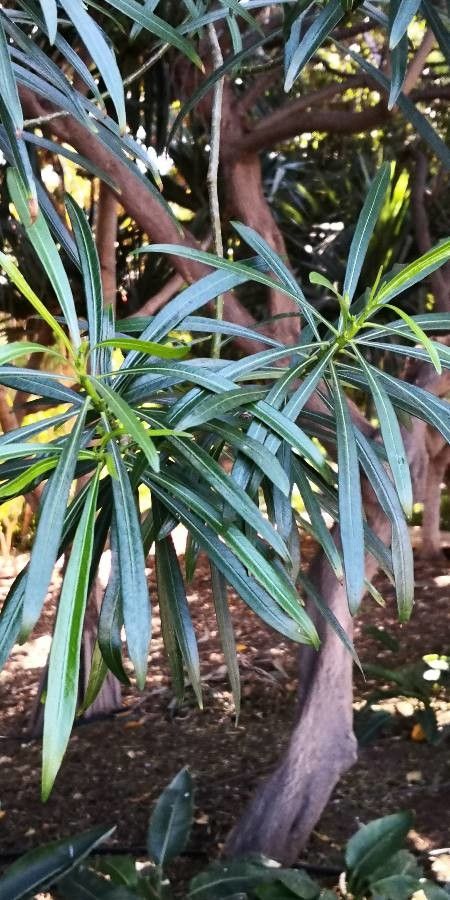
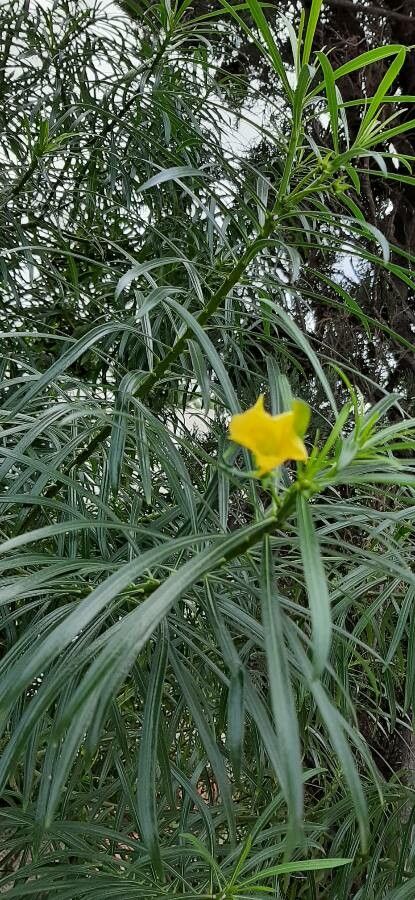
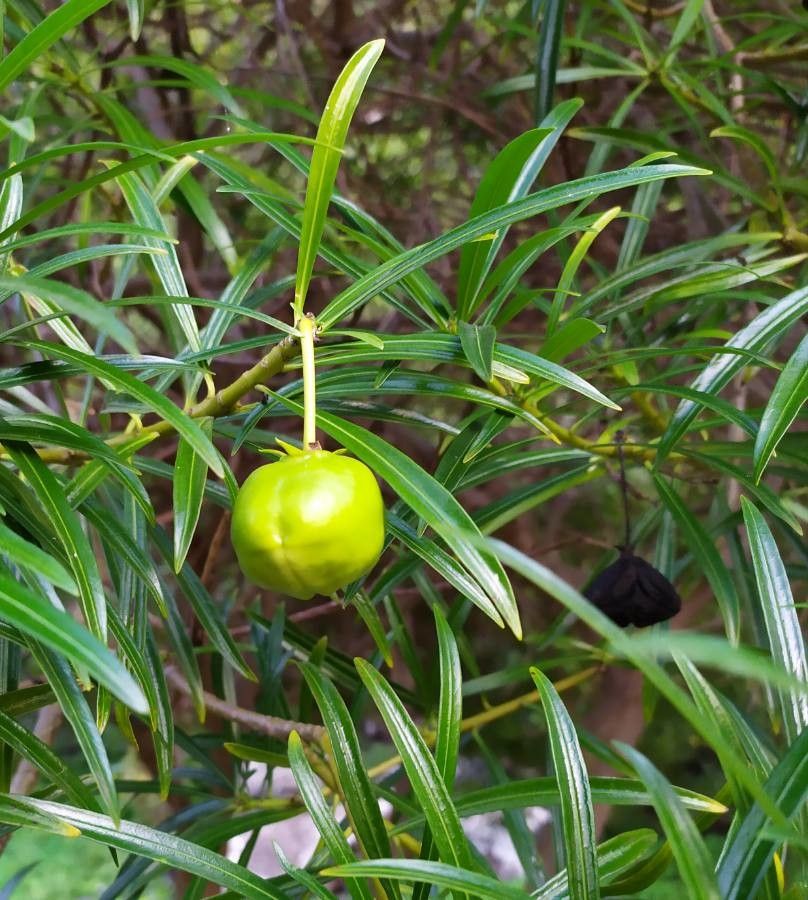
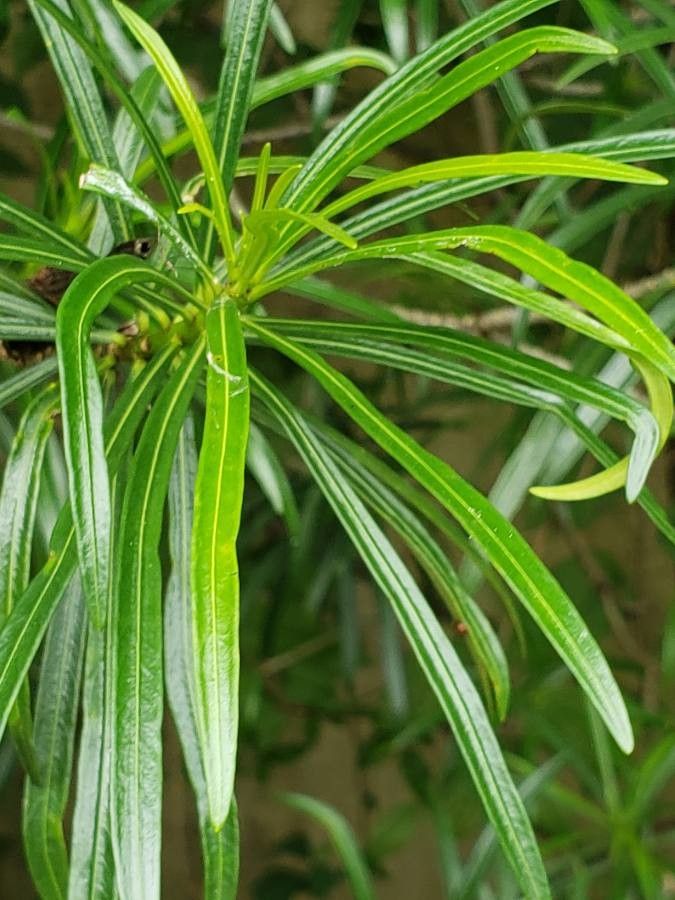
Thevetia neriifolia, commonly known as yellow oleander or lucky nut, is a small evergreen tree or shrub that belongs to the Apocynaceae family. Native to tropical and subtropical regions of Asia and Australia, it has also been introduced to many other parts of the world. This plant can grow up to 6 meters tall and features smooth gray bark and long, narrow, pointed green leaves.
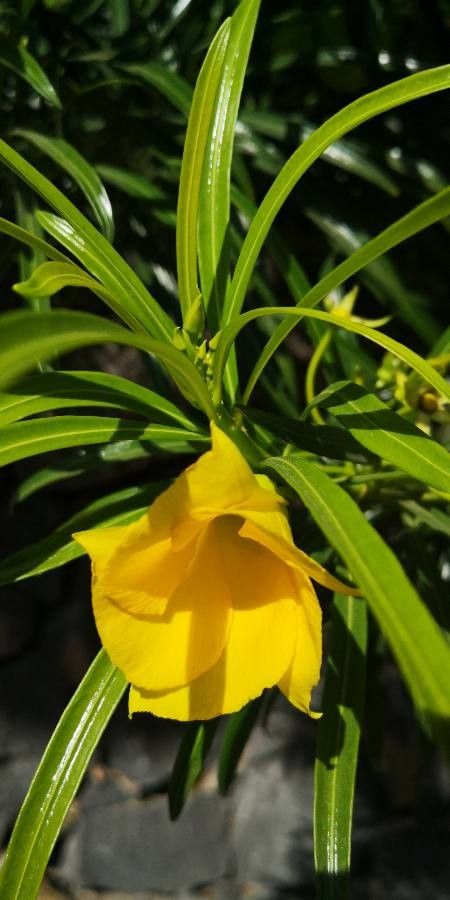
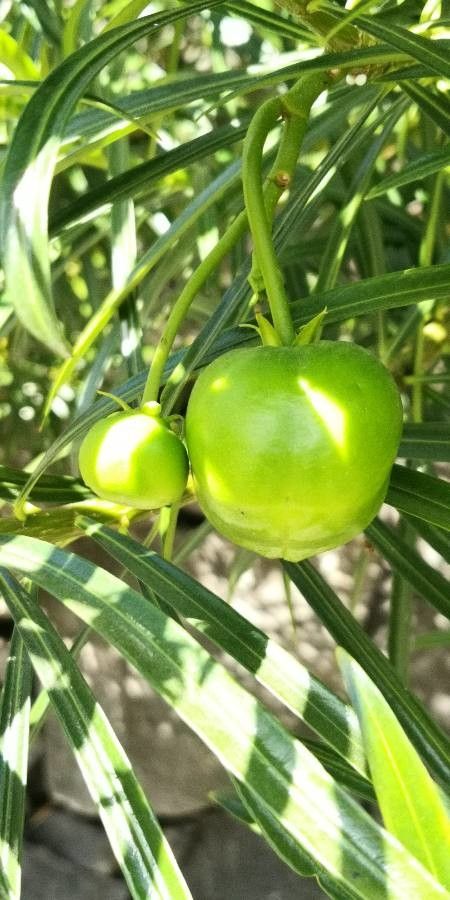
Thevetia neriifolia produces striking yellow flowers with five petals that form a trumpet shape. These flowers bloom in clusters from late spring through summer and are highly fragrant. The plant's fruit is a woody capsule that contains several seeds.
For centuries, Thevetia neriifolia has been used for medicinal purposes due to its toxic properties. It contains cardiac glycosides such as thevetin A and B, which have been explored as anti-cancer agents, particularly against leukemia cells.
Despite its beauty, all parts of Thevetia neriifolia contain toxic compounds that can be harmful if ingested by humans or animals. Therefore, it should be handled with care, especially when planted in gardens or landscapes where children might play.
Overall, Thevetia neriifolia is an attractive ornamental plant but should only be grown under careful supervision due to its toxicity.
Botanical profile.
- Genus
- Thevetia
- Family
- Apocynaceae
Other names.