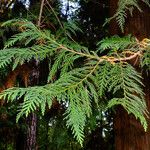
Thuja plicata
Western Red-cedar · British Columbia red cedar · Pacific Red-cedar · Western redcedar · Giant Arbor-vitae
Description
Source: leafsnapThuja plicata, commonly known as Western Red Cedar, is a large evergreen tree native to the Pacific Northwest of North America. It can grow up to 70 meters tall and has a conical shape with dense foliage. The scale-like leaves are arranged in flattened sprays, giving the tree a feathery appearance. The bark is reddish-brown, fibrous, and marked by deep furrows. The Western Red Cedar is a vital species in the region's ecosystem, providing habitat for various wildlife such as birds, squirrels, and deer. It also holds cultural significance for indigenous communities, who use it for traditional purposes like building canoes and crafting totem poles. Beyond its ecological importance, Thuja plicata has substantial commercial value due to its durable wood, which is commonly used in constructing outdoor structures such as decks and fences. Its essential oil is also prized in aromatherapy for its calming properties. However, Thuja plicata faces significant threats. Habitat loss from logging activities and climate change-induced droughts make it susceptible to diseases like root rot. In summary, Thuja plicata plays a crucial role both ecologically and culturally. Conservation efforts are essential to preserving this iconic species of North America's Pacific Northwest.
🌳 Western red cedar is versatile beyond lumber; its resistance to rot makes it well suited for boat building and outdoor structures. Its extracted essential oils are used in aromatherapy and perfumery for their soothing scent. The wood’s fine fibers contribute to the production of high-quality paper. Historically, the soft inner bark was used by indigenous groups as a material for textiles. Its aromatic qualities suggest underexplored potential in fragrance applications.
🎭 Power
Care Guide
💧 Water Every 7 days
Western red cedar, which naturally grows in moist forests, flourishes in consistently humid conditions and favors evenly moist soil. To avoid root saturation, water the plant every 1-2 weeks. As an evergreen, its dense foliage helps retain water, reducing transpiration and conserving moisture.
How should I water my Western red cedar?
Watering your Western red cedar is a simple task that can be done using a garden hose. For mature trees, a high volume of water may be needed, so using a garden hose is ideal. However, for smaller trees, a watering can or smaller tool can suffice. It is important to avoid overhead watering, as excessive moisture on the leaves can lead to disease, especially for young trees.
What should I do if I give my Western red cedar too much or too little water?
Overwatering can happen when the soil doesn't allow water to drain properly, causing the Western red cedar to deteriorate. If this is the case, you can improve drainage by amending the soil or finding a better location for your plant. If you're growing the cedar in a pot, you may need to repot it with looser soil and a container that allows for better drainage. Overwatering can also lead to diseases, which should be treated promptly. On the other hand, if your cedar is underwatered, simply increase watering frequency to help it recover. You can determine if you've overwatered by examining the foliage, particularly the new growth, for signs of discoloration or easy breakage. If you see standing water or slow drainage in the plant's area, it indicates excessive moisture in the soil. Underwatered cedars will have sparse, brown leaves. Consider recent rainfall or high temperatures if you notice such symptoms, as they can help you make the correct assessment.
How many times a week should I water my Western red cedar?
A mature Western red cedar tree is quite low-maintenance when it comes to watering. It typically survives just fine on rainfall alone, becoming drought tolerant. During the hottest months, a weekly watering is sufficient, but for the rest of the year, watering may not be necessary. The only exception is if the tree has recently been planted, in which case regular watering is important to help establish the roots. However, one key point to remember is that standing water is not tolerated by this species. So, if you're unsure, it's better to avoid watering the tree too much rather than risking overwatering it.
How much water does my Western red cedar tree need?
During the height of summer, you'll need to water your Western red cedar, typically giving it about one inch of water per week. However, this amount may vary depending on rainfall. If it has rained one inch or more, you don't need to water the cedar. For newly planted cedars, they will require more water during the establishment period. Generally, this means watering once every one to two weeks for the first few growing seasons.
How should I give my Western red cedar tree water throughout the different seasons?
During the summer months, when the weather is hottest, the Western red cedar tree requires the most water. It should be watered about once a week if there is no rainfall. However, during other times of the year, this plant can often survive without any water. In the spring and fall, there may be a need to provide some water if the weather is exceptionally hot, but this is rare. Unlike many other plants, the Western red cedar doesn't go into full dormancy during the winter. It will continue to grow even during the coldest months. However, the water needs during winter are still low because the cool temperatures won't cause the soil to dry out quickly.
☀️ Light Full sun
Western red cedar grows best in full, unobstructed sun but can also adapt to partial shade. Native to sunny areas, it performs well through the different stages of growth. However, too much or too little sun can negatively affect its optimal growth and health.
What are the sunlight requirements for Western red cedar?
Western red cedar thrives under full, unobstructed solar exposure but can also adapt to a partially shaded environment. It originates from locations abundant in solar light, managing well through varying stages of development. However, excessive or insufficient sun can affect its optimal growth and overall health.
How does artificial lighting benefit indoor plants?
Indoor plants require adequate lighting for optimal growth. When natural sunlight is insufficient, especially in winter or less sunny spaces, artificial lights provide a crucial alternative. LED lights are popular for indoor plants because they offer specific wavelengths needed by plants. Full sun plants need 30-50W/sq ft, partial sun plants 20-30W/sq ft, and full shade plants 10-20W/sq ft of artificial light. The light source should be placed 12-36 inches above the plant to mimic natural sunlight, and most plants need 8-12 hours of light per day.
What are the symptoms of light deficiency in Western red cedar?
When exposed to suboptimal lighting, Western red cedar may present symptoms like smaller new leaves, leggy or sparse growth, faster leaf drop, halted growth, and lighter-colored or irregularly patterned new leaves. These indicate a struggle with inadequate sunlight exposure.
What are the effects of excessive sunlight on Western red cedar?
Excessive sunlight can lead to chlorosis, where leaves lose their green color and turn yellow, sunscald with pale or bleached areas on plant tissue, leaf curling as a defense against water loss, wilting from increased transpiration, and leaf scorching, evidenced by brown, dry patches on leaves. These conditions stress the plant, reducing its health and photosynthetic efficiency.
What are the solutions for Western red cedar light issues?
To combat insufficient sunlight, gradually move the plant each week until it receives at least 6 hours of direct sunlight daily, utilize south-facing windows, and consider artificial lighting if needed. For outdoor plants, avoiding abrupt changes in light intensity is crucial. Minimizing obstructions, like pruning trees that block sunlight, and transplanting to sunnier locations with good drainage can also help. However, areas previously affected by light deprivation may not recover, but new growth should be healthy once proper light levels are established.
🌡️ Temperature 5–35°C
The natural growing conditions for western red cedar call for temperatures between 5 and 35 ℃ (41 to 95 ℉). Inside that span, the tree prefers cooler conditions and, with proper winter protection, can endure winter lows down to -40 ℃ (-40 ℉). In summer, providing shade and keeping the soil consistently moist is advised to avoid heat stress.
What is the native growth environment of Western red cedar?
The native growth environment of Western red cedar (Thuja plicata) requires a temperature range of 5 to 35°C (41 to 95°F). This species thrives in cooler temperatures and can tolerate winter lows down to -40°C (-40°F) with adequate protection. It is recommended to provide shaded areas and consistent moisture during hotter months to prevent heat stress. Western red cedar shows a strong resistance to cold, making special frost protection measures unnecessary in winters, except when temperatures are expected to plummet below -25°C. In such cases, protecting the trunk and branches with materials like non-woven fabric can be beneficial. Moreover, watering the plant abundantly before the first freeze in autumn to ensure the soil remains moist is advised to help the plant through winter.
How does low temperature affect Western red cedar and what should be done?
Western red cedar is cold-tolerant, thriving best above 5°C and ideally kept above -20°C during winter. However, when temperatures fall below -25°C, there might not be noticeable changes during winter, but come spring, the branches may turn brittle and dry, and no new shoots will emerge. To combat this, it is advisable to prune away any dead branches in spring that have failed to produce new leaves, aiding in the recovery and health of the plant.
How does high temperature affect Western red cedar and what is the recommended care?
In high temperatures, particularly above 35°C, Western red cedar may exhibit signs of stress such as lighter leaf color, dry and withered tips, and increased susceptibility to sunburn. To remedy this, trim away any sunburned and dried-up parts of the plant. Moving the plant to a shaded location or using shade cloth to protect it from midday and afternoon sun can also help. Ensuring the soil remains moist by watering in the morning and evening will further support the plant's health during hot periods.
💨 Humidity
🪴 Soil 5-7
🌱 Fertilizer
Western red cedar has specific nutrient needs and does not require heavy fertilization. Fertilizing in spring is the best time for encouraging optimal growth. Providing nutrients enhances its health, raises its resistance to pests and diseases, and helps sustain its long lifespan.
Why is it important to add fertilizer to my Western red cedar plant?
To promote healthy growth in Western red cedar, make sure to fertilize it in the spring. Since this plant has a long lifespan, it requires support. Adding nutrients to the soil not only enhances its health but also boosts its resistance against pests and diseases that can hinder growth or reduce its lifespan.
When should I put fertilizer on my Western red cedar?
The growing medium may not always provide sufficient nutrients for healthy growth, but Western red cedar is unique compared to garden plants. It doesn't need a lot of extra nutrients. For this specific type of cedar, the ideal time to fertilize is in the spring, before new growth emerges.
When is it not a good idea to add fertilizer to my Western red cedar?
Western red cedar has different fertilizer needs compared to other plants. It does not require frequent fertilization like some plants do. In fact, too much fertilizer can harm it, causing it to die back. It's best to only apply fertilizer in the spring and avoid doing so during the summer, fall, and winter. During these seasons, refrain from adding any fertilizer or organic matter to the soil for the cedar.
What kind of fertilizer should I use for my Western red cedar tree?
The age of your plant affects the type of fertilizer you should use. Western red cedars don't need a lot of extra nutrients. Go for a balanced plant food that promotes healthy root development and growth, but avoid high nitrogen fertilizers.
How do I give nutrients to my Western red cedar?
To properly fertilize Western red cedar, it's crucial to consider both the timing and method. In the spring, apply the fertilizer around the base of the plant, being careful not to get any on the trunk. If using granulated fertilizer, cover the pellets with a thin layer of soil to enhance absorption into the soil.
🪴 Pot & Repot Every 12 months
✂️ Pruning
Prune Western red cedar, which is known for its aromatic leaves and conical shape, between early and late winter. Focus on removing any dead or diseased branches while avoiding heavy cutting to minimize stress on the tree. Proper pruning promotes better air circulation, reduces the risk of disease, and helps maintain the tree's visual appeal. Always use clean, sharp tools for the best results.
🌿 Propagating
🐛 Diseases & pets
☠️ Toxicity
Characteristics
- Plant Type
- Tree
- Life Cycle
- Perennial
- Genus
- Thuja
- Family
- Cupressaceae
- Hardiness Zone
- 5-9
- Mature Height
- 64.92 m to 70.1 m
- Mature Spread
- 4.57 m to 6.1 m
- Leaf Color
- Green, Yellow, Variegated
- Leaf Type
- Evergreen
- Flower Color
- Yellow, Green, Black
- Flower Size
- 0.10 cm to 0.25 cm
- Bloom Time
- Early spring, Mid spring
- Planting Time
- Spring, Autumn
- Harvest Time
- Mid summer, Late summer, Early fall