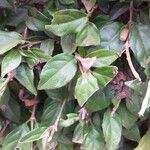
Thunbergia erecta
Bush Clockvine · King's-mantle · Kings mantle · Purple bell · Terumpetan Ungu
Description
Source: leafsnapThunbergia erecta, commonly known as Bush Clock Vine or King's Mantle, is a tropical evergreen shrub in the Acanthaceae family. Native to Africa and Madagascar, it has gained popularity worldwide for its attractive flowers and foliage. This plant can reach up to 2 meters in height and has a bushy growth habit. Its dark green leaves are ovate or lanceolate in shape. The trumpet-shaped flowers, consisting of five petals, come in a variety of colors including white, yellow, orange, pink, or purple, depending on the cultivar. Thunbergia erecta is a favored ornamental plant used in landscaping because of its vibrant blooms, which attract butterflies and hummingbirds. It can be grown either as an annual or perennial, depending on the climate zone. The plant thrives in full sun but can tolerate partial shade. It requires well-drained soil and regular watering during dry periods for optimal growth. In traditional African and Asian medicine, Thunbergia erecta has been used to treat various ailments such as fever, coughs, and colds, due to its anti-inflammatory properties. Overall, Thunbergia erecta is a visually appealing ornamental shrub that enhances any garden with its colorful flowers, while also offering medicinal benefits.
💡 This low-growing, bushy shrub originates from the tropical regions of Africa. It produces an abundance of vividly colored purple flowers. In areas without frost, it acts as a perennial, but it can also be kept in a greenhouse during winter in colder climates. Its dense foliage and stunning blooms make it an excellent choice for a border or hedgerow.
🌳 Although it has an unassuming presence, bush clockvine is a valuable ecological resource. It provides an important source of nectar for pollinators such as bees, butterflies, and hummingbirds, supporting biodiversity. With its deep violet flowers and abundant foliage, bush clockvine is also a popular ornamental plant that enhances the appearance of gardens and public spaces. Its potential extends beyond immediate uses, inviting exploration into areas like essential oils or botanical extracts with pharmaceutical applications.
Care Guide
💧 Water Every 7 days
The bush clockvine, native to tropical West Africa, thrives in environments with high humidity and consistent moisture. To keep it healthy, water the plant every 1-2 weeks, making sure the soil remains moist but not waterlogged. During the growing season, it's important to water carefully to ensure the plant maintains its lush foliage.
How should I water my Bush clockvine plant?
Here are some tips for watering your plants effectively: 1. Place a garden hose near the base of the plant to promote good root development. Avoid spraying the leaves directly, as this can be detrimental. 2. If your plants are outdoors and exposed to direct sunlight, the leaves will require more water. Keep this in mind when watering. 3. Consider using bubblers for each plant to ensure the roots are thoroughly moistened. 4. Soaker hoses are another option, especially for larger garden beds. They can cover the entire area and help the roots grow deeper. Remember to adjust the hose when adding or removing plants. 5. After watering, make sure to drain any excess water and allow the soil to dry before watering again. This helps prevent overwatering. 6. Watering at ground level is best to prevent the occurrence of diseases. 7. On a sunny day, it may be beneficial to spray the entire bush with water. 8. Whether your plant is in a pot or planted in the ground, keep in mind that Bush clockvine prefers deep watering rather than light sprinkling.
What should I do if I give too much or too little water to Bush clockvine?
If an overwatered Bush clockvine begins to show yellow leaves that drop off and wilt, as well as signs of mushy stems, it's important to adjust your watering schedule. Wilting can also be a sign of under watering, indicated by crispy and dry leaves. In such cases, check the soil for dryness and provide a thorough watering. However, even with enough water, the plant may still appear dry with yellow leaves due to root damage. Once the plant recovers, the yellowing leaves will stop. When keeping the Bush clockvine indoors, regularly check the moisture levels and avoid overwatering. If black spots appear, allow the soil to dry out for a few days. Overwatering can lead to root rot, so if discolored and slimy roots are present, consider transferring the plant to a different pot. Take care to prevent root rot and avoid excessively soggy soil. When planting the Bush clockvine outdoors, ensure that the soil is adequately moist. If it is too dry, this may indicate underwatering. In this case, provide sufficient water to aid in the plant's recovery.
How often do I need to water my Bush clockvine?
The Bush clockvine prefers deep watering, especially if planted in pots. Since pots have limited water storage, the soil dries out quicker, so it's essential to water every 3 to 5 days in cold regions. Watering should be done early in the morning when the soil is dry, both for indoor and outdoor plants. To check if watering is needed, you can assess the soil moisture. When the top 2-3 inches of soil are dry, it's time for a full watering. On hot days, monitor the moisture daily to prevent the soil from drying out rapidly. If you have a garden, irrigation is necessary, especially in hot climates. Watering once a week is sufficient when about 2 to 3 inches of soil appear too dry. However, do not water if rainfall is already abundant to avoid root rot. Bush clockvine typically grows during spring and fall, so adding mulch 3 to 4 inches deep around outdoor plants helps conserve water. Sandy soil requires more frequent watering due to faster drainage, while clay soil needs less frequent watering to prevent root rot. To keep track of watering, mark the dates on a calendar and pay attention to drooping leaves, which can indicate that you may need to water sooner.
How much water should I give my Bush clockvine?
The Bush clockvine generally needs about a gallon of water on a regular schedule. For potted plants, water deeply until you see water dripping from the bottom of the pot. Then, wait for the soil to dry before watering again. You can use a water calculator or moisture meter to determine the weekly amount for your plant. Provide plenty of water during the flowering period, but allow the moisture to evaporate afterwards to prevent root rot. If the Bush clockvine is planted outdoors and receives adequate rainfall, it may not need additional watering. When the plant is young or newly planted, ensure it gets 1-2 inches of rain per week. As the Bush clockvine grows, it can rely solely on rainfall. Only when the weather is extremely hot or there has been no rain for 2-3 weeks, consider giving the plant a full watering during the cooler part of the day to prevent heat damage. Additional watering will be necessary during prolonged dry spells.
Do I need to change how often I water my Bush clockvine based on the time of year or the weather?
The Bush clockvine needs to be outdoors and relies on rain for watering, unless it's consistently dry, in which case you should water it. During the spring and fall, keep the soil moist but not soggy, and alternating between dry and moist soil will help it grow well. In the summer, hot weather can cause water to evaporate quickly, so water more frequently and make sure it stays moist if there's a lack of rainfall. During winter, the Bush clockvine needs less water because it drops its leaves and goes dormant. Use well-draining soil like terracotta to help with water evaporation. When it starts leafing out in the spring, you can start watering again. Avoid ponding or drought when it's flowering and make sure there's good drainage at all times, especially in winter. If it's in a pot, water it well, especially in the summer, and provide adequate drainage. Deeply soak the root system once or twice a week, avoiding shallow sprinkling that reaches the leaves. Don't let it dry out completely in the fall or winter, even during dormancy. Avoid excessive watering, as sitting in water for too long can be harmful. Use mulch to lower stress, conserve water, and promote healthy blooms.
☀️ Light Full sun
Bush clockvine flourishes in locations with plentiful sunlight yet can tolerate dappled light. Native to sun-drenched habitats, the plant may experience stunted growth or develop leaf scorch if it lacks adequate light or is exposed to excessively intense light.
What are the sunlight requirements for Bush Clockvine?
Bush Clockvine thrives best in environments with a lavish display of the sun's warmth, requiring full sun conditions of above 6 hours of sunlight daily for optimal growth. However, it can also tolerate partial sun conditions, about 3-6 hours of sunlight. It's essential to watch how sunlight moves through your garden, choosing spots that provide the right balance of light and shade for your plants. Insufficient sunlight or excessive exposure can cause issues like stunted growth or leaf burn, respectively.
How does artificial lighting benefit Bush Clockvine indoors?
Indoor Bush Clockvines require adequate lighting for optimal growth, especially when natural sunlight is insufficient, such as in winter or less sunny spaces. Artificial lights, like LED lights that can be customized to provide specific wavelengths, offer a vital solution. For full sun plants like Bush Clockvine, 30-50W/sq ft of artificial light is recommended, placed 12-36 inches above the plant and turned on for 8-12 hours per day to mimic natural daylight hours and promote faster, healthier growth.
What are the symptoms of inadequate lighting for Bush Clockvine?
Bush Clockvine may show several symptoms when exposed to suboptimal lighting conditions. These include smaller new leaves, leggy or sparse growth, early leaf drop, slower or halted growth, lighter-colored new leaves indicating a lack of chlorophyll, chlorosis (leaf yellowing), sunscald, leaf curling (to minimize water loss and damage from sun), wilting from excessive transpiration, and leaf scorching. These symptoms highlight the plant's struggle in non-ideal light conditions.
What solutions can address light-related issues for Bush Clockvine?
To combat light-related issues in Bush Clockvines, for indoor plants, you can gradually move them to sunnier locations to ensure at least 6 hours of direct sunlight daily or use artificial light (desk or ceiling lamps, grow lights) for at least 8 hours a day if moving the plant isn't feasible. Outdoors, progressively moving plants to sunnier spots while avoiding sudden changes that could cause sunburn is beneficial. Minimizing obstructions (e.g., pruning trees) or transplanting to a better-lit location can also help. Unfortunately, parts of the plant affected by insufficient sunlight may not recover, but new growth should be healthy.
🌡️ Temperature 10–32.2°C
Bush clockvine originates from areas with a temperate climate. It does best in temperatures of 50 to 90 °F (10 to 32 ℃). In winter, move it to a warmer place if temperatures fall below 50 °F (10 ℃).
What are the essential care instructions for Bush clockvine?
Bush clockvine, botanically known as Thunbergia erecta, originates from environments with a temperate climate, thriving best at temperatures between 50 to 90 °F (10 to 32 °C). It possesses strong cold resistance, so special frost protection measures usually aren't required, except in cases where winter temperatures are expected to drop below -25°C. To prepare for winter, it's recommended to move the plant to a warmer location if temperatures are anticipated to drop below 50 °F (10 °C), water the plant abundantly before the first freeze in autumn to ensure the soil remains moist and enters a frozen state. If extremely low temperatures are expected, wrapping the trunk and branches with non-woven fabric or cloth can provide necessary cold protection.
How does low temperature affect Bush clockvine and what can be done?
Bush clockvine is cold-tolerant, performing optimally when temperatures remain above 10°C, and it should be kept in conditions above -15°C during winter. If temperatures fall below -25°C, the plant may not show immediate distress, but come spring, branches may become brittle and dry, and new shoots might fail to emerge. To mitigate this, in spring, prune away any dead branches that have not produced new leaves, facilitating healthier growth.
What should be done if Bush clockvine experiences high temperatures?
In summer, it's crucial to ensure the Bush clockvine doesn't endure temperatures above 32°C. Exposure to temperatures over 35°C may result in lighter-colored leaves, dry and withered tips, and an increased susceptibility to sunburn. To help the plant recover, trim away any sunburned and dried parts. Moving the plant to a shaded location during the midday and afternoon sun or utilizing a shade cloth can also protect it. Additionally, watering the plant in the morning and evening will help keep the soil moist and reduce stress on the plant.
💨 Humidity
🪴 Soil 5-7
🌱 Fertilizer
Timing is vital for fertilizing Bush clockvine. Fertilize in early spring and then monthly through early summer. Fertilizer promotes attractive blooms and supplies energy during both dormant periods and active growth phases.
Why should I put fertilizer on my Bush clockvine?
Fertilizing your Bush clockvine is important for several reasons. One of the most obvious is that it helps the plant produce beautiful blooms. It is best to fertilize in early spring to ensure excellent flowers during the season. Additionally, fertilizer provides the plant with energy that can be stored in the ground during dormant phases. Adding nutrients during fall planting or late spring will help the plant hold more energy for when active growth resumes.
When should I fertilize my Bush clockvine?
Fertilizing Bush Clockvine requires careful timing. If you fertilize too early while the plant is still dormant, the fertilizer won't be effective and will be washed away by rainwater, leading to waste and pollution. To start, apply the first round of fertilizer in early spring. Then, continue fertilizing once a month until early summer.
When is it not a good idea to fertilize my Bush clockvine?
To ensure proper blooming of Bush clockvine, it is important to avoid using fertilizers with excessive nitrogen. These can result in an abundance of leaves but few blooms. Instead, opt for fertilizers with lower nitrogen content compared to other nutrients. Additionally, it is advisable not to fertilize the plant after early autumn, as this may cause excessive growth right before winter. Furthermore, refrain from fertilizing Bush clockvine during hot and dry periods since dry soil does not effectively deliver fertilizer, and stimulating growth at such times may require more water than available. It is best to apply fertilizer during cooler temperatures earlier in the season. Lastly, be mindful that Bush clockvine can absorb fertilizers applied to nearby plants or lawns, so be careful not to unintentionally over-fertilize the plant.
What kind of fertilizer does my Bush clockvine require?
To provide optimal care for your Bush clockvine, it is recommended to use a fertilizer that contains a balanced mix of three main plant nutrients, with slightly higher levels of phosphorus. Alternatively, you can enhance the soil quality for your Bush clockvine by incorporating organic materials like compost, worm castings, or manure. Experienced gardeners may choose to supplement with water-soluble fertilizers containing phosphorus 1-2 times when the flower buds begin to appear. This practice promotes better flower development and ensures larger blooms that last longer. There are various forms of fertilizers available for Bush clockvine, but the most effective ones usually come in liquid or powdered form. Whichever type you select, make sure to dilute the fertilizer and apply it during watering to ensure proper absorption by your Bush clockvine.
How do I help my Bush clockvine grow better?
To properly fertilize your Bush clockvine, it's important to follow specific directions for the type of fertilizer you're using and conduct research on how to apply it. Avoid over-fertilizing, as it can be harmful, so determining the right amount is crucial. Typically, you can use the age of the tree or the trunk diameter as a guide. A general rule of thumb is to apply one-tenth of a pound of fertilizer per year or per inch of trunk, with a maximum of one pound. For granular and organic fertilizers like blood meal, sprinkle them around the tree's base, extending until the drip line (the outermost branches). Be careful not to let the fertilizer touch the trunk. Over time, the granules break down and seep into the soil, where the roots can absorb them. After fertilizing, spread a layer of compost around the base of the tree, about an inch deep, and make sure to thoroughly water it.
🪴 Pot & Repot Every 12 months
The bush clockvine grows best in pots with excellent drainage, which is essential for its healthy growth. Good drainage prevents waterlogging, encouraging strong root development and promoting overall plant vitality.
✂️ Pruning
Bush clockvine is a perennial plant known for its bushy appearance and beautiful blue-violet flowers. To ensure healthy growth and a vibrant display throughout the growing season, it's important to prune the plant in early spring. Start by removing any damaged stems, and then shape the plant to improve growth, air circulation, and light penetration. Regular pruning not only helps control the plant's size but also maintains its form.
🌿 Propagating
🐛 Diseases & pets
☠️ Toxicity
Characteristics
- Plant Type
- Vine, Shrub
- Life Cycle
- Perennial
- Genus
- Thunbergia
- Family
- Acanthaceae
- Hardiness Zone
- 6-8
- Mature Height
- 2.44 m
- Mature Spread
- 1.52 m to 2.44 m
- Leaf Color
- Green
- Leaf Type
- Evergreen
- Flower Color
- Purple
- Flower Size
- 2.54 cm to 5.08 cm
- Bloom Time
- All year round
- Planting Time
- Spring, Autumn
- Harvest Time
- Spring, Summer, Fall
- Native Area
- Rwanda, Nigeria, Guinea-Bissau, Uganda, Tanzania, Benin, Sierra Leone, Cameroon, Liberia, Ghana, Central African Republic, Congo, Sudan, Guinea, Chad, Senegal, Côte d'Ivoire, Congo (DRC), Gabon