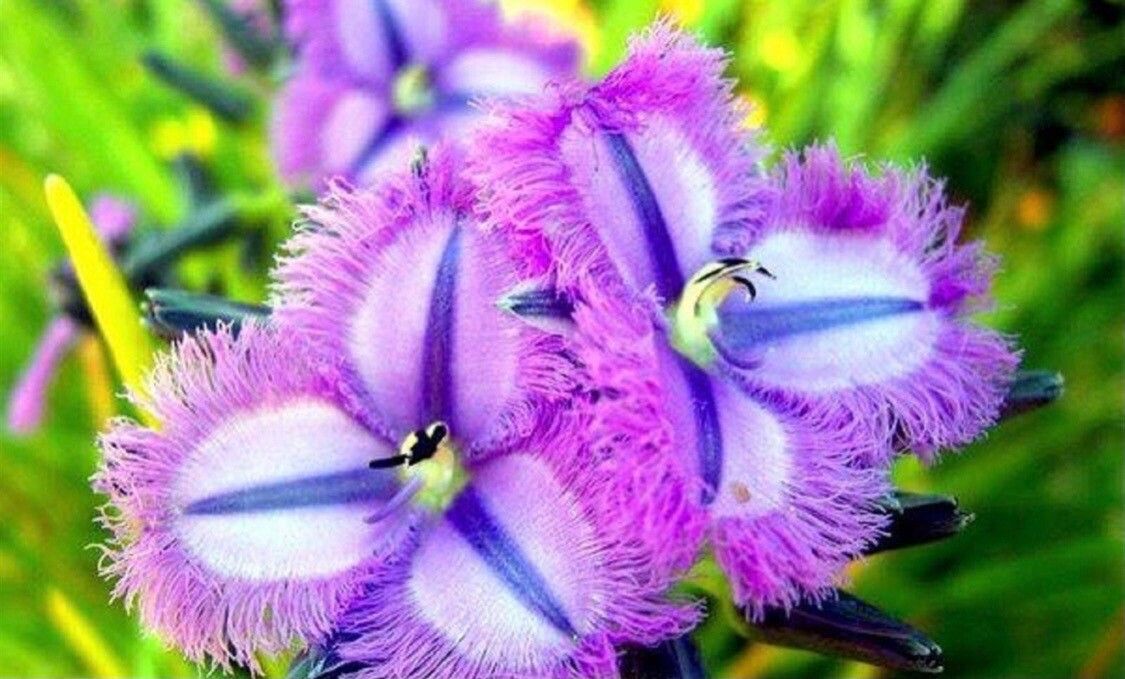
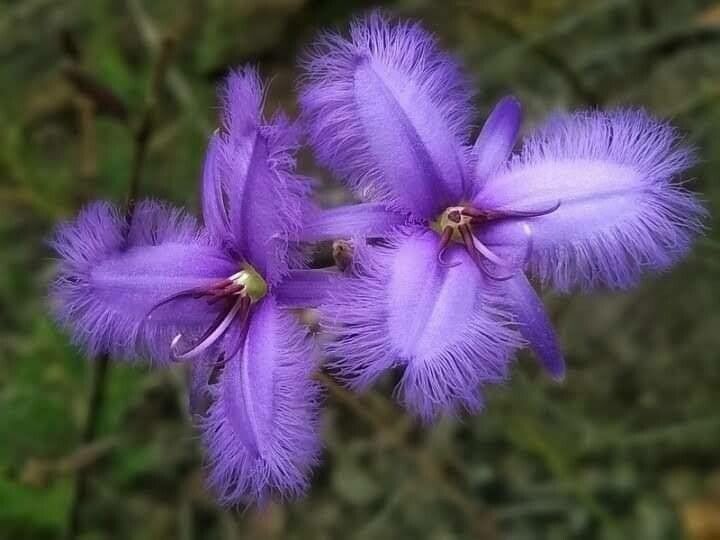
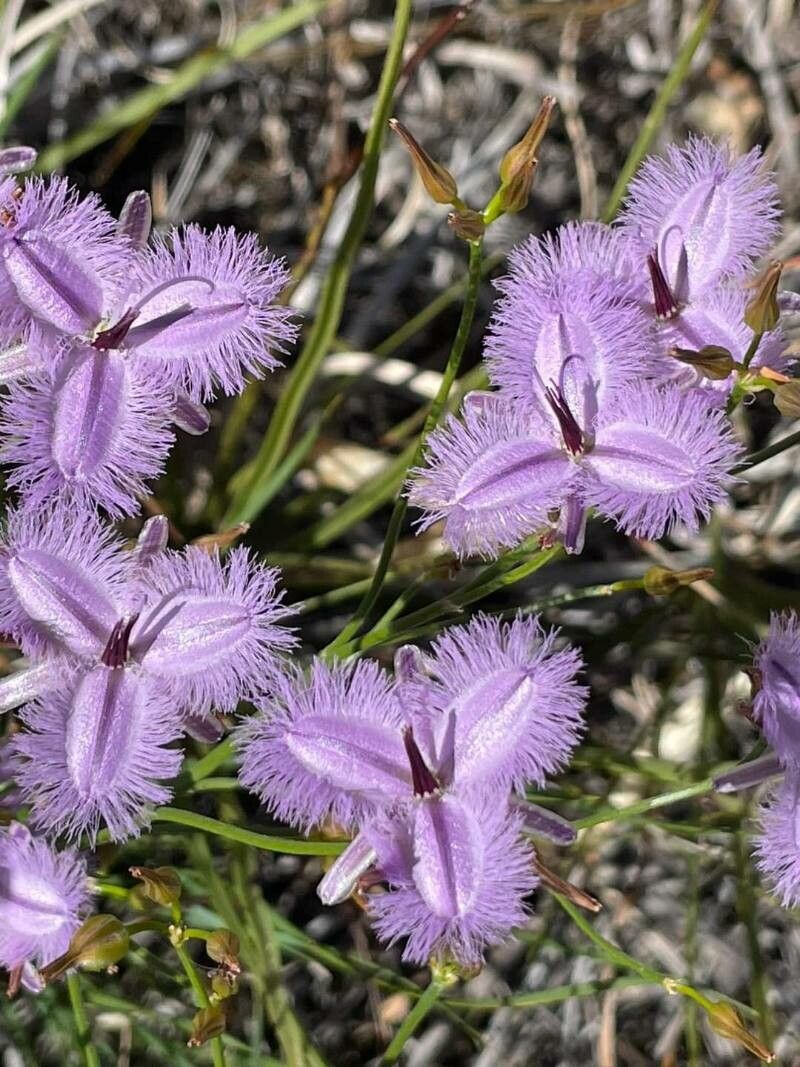
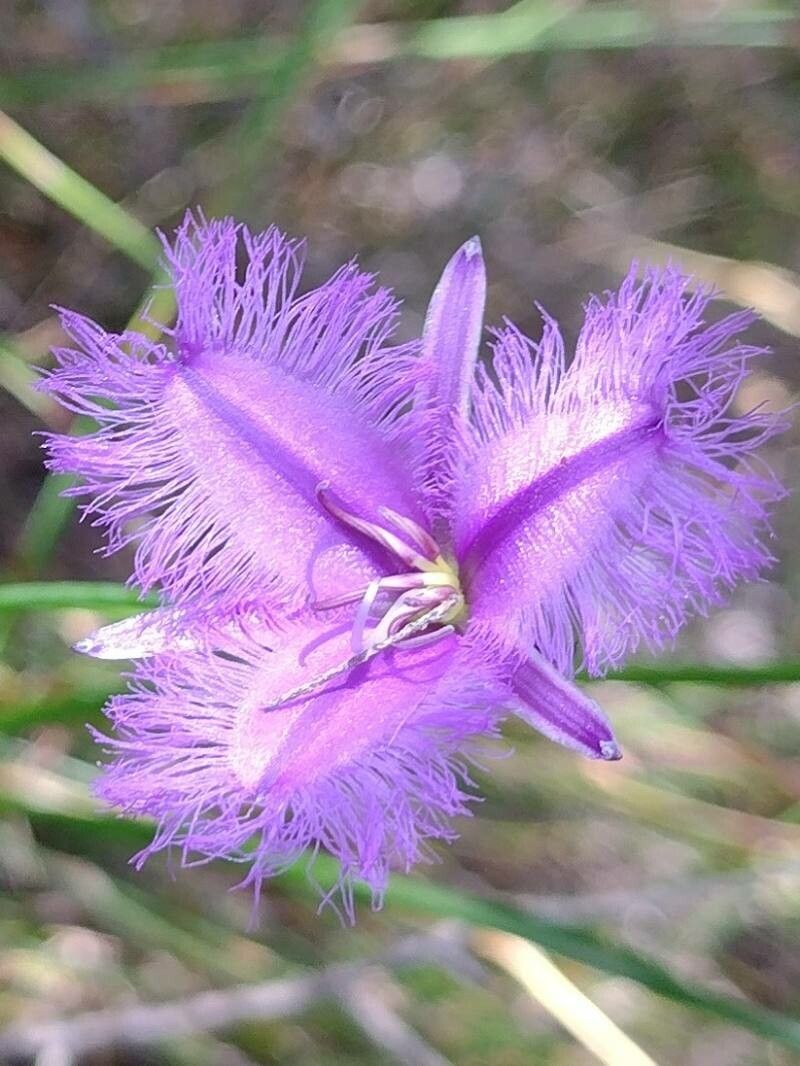
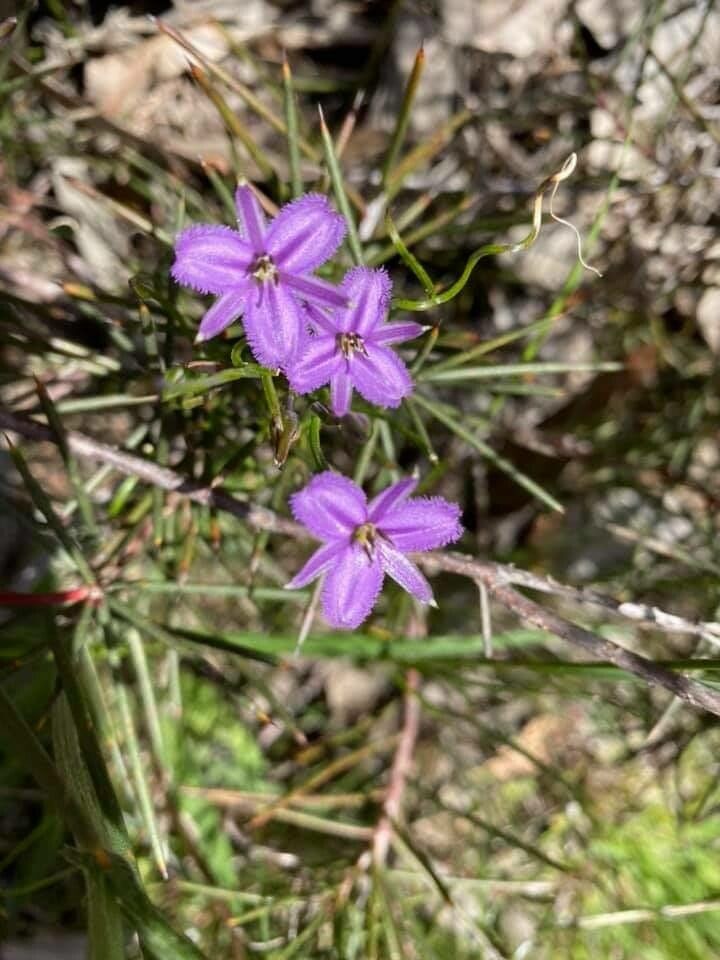
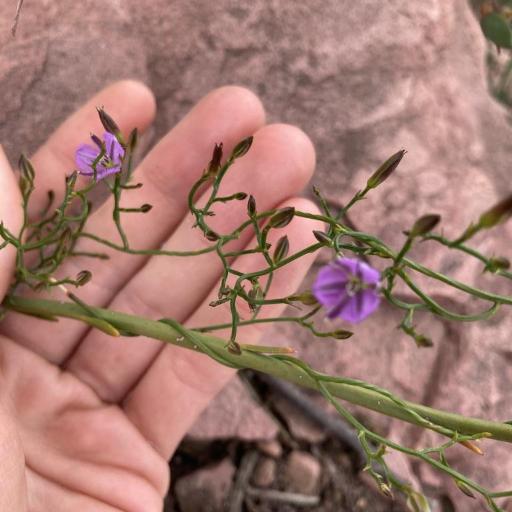
Thysanotus tuberosus, known as the common fringe-lily is a perennial herb which is endemic to Australia. The species name tuberosus refers to the crisp tasting edible root.The leaves are linear in shape, and round at cross section towards the top. The plant grows from 20 cm to 60 cm tall. It grows in a wide variety of situations, from semi-arid parts of south eastern Australia to coastal areas receiving more than 1300 mm of rain per year. They are often found in open country, heathlands or in dry sclerophyll woodland.Flowers form from September to April. The three petaled flowers are purple, with frilly edges, and only last for one day. They are among the more colorful wildflowers in south eastern Australia.
Common fringe-lily is fairly disease-resistant and usually not prone to illness. However, it can be affected by pests and diseases present in its environment. These problems are typically mild. For care, the plant needs moderate maintenance. It should be pruned regularly to keep a tidy appearance and healthy growth. Fertilizing can also encourage flowering. Common fringe-lily is well suited to anyone with outdoor space, such as a garden or patio, and does not demand extensive plant-care experience. It may need more attention if grown indoors.
How to keep Thysanotus Tuberosus.
Light
The common fringe-lily grows best when exposed to abundant sunlight throughout the day, although it can tolerate somewhat shadier conditions. It is typically found in habitats with plentiful sun exposure. Too little light can limit its growth, while too much can scorch its foliage.
Water
The common fringe-lily thrives with moderate watering, generally needing water every 1–2 weeks. It is often cultivated outdoors, where it benefits from natural rainfall without requiring excessive moisture. This adaptation enables the common fringe-lily to align its growth with the availability of water, ensuring efficient use of resources.
Temperature
Common fringe-lily can tolerate a wide range of temperature conditions, but its distribution may still be limited by various combinations of water and heat. It does best in warm summer climates with adequate rainfall or watering. Extended periods of cloudy, rainy weather or prolonged high temperatures can increase the likelihood of Common fringe-lily dying. In winter, proper protection against cold can improve the plant's survival rate.
Fertilizer
The best time to fertilize Common fringe-lily is in early spring while the flowers are forming. Using the right fertilizer promotes better blooms and helps Common fringe-lily produce attractive flowers. Fertilizing in early spring ensures excellent flowers through the season and provides energy for dormant growth phases.
Pruning
The Common Fringe-lily is known for its delicate, purple flowers with fringed edges. To maintain its health and appearance, prune it between early and late spring to remove any dead foliage and promote new growth. Be cautious not to prune too heavily, as this plant grows slowly. Regularly remove spent blooms to encourage prolonged flowering and improve the plant's overall vitality.
Botanical profile.
- Plant Type
- Herb
- Life Cycle
- Perennial
- Genus
- Thysanotus
- Family
- Asparagaceae
- Hardiness Zone
- 9-11
- Mature Height
- 61 cm
- Mature Spread
- 15 cm
- Leaf Color
- Green
- Leaf Type
- Semi-evergreen
- Flower Color
- White, Pink, Purple, Lavender, Mauve
- Flower Size
- 2.54 cm
- Bloom Time
- Mid spring, Late spring, Early summer
- Planting Time
- Spring, Summer, Autumn
- Harvest Time
- Summer
Other names.
Reader questions.
What are the sunlight requirements for the Common Fringe-lily?
The Common Fringe-lily, or Thysanotus tuberosus, thrives best under ample sunlight, requiring more than 6 hours of sunlight for 'Full sun' conditions and about 3-6 hours for 'Partial sun' conditions. Observing how sunlight moves through your garden to find the perfect balance of light and shade is crucial for ensuring the plants' optimal growth and health.
How does inadequate sunlight affect the Common Fringe-lily?
Inadequate sunlight can impact the Common Fringe-lily's growth significantly. Symptoms of light deficiency include small leaves, leggy or sparse growth, faster leaf drop, slower or no new growth, and irregular color patterns or paler leaves indicating a lack of chlorophyll and essential nutrients. Conversely, excessive sunlight can lead to chlorosis, sunscald, leaf curling, wilting, and leaf scorching, which damage the plant's health.
What solutions are available for Common Fringe-lily experiencing light issues?
To address light issues for Common Fringe-lily, gradually increase sunlight exposure to at least 6 hours daily by moving the plant to a sunnier location each week. For indoor plants that can't be moved easily or are large, consider using artificial light, keeping a lamp on for at least 8 hours daily or investing in professional grow lights. Outdoors, gradually acclimate plants to sunnier spots to avoid sunburn. If necessary, prune trees to reduce shade or transplant smaller plants during their dormant period to a location with better sunlight and drainage. Note that parts of the plant affected by insufficient light may not recover, but new growth will be healthy following improved light exposure.
Can artificial lighting be used for Common Fringe-lily and what are some tips?
Yes, artificial lighting can be a vital solution for the Common Fringe-lily, especially when natural sunlight is insufficient, like in winter or less sunny spaces. LED lights are recommended because they can be customized to provide specific wavelengths needed by plants. Full sun plants require 30-50W/sq ft, partial sun plants 20-30W/sq ft, and full shade plants 10-20W/sq ft of artificial light. The light source should be placed 12-36 inches above the plant to mimic natural sunlight, with a duration mimicking natural daylight hours, usually 8-12 hours per day, for optimal growth.