Tigridia pavonia
Mexican shellflower · Peacock-flower · Tiger-flower · Common tiger flower
Description
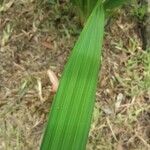
Source: leafsnapTigridia pavonia is a species of flowering plant in the iris family Iridaceae. Common names include jockey's cap lily, Mexican shellflower, peacock flower, tiger iris, and tiger flower. This summer-flowering bulbous herbaceous perennial is widespread across much of Mexico, Guatemala, El Salvador, and Honduras. It is naturalized in Ecuador and Peru.The leaves are narrow and lance-shaped. The three-petalled blooms occur in a variety of colours with strongly contrasting central markings. They open early in the morning and close before dusk. Blooms are successional throughout summer. Plants bloom in the first year after sowing.Tigridia pavonia is cultivated as an ornamental plant. It prefers a sheltered position in full sun, in sandy but fertile soil. As it is only hardy to 5 °C (41 °F), in colder areas bulbs should be lifted and stored throughout the winter months.The roasted bulbs are edible and have been used by the American Indians and Indigenous peoples of Mexico. It has a chestnut-like flavour.The aphid Aphis newtoni may be found on this plant.
🌳 The tiger flower is more than just visually attractive; it also has an important ecological role by drawing pollinators. With its bright colors and bold patterns, the flower acts as a signal to bees, butterflies, and birds, which are vital for pollinating many other plant species and thus help sustain biodiversity.
🎭 Brutality
Care Guide
💧 Water Every 7 days
The tiger flower thrives in tropical environments, where it prefers consistent moisture and high humidity. To maintain optimal health, it should be watered weekly, although it can tolerate brief dry periods. In garden settings, the tiger flower flourishes best when the soil has balanced moisture levels, which aligns with the start of its growing season.
☀️ Light Full sun
Tiger flower prefers spots that get continuous sunlight, although it can tolerate locations with reduced sun. Excessive sun can lead to problems like dehydration, while inadequate light can hinder growth. Coming from regions with plentiful sunshine, its vigorous development at every stage needs ample light.
What are the sunlight requirements for Tiger Flower?
Tiger Flower, or Tigridia pavonia, needs significant sunlight exposure to thrive optimally. It requires full sun for more than 6 hours a day or partial sun for about 3-6 hours. It's important to monitor the movement of sunlight through your garden to ensure your plants receive the perfect balance of light and shade, promoting their health and happiness.
How does sunlight affect the growth and health of Tiger Flower?
Sunlight plays a crucial role in the health and growth of Tiger Flower, as it originates from habitats with abundant sunshine. Constant exposure to the sun is ideal, though the plant can tolerate some shade. Both overexposure and insufficient sunlight can negatively impact the plant; overexposure may lead to dehydration, while insufficient light can stunt growth. For indoor plants, especially in less sunny spaces or during winter, artificial lighting can be used to mimic natural sunlight, supporting optimal growth. LED lights are recommended for their ability to provide the specific wavelengths of light that plants need.
What symptoms indicate insufficient sunlight for Tiger Flower?
When Tiger Flower receives inadequate sunlight, several symptoms can manifest. These include the growth of smaller leaves compared to previous ones, leggy or sparse growth, accelerated leaf drop, halted or entirely stopped growth, lighter-colored new leaves, and chlorosis. Excessive sunlight can cause its own set of issues, such as sunscald, leaf curling, wilting, and leaf scorching, showing the plant's distress toward environmental conditions.
What are some solutions for Tiger Flower suffering from insufficient sunlight?
To combat insufficient sunlight for Tiger Flower, gradual relocation to a sunnier spot is advised to ensure adaptation without sunburn. For indoor plants, this entails moving them closer to a south-facing window or using artificial lighting, like desk lamps or grow lights, to provide at least 6 hours of direct sunlight daily. Outdoors, minimizing obstructions and possibly transplanting to a brighter location during the plant's dormant period can enhance sunlight exposure. While parts of the plant that have already suffered might not recover, new growth will be healthy with improved light conditions.
🌡️ Temperature 20–37.8°C
The native habitat of tiger flower includes areas where the average temperature ranges from 68 to 100 ℉ (20 to 38 ℃). Tiger flower prefers temperatures within this range and can tolerate occasional temperature drops down to 50 ℉ (10 ℃) in winters. During summers, it is recommended to provide shade or water regularly to cope with temperatures exceeding 100 ℉ (38 ℃).
What is the ideal temperature range for Tiger Flower growth?
The Tiger Flower thrives in an environment where the average temperature ranges between 68 to 100°F (20 to 38°C). This heat-loving plant prefers these temperatures and can endure short periods of cold, withstanding temperatures down to 50°F (10°C) during winter. To encourage its growth, maintaining a temperature above 20°C in colder seasons is essential, as temperatures near 5°C could be harmful to the plant. In areas with hot summers where temperatures exceed 100°F (38°C), providing shade or watering regularly is key to helping the plant cope with the heat.
How should I care for a Tiger Flower during winter?
In the autumn and winter months, it is advised to bring outdoor-grown Tiger Flowers indoors to protect them from cold temperatures. Placing them near a bright window helps ensure they receive enough light but keep them at a safe distance from heaters to avoid heat stress. The ideal winter care strategy involves maintaining ambient temperatures above 20°C (68°F), aiding the plant's continued growth and preventing damage from cold exposures.
What are the symptoms of temperature stress in Tiger Flowers and how can I manage them?
Tiger Flowers exhibit different symptoms under temperature stress. For cold stress, symptoms include a lightening of leaf color when temperatures fall below 1°C, progressing to brown or black as frost damage worsens, accompanied by wilting and drooping. Managing cold stress involves trimming frost-damaged parts and moving the plant to a warmer, well-lit indoor location, avoiding harsh dry air from heaters or air conditioning. For heat stress, leaves may lighten and become prone to sunburn if temperatures rise above 43°C. Mitigate heat stress by trimming away sun-damaged parts, relocating the plant to a shaded area during peak sun hours, and maintaining soil moisture with regular watering in cooler morning and evening times.
💨 Humidity
🪴 Soil 6-7
🌱 Fertilizer
Correct feeding is essential for the Tiger flower’s health and appearance. Fertilize the Tiger flower in summer, applying fertilizer once a month throughout the season. Nutrients fuel growth and support the plant’s structures. Regular fertilization improves the Tiger flower’s floral display, ensuring its best blooms.
🪴 Pot & Repot Every 12 months
Repot Tiger flower in early spring. Choose a pot that is wider than it is deep and has good drainage. Use a well-draining, loamy potting mix amended with compost. Gently remove old soil from the bulb and plant it at a depth equal to the bulb's height. Water thoroughly after repotting and place the pot in a sunny spot. Avoid overwatering to prevent bulb rot.
✂️ Pruning
Prune tiger flowers in early to late spring to remove any dead or damaged leaves, which will help enhance growth and flowering. Removing spent flowers redirects energy back to the bulb. Be careful not to cut into the bulbs, as this can inhibit growth. By aligning your pruning with the tiger flower's natural growth cycle, you can encourage vigorous blooms.
🌿 Propagating
🐛 Diseases & pets
☠️ Toxicity
Characteristics
- Plant Type
- Herb
- Life Cycle
- Perennial
- Genus
- Tigridia
- Family
- Iridaceae
- Hardiness Zone
- 10-12
- Mature Height
- 91 cm
- Mature Spread
- 15 cm
- Leaf Color
- Green
- Leaf Type
- Deciduous
- Flower Color
- Red, Orange, Yellow
- Flower Size
- 7.62 cm to 10.16 cm
- Bloom Time
- Mid summer
- Planting Time
- Spring
- Harvest Time
- Mid summer
- Native Area
- Honduras, Mexico, Guatemala