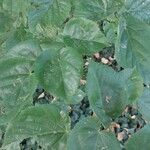
Tilia mandshurica
Manchurian linden · Manchurian lime
Description
Source: leafsnapTilia mandshurica, the Manchurian linden or Manchurian lime, is a species of flowering plant in the family Malvaceae, native to China, the Korea Peninsula, Japan, and the Russian Far East. It is used as a street tree in its native range, and has potential elsewhere, but is susceptible to damage from late frosts.
🌳 The manchurian linden is valued not only for its visual charm but also for its wide range of uses. Beekeepers prize it for its plentiful nectar, which bees convert into honey with a distinctive flavor. Woodworkers seek out manchurian linden timber because of its durability and ease of working, making it an excellent choice for producing high-quality furniture. Additionally, its inner bark has long been used in some cultures for making fibers.
Care Guide
💧 Water
The Manchurian linden flourishes in regions that experience distinct seasonal changes. It needs moderate moisture and can tolerate occasional dry spells. To care for it, water the plant every 2–3 weeks, ensuring the soil dries out slightly between waterings. During the growing season, it's important to provide sufficient water to support healthy leaf development and the plant's overall well-being.
☀️ Light Full sun
Manchurian linden is native to open habitats, like sunlit meadows and forest margins, which supply plenty of light. It does best in Full Sun but can also tolerate Partial Sun, adjusting well to different light conditions.
What are the sunlight requirements for Manchurian linden?
Manchurian linden thrives in full sun, requiring more than 6 hours of sunlight daily, but it can also tolerate partial sun, which means about 3-6 hours of sunlight. Originating from sunny meadows and forest edges, it adapts well to various sunlight conditions, making it versatile for garden spots with different light exposures. Remember to watch how sunlight moves through your garden to choose spots that provide a balance of light and shade, ensuring the plant's happiness.
How do I use artificial lighting for Manchurian linden indoors?
When natural sunlight is insufficient, especially during winter or in less sunny spaces, artificial lighting becomes crucial for Manchurian linden's growth. Opt for LED lights, which can provide specific wavelengths needed by your plants. For full sun plants, 30-50W/sq ft is recommended, partial sun plants require 20-30W/sq ft, and full shade plants 10-20W/sq ft. Ensure the light source is 12-36 inches above the plant, and mimic natural daylight hours, typically 8-12 hours per day, to promote healthier, faster growth.
What symptoms indicate Manchurian linden is receiving insufficient light?
Symptoms of insufficient light for Manchurian linden include smaller new leaves, leggy or sparse growth, faster leaf drop, slower or no new growth, lighter-colored new leaves, chlorosis (yellowing leaves due to chlorophyll breakdown), sunscald (pale, bleached areas on leaves or stems), leaf curling, wilting, and leaf scorching. These symptoms suggest the plant is struggling with the light conditions it's in, requiring adjustment to its environment or care routine.
What solutions can help improve light conditions for Manchurian linden?
To improve light conditions for Manchurian linden, gradually move your plants to a sunnier location each week, aiming for at least 6 hours of direct sunlight daily. Indoors, use a south-facing window or consider artificial lighting, keeping lamps on for at least 8 hours daily. Outdoors, adapt your plants to sunlight changes gradually to avoid sunburn. If necessary, prune obstructions like tree branches to increase sunlight exposure. For smaller plants, consider transplanting during their dormant period to a location with better light and drainage.
🌡️ Temperature 0–25°C
Manchurian linden originates from areas with a wide temperature range, performing well in conditions between 32 and 77 °F (0 to 25 ℃). With seasonal changes, small adjustments to mimic its native temperature conditions may promote better growth.
What are the ideal temperature conditions for Manchurian linden?
Manchurian linden (Tilia mandshurica) thrives in a wide range of temperatures, ideally between 32°F and 77°F (0°C and 25°C). It is extremely tolerant of cold weather and requires no special frost protection. Nonetheless, it's beneficial to slightly adjust its surroundings to match the seasonal temperature changes of its native habitat to promote optimal growth. Before the onset of winter's first freeze, it is advised to water the plant thoroughly to ensure the soil is moist as it freezes, which helps in preventing drought stress during the colder months.
What should I do if the temperature drops below -35°C for Manchurian linden?
Manchurian linden is highly resistant to cold temperatures but should ideally not be exposed to temperatures below -35°C. If it does experience such low temperatures, while there might not be immediate visible damage in winter, the plant could exhibit brittleness and dryness in its branches come spring, with no new shoots appearing. In response, it's recommended to prune away any dead branches that have not produced new leaves to encourage healthy growth and recovery.
How does Manchurian linden react to high temperatures, and what are the solutions?
Manchurian linden is not tolerant of high temperatures, especially those exceeding 25°C. Under such conditions, the plant may suffer significant leaf drop, and in extreme cases, it might wither and die entirely. To combat this, one should trim any sunburned or dried parts of the plant. Additionally, relocating the plant to a shaded location or using a shade cloth to protect it from direct midday and afternoon sun can be beneficial. Ensuring the soil remains moist by watering in the mornings and evenings will also help the plant cope with the stress of high temperatures.
💨 Humidity
🪴 Soil 5-7
🌱 Fertilizer
Timing is critical when fertilizing Manchurian linden. Apply fertilizer in early spring and repeat monthly until early summer. Fertilizer encourages attractive blooms and provides energy both during dormancy and throughout active growth.
🪴 Pot & Repot
✂️ Pruning
The Manchurian linden is a deciduous tree known for its heart-shaped leaves and fragrant yellowish-white flowers. To promote healthy growth, prune the tree in early spring by removing any dead or overcrowded branches. However, be careful not to over-prune, as this can stress the tree.
🌿 Propagating
🐛 Diseases & pets
☠️ Toxicity
Characteristics
- Plant Type
- Tree
- Life Cycle
- Perennial
- Genus
- Tilia
- Family
- Malvaceae
- Hardiness Zone
- 3
- Mature Height
- 20.12 m
- Mature Spread
- 10.06 m to 14.94 m
- Leaf Color
- Green, Dark Green
- Leaf Type
- Deciduous
- Flower Color
- Yellow, Green
- Flower Size
- 0.76 cm to 0.76 cm
- Bloom Time
- Early summer, Mid summer
- Planting Time
- Spring, Autumn
- Harvest Time
- Mid summer
- Native Area
- Russia, Japan, Koppen, South Korea, China