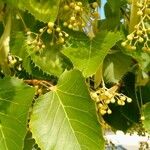
Tilia mongolica
Mongolian lime · Mongolian Linden
Description
Source: leafsnapTilia mongolica Maxim., commonly known as Mongolian lime, is a tree native to mountains of the northern China, growing up to elevations of 1200–2200 m.
Care Guide
💧 Water
The Mongolian lime flourishes in moderate humidity and occasional rainfall. It can endure short periods of drought, needing watering every two weeks. When grown outdoors in temperate regions, it follows a seasonal growth cycle and requires less water during its dormancy in the colder months.
☀️ Light Full sun
Mongolian lime is native to open habitats like sunny meadows and the edges of forests, which supply abundant light. It does best in full sun but can also tolerate partial sun, adapting well to different light conditions.
What are the sunlight requirements for Mongolian lime (Tilia mongolica)?
Mongolian lime (Tilia mongolica) thrives in various sunlight conditions. For 'Full sun', it requires more than 6 hours of sunlight daily. If the aim is for 'Partial sun', about 3-6 hours of sunlight per day is sufficient. It's important to observe how sunlight moves through your garden to ensure you pick the perfect spot. This balance guarantees that your plants stay happy by receiving the right amount of light and shade.
🌡️ Temperature 0–32.2°C
Mongolian lime is highly adaptable to a variety of climatic conditions, from blistering summers to freezing winters. Nevertheless, it has an optimal temperature range for growth. If temperatures become too high, the plant is vulnerable to heat and humidity stress, which can lead to its death. In areas where temperatures approach the lower edge of its cold tolerance, it is necessary to use insulation to protect the plant.
💨 Humidity
🪴 Soil 6-7
🌱 Fertilizer
The timing of fertilizing a Mongolian lime is important. Apply fertilizer in early spring and continue doing so monthly until early summer. Fertilizer encourages attractive blooms and provides energy during both dormant and active growth periods.
🪴 Pot & Repot
✂️ Pruning
Mongolian lime trees boast heart-shaped leaves and fragrant flowers. To maintain their health, prune them in early spring by removing dead wood, thinning crowded branches to improve air circulation, and shaping the crown. This encourages healthy growth and helps prevent disease. Avoid heavy pruning late in the season. For the best results, consult horticultural resources for guidance on best practices.
🌿 Propagating
🐛 Diseases & pets
☠️ Toxicity
Characteristics
- Plant Type
- Tree
- Life Cycle
- Perennial
- Genus
- Tilia
- Family
- Malvaceae
- Hardiness Zone
- 3-7
- Mature Height
- 14.94 m
- Mature Spread
- 11.89 m
- Leaf Color
- Yellow, Green
- Leaf Type
- Deciduous
- Flower Color
- White, Yellow
- Flower Size
- 0.51 cm to 0.76 cm
- Bloom Time
- Early summer, Mid summer
- Planting Time
- Spring, Summer
- Harvest Time
- Late summer, Early fall, Mid fall
- Native Area
- China