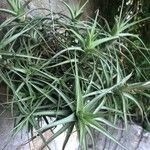
Tillandsia aeranthos
Air Plant · Tillandsia
Description
Source: leafsnapTillandsia aeranthos, commonly known as the air plant, is an epiphytic species belonging to the Bromeliaceae family. Native to South America, it thrives in countries like Brazil, Uruguay, and Argentina. The plant boasts a distinctive look with its long, slender leaves that form a rosette. These leaves are green or grayish-green, covered with small scales. One of the most fascinating characteristics of Tillandsia aeranthos is its ability to absorb nutrients and moisture from the air through specialized trichomes on its leaves. This feature makes it an ideal houseplant since it does not require soil for growth. The flowers of Tillandsia aeranthos are also remarkable, with bright pink or purple hues that create a stunning contrast against the green foliage. Blooming from late spring through summer, these flowers attract pollinators such as hummingbirds. Tillandsia aeranthos can be grown either indoors or outdoors, depending on your climate zone. It prefers bright, indirect light for optimal growth but can tolerate some shade. As an epiphytic plant, it does not need regular watering like traditional plants but should be misted occasionally to maintain hydration. Overall, Tillandsia aeranthos is an easy-to-care-for houseplant that adds unique beauty to any space with its intriguing appearance and vibrant blooms during the flowering season.
Care Guide
💧 Water Every 7 days
The air-flowered air plant thrives in humid environments and needs to be watered weekly to stay healthy. As an air plant, it absorbs moisture directly from the air, making it ideal for indoor spaces with high humidity.
What do I do if I give too much water to my Air-flowered air plant?
Overwatering can be harmful to Air-flowered air plants because their stems and leaves are susceptible to rotting. Unlike other plants, overwatering for Air-flowered air plants primarily affects the center of the leaves, causing them to become waterlogged. This trapped water can suffocate the leaves and create an environment for microorganisms to thrive. Unfortunately, overwatering is the main cause of these houseplants dying. However, if Air-flowered air plants are maintained outdoors, they are less likely to experience overwatering issues due to better ventilation. The symptoms of overwatering in Air-flowered air plants include darkening of the base and mushy roots. The leaves will also turn yellow and eventually fall off. If you notice any signs of overwatering, it is important to remove any dead or dying parts of the plant and allow it to thoroughly dry. Placing the plant on a dry surface with good air circulation, such as using a fan, can be beneficial. If the rot continues to spread, the Air-flowered air plant will eventually die.
What do I do if my Air-flowered air plant doesn't get enough water?
You should water the plant when you notice wrinkles or when the leaves roll up and stay loose. If the plant is severely underwatered, the leaf tips may dry out and turn brown. An underwatered air-flowered air plant will look droopy instead of sharp, but it can be revived with continuous spraying or soaking. However, once the leaf tips have dried out and turned brown, they cannot be saved, so it's important to establish a proper watering schedule.
How often should I water an Air-flowered air plant?
To properly care for your Air-flowered air plant, you should generally mist it three or four times a week. However, if you live in a particularly dry area or if your plant is in need of more water, you will need to increase the frequency of watering. One recommended method is to soak the plant in a bowl of water for 30 minutes to 1 hour every 1-2 weeks. In the spring and fall, it is common for people to soak their plants once a week, while in the summer the frequency may be higher, and in the winter, it may be lower. Of course, the exact watering schedule may vary in different cities, but overall the differences aren't significant. These plants are generally easy to care for, and as you become more familiar with their needs, you can establish a personalized watering routine that suits them best.
How should I water an air plant with air flowers?
Air-flowered air plants absorb water through their leaves, which in the wild is collected from condensation at night. As a houseplant, you can simulate this process by misting the leaves with water. Be careful not to over spray and avoid letting water accumulate in the center of the leaves, as this can promote the growth of harmful bacteria and suffocate the leaves. Ideally, mist the plant at night using unchlorinated water, such as rainwater or stream/lake water, for best results. Distilled water is not recommended for long-term use as it lacks necessary minerals and nutrients. Alternatively, you can water the plant by soaking it for 30 minutes to an hour. After soaking, make sure to dry the air plant completely, either by placing it on its side or upside down on a paper towel or dry dish towel for about 2 hours. More frequent soaking is required in the summer and in dry locations. It's also important to maintain water temperature between 60 and 80 degrees Fahrenheit. If the water temperature is not suitable, allow the water to come to room temperature before watering the plant. You'll know it's time to water the plant when it appears wrinkled, the leaves roll and remain loose, or the leaf tips dry out and turn brown. Underwatered plants may appear droopy, but they can be revived through continuous spraying or soaking. Once the leaf tips turn brown, they cannot recover, so it's crucial to establish a proper watering schedule. The watering frequency may also be influenced by environmental factors. Air-flowered air plants thrive in humid and warm conditions, so if you live in a dry climate or use air conditioning that reduces humidity, you may need to water more often. Warmer temperatures in spring and summer also require more water, while high humidity reduces the need for frequent watering. Additional tips include using a humidifier or pebble tray to increase ambient humidity and ensuring adequate air circulation in the room.
How does the Air-flowered air plant get water when it's growing naturally?
Air-flowered air plants absorb moisture from the humid air in their natural habitat. When caring for them as houseplants, it is important to water them in a way that mimics their wild environment. Instead of using traditional flower pots, these plants prefer rocky soil and can even thrive when attached to surfaces. Some popular options for displaying Air-flowered air plants include coconut shells, large seashells, or wireframes.
☀️ Light Partial sun
The air-flowered air plant comes from habitats such as forest understories where natural shade is present. It favors partial sun but can tolerate full sun if required.
What are the sunlight requirements for Air-flowered air plant?
The Air-flowered air plant, scientifically known as Tillandsia aeranthos, prefers partial sun, receiving about 3-6 hours of sunlight a day but can tolerate full sun, which is above 6 hours of sunlight. It's pivotal to watch how sunlight moves through your garden to find the perfect balance of light and shade that ensures the plant's happiness.
What are the essentials for growing an Air-flowered air plant?
Originating from environments like forest understories that offer natural shade, the Air-flowered air plant thrives best in partial sun. In scenarios where natural sunlight is insufficient, especially during winter or in less sunny spaces, artificial lighting serves as an excellent alternative. LED lights are recommended due to their ability to provide specific wavelengths needed for optimal growth. The required artificial light intensity varies with plant type: 30-50W/sq ft for full sun plants, 20-30W/sq ft for partial sun plants, and 10-20W/sq ft for full shade plants. The light should be positioned 12-36 inches above the plant and be kept on for 8-12 hours per day to mimic natural sunlight duration.
What symptoms indicate a light deficiency in an Air-flowered air plant?
Symptoms of light deficiency in the Air-flowered air plant include small or immature leaves compared to older ones, leggy or sparse growth, faster leaf drop, slower or halted new growth, and lighter-colored or pale new leaves. Excessive sunlight exposure can cause chlorosis, where leaves lose their green color and turn yellow, sunscald with pale or necrotic areas on plant tissue, leaf curling as a defense against water loss, wilting from oppressive transpiration, and leaf scorching signified by brown, dry edges on leaves. These symptoms highlight the plant's struggle in inappropriate lighting conditions.
What are the solutions for light-related issues in an Air-flowered air plant?
To address light-related issues in an Air-flowered air plant, begin by gradually acclimating the plant to sunlight. If indoors and the plant is large or immovable, use artificial lighting, such as desk lamps or professional grow lights, and ensure it's on for at least 8 hours daily. For outdoor plants, relocate them to sunnier spots weekly to prevent sunburn. If plants are ground-placed and experiencing light obstruction, prune nearby trees or transplant smaller plants during their dormant period in late winter or early spring to areas with ample sunlight and good drainage. It's important to note that parts of the plant damaged by insufficient sunlight may not recover, but new growth should be healthy with improved light conditions.
🌡️ Temperature 20–37.8°C
The air-flowered air plant does well in warm conditions. If ambient temperatures fall too low, the plant may stop growing or sustain frost damage. It tolerates high heat and humidity and needs a steady level of moisture in its surroundings. However, very high temperatures and humidity can make it vulnerable to fungal infections. In dry environments, regular watering and misting are needed to keep the air humidity adequate. The plant is sensitive to sudden temperature changes, so maintaining a fairly stable temperature is important.
What are the ideal conditions for an Air-flowered air plant (Tillandsia aeranthos)?
The Air-flowered air plant thrives in warm, humid environments and requires a consistent level of moisture. It has a strong tolerance for high temperatures and prefers being in a tropical climate. The plant should be kept in conditions where temperatures are above 20°C, avoiding sudden temperature fluctuations to ensure its health. During winter, indoor cultivation is recommended if the temperature drops below 5°C, preferably near a south-facing window for sufficient sunlight. The plant should not be placed near heaters or air conditioners to avoid excessive dryness. Regular watering and misting are essential in dry conditions to maintain humidity.
How should you care for an Air-flowered air plant during low temperature?
During low temperatures, especially below 5°C, it's crucial to move the Air-flowered air plant indoors to a warmer environment, preferably near a south-facing window to ensure it gets enough sunlight. Care should be taken not to place it near heaters or air conditioners to prevent the air from becoming too dry. If the temperature drops below 20°C, watering should be reduced, and plants should only be watered once the soil surface is dry. This precaution helps prevent root rot. For plants that need to remain outdoors, ensure they are in a sheltered position and consider using protective measures like a temporary greenhouse or wrapping materials.
What actions should be taken if an Air-flowered air plant is affected by frost or high temperature?
In case of frost damage, indicated by withering and drooping leaves a few days after exposure to temperatures below 1°C, the frostbitten areas should be trimmed and the plant moved indoors to a warm spot with ample sunlight, avoiding excessive dryness. In contrast, during high temperatures above 45°C, which may cause dry and withered leaf tips, growth cessation, or root rot, the damaged parts should be removed. The plant should be relocated to a shaded area, especially away from the midday and afternoon sun. Ensuring the plant and its environment remain moist through watering in the morning or evening is also beneficial.
💨 Humidity
🪴 Soil
🌱 Fertilizer
To promote healthy growth in your air plants, fertilize them every two weeks with a diluted water-soluble fertilizer from spring through early fall. During winter, reduce fertilization to once a month. Be sure to apply the fertilizer to wet soil to prevent leaf burn, and maintain good air circulation afterward to boost vitality and encourage blooms.
🪴 Pot & Repot
✂️ Pruning
The air-flowered air plant is a low-maintenance epiphyte known for its vibrant blooms. To keep it healthy, prune it from late winter to early spring by removing dead leaves and spent flowers. This encourages growth, prevents disease, and improves air circulation. Be sure to handle the plant gently to avoid causing any damage.
🌿 Propagating
🐛 Diseases & pets
☠️ Toxicity
Characteristics
- Plant Type
- Herb
- Life Cycle
- Perennial
- Genus
- Tillandsia
- Family
- Bromeliaceae
- Hardiness Zone
- 9-11
- Mature Height
- 20 cm
- Mature Spread
- 30 cm
- Leaf Color
- Green, Silver, Gray
- Leaf Type
- Evergreen
- Flower Color
- Purple, Blue
- Flower Size
- 2.03 cm to 3.05 cm
- Bloom Time
- All year round
- Planting Time
- Spring, Summer, Autumn
- Harvest Time
- All year round
- Native Area
- Brazil