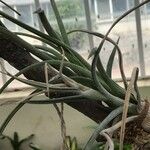
Tillandsia baileyi
Reflexed airplant
Description
Source: leafsnapTillandsia baileyi is a species of air plant that belongs to the Bromeliaceae family. Native to Mexico and Central America, this versatile plant thrives in various habitats, including forests, deserts, and rocky areas. As an epiphytic plant, Tillandsia baileyi requires no soil, obtaining nutrients and moisture directly from the air through its leaves. This plant features long, thin leaves that are green or grayish-green, covered with small scales that facilitate moisture absorption. The flowers are small, tubular, and adorned with delicate purple petals. Tillandsia baileyi is easy to care for, requiring minimal watering—just a misting or soaking once a week should suffice. This low-maintenance plant can be grown on rocks or mounted on decorative objects such as driftwood, making it a versatile addition to any indoor space. Beyond its ornamental appeal, Tillandsia baileyi has been used traditionally for its medicinal properties, particularly in treating ailments like coughs and colds. Overall, Tillandsia baileyi is an intriguing and easy-to-care-for plant that stands out in any indoor garden, making it a perfect choice for both beginners and experienced plant enthusiasts.
Care Guide
💧 Water Every 7 days
To keep a reflexed air plant healthy, provide moisture by soaking or misting it. Be sure to avoid letting water gather in the leaves, as this can lead to rot. After watering, tilt or shake the plant to drain any excess water. If you notice the leaves curling, this is a sign of severe dehydration. In such cases, soak the plant immediately to help it recover.
☀️ Light Partial sun
Reflexed airplant is native to places with dappled light, such as the understory of forests or rocky areas that offer natural shade. It favors partial sun but is also able to tolerate full sun.
What are the sunlight requirements for a Reflexed airplant (Tillandsia baileyi)?
The Reflexed airplant, scientifically known as Tillandsia baileyi, thrives under specific sunlight conditions. It requires partial sun, meaning it should receive about 3-6 hours of sunlight per day. For areas with full shade, it is essential to ensure that it gets less than 3 hours of sunlight. It's important to observe how sunlight moves throughout your garden over the day to find spots that offer a perfect balance of light and shade. This careful selection helps ensure the plant's health and happiness.
🌡️ Temperature 20–37.8°C
The reflexed airplant does best in warm conditions. If temperatures drop too low, it may stop growing or incur frost damage. It tolerates high heat and humidity well and needs a steady level of moisture in its surroundings. Still, very high temperatures and humidity can make it prone to fungal infections. In dry environments, regular watering and misting are needed to keep the air humidity adequate. The plant is sensitive to abrupt temperature changes, so keeping the temperature fairly stable is important.
What is the Reflexed airplant?
The Reflexed airplant, also known scientifically as Tillandsia baileyi, does not have detailed information about its essentials or symptoms provided in this data. Further research might be necessary to gather more in-depth knowledge about its characteristics, care, or potential issues.
💨 Humidity
🪴 Soil
🌱 Fertilizer
Let the reflexed air plant acclimate to its environment before fertilizing. Apply fertilizer during the spring and summer, or during the fall and winter. It is ideal to do this at night when the stomata are open. Avoid using fertilizers with high concentrations of urea, copper, boron, and zinc. Low-copper fertilizers are the safest choice. For optimal plant health, use small amounts of fertilizer frequently.
🪴 Pot & Repot
✂️ Pruning
The reflexed air plant benefits from occasional pruning, which enhances both its health and appearance. The best time to prune is early spring, focusing on removing dead leaves and offsets to improve airflow. This practice helps the plant allocate energy more efficiently, promoting vigorous and healthy growth.
🌿 Propagating
🐛 Diseases & pets
☠️ Toxicity
Characteristics
- Plant Type
- Herb, Succulent
- Life Cycle
- Perennial
- Genus
- Tillandsia
- Family
- Bromeliaceae
- Hardiness Zone
- 9-11
- Mature Height
- 20 cm
- Mature Spread
- 15 cm
- Leaf Color
- Silver, Gray
- Leaf Type
- Evergreen
- Flower Color
- Purple, Lavender
- Flower Size
- 2.03 cm to 3.05 cm
- Bloom Time
- Summer
- Planting Time
- Spring, Summer, Autumn
- Harvest Time
- Late summer, Early fall, Mid fall
- Native Area
- El Salvador, Honduras, Mexico, Guatemala