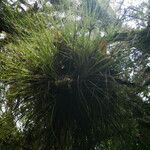
Tillandsia bartramii
Bartram's airplant
Description
Source: leafsnapTillandsia bartramii, commonly known as Bartram's airplant, is a species of flowering plant in the bromeliad family. It is native to Florida, South Carolina and southern Georgia in the United States as well as Guatemala and Mexico (Tamaulipas, Oaxaca, Guerrero, Jalisco, San Luis Potosí). The name honours William Bartram (1739 – 1823), an early Florida naturalist.
Care Guide
💧 Water
Air plants thrive in humid environments, drawing moisture from the air rather than needing frequent watering like traditional soil-based plants. Watering them once a week simulates their natural conditions, while regular misting helps them capture water vapor. As epiphytes, air plants are well-suited for indoor growth, which enhances their drought tolerance.
☀️ Light Full sun
Airplant comes from habitats such as forest understories that provide natural shade. It prefers partial sun but can tolerate full sun if necessary.
What are the sunlight requirements for Airplants?
Airplants thrive best in environments that mimic their natural forest understory habitats, which means they prefer partial sun, achieving about 3-6 hours of sunlight daily. However, they can adapt to full sun conditions, requiring above 6 hours of sunlight, especially in cooler climates. It's essential to observe the movement of sunlight through your garden to find spots that offer a balanced amount of light and shade, ensuring the plants' health and happiness.
Can Airplants grow under artificial lighting?
Yes, Airplants can grow under artificial lighting, which becomes particularly important when natural sunlight is insufficient, such as during winter or in less sunny indoor spaces. Artificial lights, like LEDs, can be customized to replicate specific wavelengths of light needed by plants, promoting faster and healthier growth. For full sun plants, 30-50W/sq ft of light is recommended, partial sun plants require 20-30W/sq ft, and full shade plants need 10-20W/sq ft. It’s vital to place the light source 12-36 inches above the plant and mimic the natural daylight hours, usually around 8-12 hours of light per day.
What symptoms indicate an Airplant is receiving insufficient or excessive sunlight?
Symptoms of insufficient sunlight in Airplants include smaller new leaves, leggy or sparse growth, faster leaf drop, slower or halted new growth, and lighter-colored or irregularly patterned new leaves. Excessive sunlight can lead to chlorosis (the leaves turning yellow), sunscald (pale, bleached areas on the plant tissue), leaf curling or twisting, wilting from increased water loss, and leaf scorching (brown, dry edges on leaves). These symptoms reveal the plant's struggle to adapt to its lighting conditions, indicating the need for adjustments.
How can I address insufficient or excessive sunlight exposure for my Airplant?
To mitigate issues caused by incorrect sunlight exposure for Airplants, gradually adjust the plant's location to receive the appropriate amount of sunlight. Indoors, move the plant closer to a south-facing window or utilize artificial light for at least 8 hours a day. Outdoors, transition the plant to sunnier spots weekly to avoid sunburn. If natural light is blocked, consider pruning obstructions or transplanting to a better-lit location. While damaged parts might not recover, new growth should be healthy with the correct light exposure. Remember, too sudden changes in lighting can harm the plant, so adjustments should be gradual.
🌡️ Temperature 20–37.8°C
Airplant does best in warm conditions. If the ambient temperature drops too low, growth can stop and the plant may suffer frost damage. It tolerates high heat and humidity well and needs a steady level of moisture in its surroundings. Nevertheless, excessively high temperature and humidity can increase its susceptibility to fungal infections. In dry environments, regular watering and misting are needed to keep the air humid enough. The plant is sensitive to sudden temperature changes, so maintaining a relatively stable temperature is important.
What are the ideal temperature and humidity conditions for Airplant?
Airplant, or Tillandsia bartramii, thrives in warm environments and has a strong tolerance for high temperatures and humidity. It requires a consistent level of moisture in the surroundings to grow optimally. During winter, it's recommended to keep the plant in temperatures above 5°C, especially if the environmental temperature drops below this point. For indoor cultivation, maintaining indoor temperatures above 20°C is beneficial. Airplant is sensitive to sudden temperature changes, so it's crucial to avoid such fluctuations to prevent stress or damage to the plant.
How should Airplant be cared for in different temperature conditions?
In cold conditions, if the temperature falls below 20°C, watering should be reduced, and the soil should only be watered again when its surface is dry, to prevent root rot. During winter or if the minimum temperature drops below 5°C, it is advisable to move the plant indoors, ideally near a south-facing window for sufficient sunlight, while avoiding placement near heaters or air conditioners to prevent excessive dryness. For outdoor overwintering, ensure the plant is sheltered and receives sunlight, and consider wrapping with materials such as plastic film or fabric for added protection. In contrast, for high temperatures, especially above 41°C, precautions include providing shade from the midday sun and maintaining adequate moisture through watering.
How do you treat Airplant when affected by extremely low or high temperatures?
For damage from low temperatures, where the plant experiences withering and drooping leaves or severe dry up when the temperature falls below 1°C, it's crucial to trim the frostbitten areas and move the plant indoors to a warm area with ample sunlight, away from heaters or air conditioning vents to avoid dry air. On the other hand, for high temperature stress, evident by dry, withered leaf tips or sunburn when the temperature exceeds 45°C, the damaged parts should be removed, and the plant should be relocated to a shaded area, especially during peak sunlight hours. Watering in the morning and evening can also help retain moisture in both the plant and its environment.
💨 Humidity
🪴 Soil
🌱 Fertilizer
🪴 Pot & Repot
✂️ Pruning
The air plant is a unique type of epiphyte that attaches itself to trees but doesn't take any nutrients from them. To promote growth and improve air circulation, prune the plant in early spring by removing any dead leaves and spent blooms. To prevent infections and keep the plant healthy and well-maintained, be sure to use sterilized tools.
🌿 Propagating
🐛 Diseases & pets
☠️ Toxicity
Characteristics
- Plant Type
- Herb
- Life Cycle
- Perennial
- Genus
- Tillandsia
- Family
- Bromeliaceae
- Hardiness Zone
- 9-11
- Mature Height
- 30 cm to 91 cm
- Mature Spread
- 15 cm to 25 cm
- Leaf Color
- Silver, Gray
- Leaf Type
- Evergreen
- Flower Color
- Lavender, White
- Flower Size
- 2.03 cm to 3.05 cm
- Bloom Time
- Late spring, Early summer, Mid summer
- Planting Time
- Spring, Autumn
- Harvest Time
- Late summer, Early fall, Mid fall
- Native Area
- Mexico, Guatemala