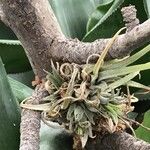
Tillandsia brachycaulos
Tree Orchid
Description
Source: leafsnapTillandsia brachycaulos is a species in the genus Tillandsia. It is native to Mexico, Central America, and Venezuela.
Care Guide
💧 Water Every 2 days
☀️ Light Partial sun
Tillandsia brachycaulos comes from habitats such as forest understories that provide natural shade. It prefers partial sun but can withstand full sun when necessary.
🌡️ Temperature 20–37.8°C
Tillandsia brachycaulos prefers warm conditions. If the ambient temperature drops too low, its growth can stop or it may suffer frost damage. It stands up well to high heat and humidity and needs consistent moisture in its environment. However, excessively high temperatures and humidity increase its vulnerability to fungal infections. In dry environments, regular watering and misting are needed to keep the air sufficiently humid. The plant is sensitive to sudden temperature swings, so maintaining a relatively stable temperature is important.
💨 Humidity high (>60%)
This plant needs special care because it loves high humidity levels of 60-80% or more. The best way to achieve this is by placing a humidifier near the plant. Daily misting is also essential! Make sure the room has good ventilation.
🪴 Soil
🌱 Fertilizer Every 30 days
Actually, Brachycaulos is the name of the hardy kind of air plants. It can therefore withstand temperatures as low as 30 °F (-1 degree Celsius). These low temperatures won't be deadly, but they should be avoided. As a result, a room with a humidity level of 60% to 90% will suffice for them. Bathrooms and kitchens, for example, make the best humid environments for your brachycaulos.
🪴 Pot & Repot
✂️ Pruning
Although air plants don't require trimming, you can tidy them up if you'd like. Tillandsia brachycaulos sheds old, dried-out leaves as it grows, just like other indoor plants do. By removing the dead leaves from the base, you can aid it. It is not advised that you use a knife or pair of scissors on your air plants because too much pruning will result in their death.
🌿 Propagating
🐛 Diseases & pets
☠️ Toxicity
Tillandsia, often known as air plants, come in a variety of forms, and none of them are poisonous. Air plants are not endangered by people, cats, dogs, or rabbits, among other animals. The advantages of air plants will be discussed, along with precautions you can take to prevent unintentional nibbling.
Characteristics
- Plant Type
- Succulent
- Life Cycle
- Perennial
- Genus
- Tillandsia
- Family
- Bromeliaceae
- Hardiness Zone
- 10-12
- Mature Height
- 25 cm
- Mature Spread
- 25 cm
- Leaf Color
- Gray, Light Green
- Leaf Type
- Evergreen
- Flower Color
- Purple, Pink
- Flower Size
- 2.03 cm to 3.05 cm
- Bloom Time
- Late spring, Summer
- Planting Time
- Summer, Autumn
- Harvest Time
- Mid summer, Late summer, Early fall, Mid fall
- Native Area
- Belize, Honduras, Mexico, Guatemala, Venezuela, El Salvador, Nicaragua, Costa Rica, Panama