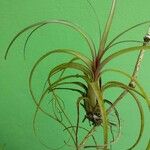
Tillandsia bulbosa
Bulbous airplant
Description
Source: leafsnapTillandsia bulbosa is a species of air plant that belongs to the Bromeliaceae family. Native to Central America, Mexico, and the Caribbean, this plant is prized for its unique appearance and easy care requirements, making it a popular choice for indoor gardening. The plant features long, thin leaves that curl at the ends to form a bulb-like shape. These green leaves have small scales on their surface, which help them absorb moisture from the air. During its blooming season, Tillandsia bulbosa produces small purple flowers on long stalks. Unlike many plants, this air plant does not require soil to grow. Instead, it absorbs nutrients and moisture from the surrounding environment through its leaves. It thrives in bright but indirect sunlight and should be watered by misting or soaking in water once or twice a week. Tillandsia bulbosa can be grown as an indoor houseplant or mounted on driftwood and other decorative objects for display purposes. Its unique appearance makes it a stylish addition to any home decor, while also providing benefits like improved air quality by removing toxins from indoor spaces. In summary, Tillandsia bulbosa is an easy-to-care-for houseplant that stands out with its distinctive features. It not only enhances any plant collection but also offers various health benefits when grown indoors.
Care Guide
💧 Water Every 7 days
The bulbous air plant flourishes in humid environments and stores water in its rounded base, which makes it drought-tolerant. It generally requires watering once a week, but its water needs decrease during dormancy. This plant is well-suited for indoor growth, where humidity levels can be controlled.
☀️ Light Partial sun
The bulbous airplant comes from habitats such as forest understories that provide natural shade. It favors partial sunlight but can withstand full sun when necessary.
What are the sunlight requirements for a Bulbous Airplant?
The Bulbous Airplant (Tillandsia bulbosa) requires specific sunlight conditions to thrive. For partial sun, it needs about 3-6 hours of sunlight daily. In contrast, full shade for this plant means it should receive less than 3 hours of sunlight per day. It's crucial to observe how sunlight moves through your garden throughout the day. This ensures that you select locations that offer the right balance of light and shade, which is key to the happiness and health of your Bulbous Airplant.
🌡️ Temperature 20–37.8°C
The bulbous airplant does best in warm conditions. If temperatures fall too low, growth may stop or the plant can suffer frost damage. It tolerates high heat and humidity well and needs a consistent level of moisture in its surroundings. However, very high temperature and humidity can make it prone to fungal infections. In dry conditions, regular watering and misting are needed to keep the air sufficiently humid. The plant is sensitive to sudden temperature changes, so maintaining a relatively stable temperature is important.
What is Bulbous Airplant?
The Bulbous Airplant, known scientifically as Tillandsia bulbosa, is a unique plant species that does not have detailed essentials, symptoms, or additional information provided. It stands out for its bulbous base and distinctive growth habits.
💨 Humidity normal (40-60%)
This plant will thrive in moderate humidity, which is probably the level in your home. However, misting it a few times a week can be very beneficial. Make sure the room has good ventilation.
🪴 Soil
🌱 Fertilizer
To promote growth and blooms in bulbous air plants, fertilize them every two months using a quarter-strength balanced, water-soluble fertilizer. Applying fertilizer once a month during the growing season can boost their vitality. It's crucial to use the correct dosage to prevent damage and maintain healthy, vibrant plants, whether you're a novice or an experienced grower.
🪴 Pot & Repot
✂️ Pruning
The bulbous air plant is an epiphytic species known for its curly, bulbous base and tubular leaves. For optimal health, it should be pruned in early spring to remove dead leaves and enhance air circulation. It is important not to remove more than one-third of the plant at any given time. Always use sterilized tools during pruning to prevent infections and encourage healthy growth.
🌿 Propagating
🐛 Diseases & pets
☠️ Toxicity
Characteristics
- Plant Type
- Herb
- Life Cycle
- Perennial
- Genus
- Tillandsia
- Family
- Bromeliaceae
- Hardiness Zone
- 9-11
- Mature Height
- 10 cm
- Mature Spread
- 30 cm
- Leaf Color
- Red, Green
- Leaf Type
- Evergreen
- Flower Color
- Purple, Violet
- Flower Size
- 2.03 cm to 3.05 cm
- Bloom Time
- Summer, Early fall
- Planting Time
- Spring, Summer, Autumn
- Harvest Time
- Late summer, Fall
- Native Area
- Belize, Honduras, Mexico, Guatemala, Panama, Jamaica, Colombia, Bahamas, Cuba, Venezuela, Guyana, Brazil, Nicaragua, Ecuador, Costa Rica