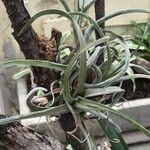
Tillandsia caput-medusae
Octopus plant
Description
Source: leafsnapTillandsia caput-medusae, commonly known as the Medusa's head air plant, is a unique and fascinating species of epiphytic plant in the Bromeliaceae family. Native to the tropical regions of Central and South America, this intriguing plant typically grows on trees and rocks within humid forests. The most distinctive feature of Tillandsia caput-medusae is its striking appearance. Its long, curly leaves resemble the snakes on Medusa's head from Greek mythology. Additionally, the leaves are coated with fine silvery scales that enable the plant to absorb moisture from the air. Tillandsia caput-medusae is an easy-to-care-for houseplant that requires minimal maintenance. It thrives in bright but indirect light and prefers a humid environment with good air circulation. Remarkably, this species does not require soil to grow, as it absorbs nutrients through its leaves. Besides being an attractive ornamental houseplant, Tillandsia caput-medusae is also valued for its medicinal properties by traditional medicine practitioners in South America. It has been used to treat respiratory problems such as asthma due to its anti-inflammatory properties. Overall, Tillandsia caput-medusae is a captivating epiphytic plant with unique features, making it an excellent addition to any indoor garden or collection of exotic plants.
🌳 Octopus plant is more than an ordinary plant; it has an ornamental charm that has drawn the interest of decorative horticulture enthusiasts. While it is not commonly used for traditional purposes, its striking look—twisting tendrils and a swollen base—can brighten both indoor and outdoor landscapes. Its toughness and low soil requirements make it a suitable option for green roofs and vertical gardens, areas with considerable potential for ecological construction and urban biodiversity.
Care Guide
💧 Water Every 7 days
The octopus plant flourishes in environments with high humidity and frequent rainfall, as it needs consistent moisture. Watering it weekly is beneficial, and misting can help keep it hydrated, especially in drier indoor conditions during the growing season.
What do I do if I water Octopus Plant too much?
Overwatering can cause severe problems for Octopus plants because their stems and leaves are prone to rot. Unlike other plants, the Octopus plant primarily gets waterlogged in the center of its leaves. When water gets trapped, it suffocates the leaves and creates an environment for microorganisms to multiply. In fact, overwatering is the primary reason why Octopus plants kept as houseplants die. However, Octopus plants kept outdoors are less likely to be overwatered due to better air circulation. The signs of an overwatered Octopus plant are a darkened base and mushy roots. The leaves will also turn yellow and begin to fall off. If your Octopus plant shows signs of overwatering, it is important to remove any dead or dying parts and completely dry the plant. Place it on a dry surface with good air circulation, and consider using a fan if the plant is large enough. If the rot continues to spread, the Octopus plant will gradually perish.
What should I do if the Octopus plant doesn't get enough water?
To determine when to water the plant, look for signs like wrinkled appearance, rolling and loose leaves, or dry and brown leaf tips. If the octopus plant is underwatered, it will seem droopy instead of sharp. However, you can revive it by regularly spraying or soaking it. Keep in mind that once the leaf tips have dried out and turned brown, they cannot be revived, so it is crucial to establish a proper watering schedule.
How frequently do I need to water Octopus plant?
To ensure the health of your plant, it is generally advised to mist it three or four times per week. However, if you live in a particularly dry environment or if your plant is in desperate need of water, it may require more frequent watering. For optimal care, it is recommended to fully submerge the Octopus plant in a bowl of water for 30 minutes to 1 hour every 1-2 weeks. Some people choose to soak their plants once a week in the spring and fall, and more frequently in the summer, while reducing frequency in the winter. The specific watering schedule may vary depending on your city's climate, but overall the deviations are minimal. These plants are relatively low-maintenance, and after a few weeks, you will become familiar with their specific care requirements and establish your own watering routine.
How do I water an Octopus plant?
The octopus plant has a unique way of absorbing water through its leaves. In the wild, water condenses on the leaves at night and is absorbed through pores. To mimic this as a houseplant, you can mist the plant's leaves with water. However, be careful not to let water accumulate in the center of the leaves for more than a couple of days, as it can promote bacterial growth and suffocate the leaves. It's best to do this misting at night since it aligns with the plant's natural cycle. If possible, use unchlorinated water, such as rainwater, stream water, or lake water. The octopus plant gets nutrients from water, so using water with minerals and nutrients is recommended over distilled water. If you prefer not to mist the plant, you can also soak it for about 30 minutes to an hour to satisfy its watering needs. After soaking, make sure to dry the plant completely before putting it back in place. In the summer or in dry conditions, more frequent soaking may be necessary. Pay attention to the water temperature, keeping it between 60 and 80 degrees Fahrenheit. If the water temperature is not suitable, let the water sit in the room for a while before watering the plant. You'll know it's time to water the plant when it appears wrinkled or the leaves become loose. If the leaf tips have dried out and turned brown, they cannot be revived, so establishing a proper watering schedule is crucial. Factors such as humidity and temperature also influence the watering needs of the octopus plant. In a dry climate or with the use of air conditioning that reduces humidity, you may need to water more often. Warmer temperatures require more water, while cooler temperatures require less. High humidity is beneficial, and you can increase it around the plant with a humidifier or a pebble tray. Good air circulation in the room is also helpful, but it may increase the rate of water evaporation, meaning you may need to water more frequently.
How does the Octopus plant find water in nature?
Octopus plants are low-maintenance houseplants that usually get their moisture from the humid air in their natural environment. To mimic this, you must water them in a way that replicates their wild growth. Instead of using traditional flower pots, Octopus plants thrive in rocky soil or when attached to something. Many people choose coconut shells, large seashells, or wireframes as alternative homes for these plants.
☀️ Light Partial sun
A well-lit environment with enough — but not too much — sunlight is beneficial for the healthy growth of the octopus plant. In its natural settings, the plant does best in spots where it receives gentle morning or late afternoon sun. Excessive sunlight, however, can cause harm such as leaf burn. Conversely, insufficient light can produce limited growth and duller, less vibrant colors.
What are the sunlight requirements for an Octopus plant?
The Octopus plant, known botanically as Tillandsia caput-medusae, thrives in a well-lit environment that receives sufficient, but not excessive, exposure to sunlight. It does well in partial sun, meaning about 3-6 hours of sunlight daily, and can also tolerate full sun, which is above 6 hours of sunlight daily, especially in cooler weather. Nevertheless, too much exposure to sunlight can lead to harmful effects such as leaf burn, whereas insufficient light can cause limited growth and result in dull, less vibrant colors. It's crucial to watch how sunlight moves through your garden to choose spots that provide an ideal balance of light and shade, ensuring the plant's happiness.
How can artificial lighting be used for indoor Octopus plants?
Indoor Octopus plants require adequate lighting for optimal growth, especially when natural sunlight is insufficient, like in winter or less sunny spaces. Artificial lights offer a crucial solution by promoting faster, healthier growth. LED lights are a popular choice because they can be customized to provide specific wavelengths needed by the plants. Full sun plants need 30-50W per square foot of artificial light, partial sun plants require 20-30W per square foot, and full shade plants need 10-20W per square foot. The artificial light source should be placed 12-36 inches above the plant to mimic natural sunlight, and the duration should mimic natural daylight hours, usually 8-12 hours per day.
What are the common symptoms of incorrect lighting for an Octopus plant?
Incorrect lighting can cause several symptoms in Octopus plants. Insufficient light may lead to smaller new leaves, leggy or sparse growth, faster leaf drop, slower or no new growth, and lighter-colored new leaves, indicating a lack of chlorophyll and essential nutrients. Excessive sunlight, on the other hand, can result in chlorosis (leaves losing their green color and turning yellow), sunscald (pale, bleached, or necrotic areas on the plant tissue), leaf curling (leaves curl or twist to reduce surface area exposed to sunlight), wilting (loss of turgor pressure causing drooping), and leaf scorching (brown, dry, crispy edges on leaves).
What solutions are recommended for Octopus plants experiencing insufficient or excessive sunlight?
To address insufficient or excessive sunlight, gradual adaptation to changing light conditions is key. For indoor plants, it's advised to shift them to sunnier spots week by week until achieving 3-6 hours of direct sunlight daily or use artificial light if the plant is large or not easily movable, keeping a lamp on for at least 8 hours daily, or investing in professional grow lights. For outdoor plants, gradually moving them to optimal sunlight spots is necessary to prevent sunburn. Reducing obstructions or transplanting to a sunnier location with good drainage can also be effective, especially by pruning trees that block sunlight or choosing the plant's dormant period for relocation. It's noted that parts of the plant affected by insufficient sunlight may not recover, but new growth after increasing light exposure will be healthy.
🌡️ Temperature 20–37.8°C
Octopus plant originates from habitats where temperatures range from 68 to 100 °F (20 to 38 °C). For best growth, keep temperatures within that range. In colder seasons, grow it indoors or use temperature-control methods to recreate its native climate.
What is the native environment of the Octopus plant?
The Octopus plant, or Tillandsia caput-medusae, is native to environments where the temperatures range between 68 to 100 °F (20 to 38 °C). To ensure optimal growth, it's important to maintain temperatures within this range. This tropical plant thrives in warm conditions and requires temperature control measures during cooler seasons, or it should be moved indoors to replicate its native climate for successful cultivation.
How should I care for an Octopus plant during winter?
During the winter, if temperatures drop below 0°C, the Octopus plant should be moved indoors to protect it from the cold. It's recommended to place the plant near a south-facing window to ensure it receives sufficient sunlight. Avoid positioning the plant near heaters or air conditioners to prevent the air around it from becoming excessively dry. Indoor temperatures should be kept above 20°C for the well-being of the plant. Watering should be reduced, and you should wait until the soil surface is dry before watering again to avoid root rot. If the plant needs to overwinter outside, ensure it's in a sheltered position that receives sunlight and consider using a temporary greenhouse or wrapping materials like plastic film or fabric around the plants, while keeping the soil slightly moist with reduced watering.
What symptoms indicate an Octopus plant is suffering from low temperatures?
The Octopus plant prefers warm environments and does not tolerate low temperatures well. It thrives best when the temperature is above 20°C and should be kept above 0°C during winter. When the temperature falls below -5°C, the leaves may not show immediate symptoms, but after three to five days, they begin to wither and droop. In severe cases, the entire plant may dry up. To address this, trim the frostbitten areas and immediately move the plant indoors to a warm environment, placing it near a south-facing window for ample sunlight. Also, be sure to avoid placing it near heaters or air conditioning vents to sidestep excessive dryness in the air.
How does high temperature affect the Octopus plant, and what are the solutions?
In summer, it's vital to keep the Octopus plant below 38°C. Temperatures exceeding 43°C can cause the leaves to dry out and wither at the tips, halt growth, and make the plant prone to root rot. Excessive direct sunlight may also lead to sunburn. To mitigate these issues, remove the withered parts of the plant, relocate it to a shaded area away from the intense midday and afternoon sun, and water the plant both in the morning and evening to maintain moisture levels for the plant and its surrounding environment.
💨 Humidity high (>60%)
This plant needs special care because it loves high humidity levels of 60-80% or more. The best way to achieve this is by placing a humidifier near the plant. Daily misting is also essential! Make sure the room has good ventilation.
🪴 Soil
🌱 Fertilizer
The octopus plant flourishes when given a balanced water-soluble fertilizer that is diluted to one-quarter strength. During its active growing seasons in spring and summer, apply this fertilizer monthly. In the fall and winter, reduce the application to every other month. Make sure to apply the fertilizer to damp soil, and rinse the leaves afterward to prevent any residue buildup and to promote healthy growth.
🪴 Pot & Repot
✂️ Pruning
Before an octopus plant dies, it produces seedlings at its base. To encourage their growth, remove any dead sections of the plant. Regularly trimming away dead or infected parts not only improves the plant's appearance but also helps prevent infestations by ants and other pests.
🌿 Propagating
🐛 Diseases & pets
☠️ Toxicity
All varieties of the Tillandsia genus, including the Octopus Plant, is not reported to be toxic. This unique and striking epiphyte is safe for nearly all households with children and pets. The ASPCA has confirmed that it is highly unlikely for dogs and cats to fall ill after nibbling a bit of the leaf.
Characteristics
- Plant Type
- Herb
- Life Cycle
- Perennial
- Genus
- Tillandsia
- Family
- Bromeliaceae
- Hardiness Zone
- 9-11
- Mature Height
- 25 cm
- Mature Spread
- 30 cm
- Leaf Color
- Green, White, Gray, Silver, Bronze
- Leaf Type
- Evergreen
- Flower Color
- Purple, Violet
- Flower Size
- 2.03 cm to 3.05 cm
- Bloom Time
- Late spring, Early summer, Mid summer
- Planting Time
- Summer, Autumn
- Harvest Time
- Early summer, Mid summer
- Native Area
- Honduras, Mexico, Guatemala, El Salvador, Nicaragua, Costa Rica