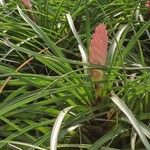
Tillandsia cyanea
Pink Quill
Description
Source: leafsnapTillandsia cyanea, commonly known as the Pink Quill, is a species of epiphytic bromeliad native to Ecuador. This plant is a popular choice for houseplant enthusiasts, thanks to its striking pink and purple flowers that bloom on long stalks. The plant features long, narrow leaves that grow in a rosette pattern and can reach up to 30 cm in length. Unlike many other plants, Tillandsia cyanea does not require soil to grow. Instead, it absorbs nutrients and moisture through its leaves from the surrounding air. This unique plant prefers bright but indirect light and should be watered by misting or soaking once or twice a week, depending on the humidity of its environment. With proper care, Tillandsia cyanea can bloom for several months, making it an excellent addition to any indoor garden or tropical plant collection.
🌳 Pink quill is mainly recognized for its decorative value, with vibrant pink bracts and purplish-blue flowers that catch the eye in any home or garden. Beyond its appearance, pink quill also serves a practical role indoors as a natural air purifier. It is known to remove harmful chemicals like formaldehyde from the air, helping create a healthier living space for people. This combines beauty and health benefits, illustrating a plant that is both visually striking and advantageous for indoor air quality.
Care Guide
💧 Water Every 7 days
Tillandsia species do not need a lot of water, but compared to its other species, Pink Quill needs a little more. This plant needs to be watered every two weeks but depending on the season. Gentle misting every week is advisable in the warmer season. Make sure that the soil has dried out before rewatering. Rainwater or filtered tap is best for Pink Quills.
☀️ Light Partial sun
The pink quill grows best with plenty of sunlight, though it can tolerate lower light. Too much sun can weaken it, while too little may cause slower growth or less vibrant flowering. Native to a habitat with mixed sun and shade, it copes well with both conditions during different stages of growth.
🌡️ Temperature 20–37.8°C
Pink quill grows best in temperatures of 68 to 100 ℉ (20 to 38 ℃). It originates from rainforests with warm, humid conditions. In winter, it is advisable to keep the temperature above 60 ℉ (15.5 ℃) to avoid cold damage.
💨 Humidity normal (40-60%)
This plant will thrive in moderate humidity, which is probably the level in your home. However, misting it a few times a week can be very beneficial. Make sure the room has good ventilation.
🪴 Soil 5-6
🌱 Fertilizer
Correct fertilization is essential for the Pink quill’s health and appearance. Feed the Pink quill in summer, applying fertilizer once a month throughout the season. These nutrients fuel growth and help maintain the plant’s structures. Fertilizing improves the Pink quill’s flower display, helping ensure the best blooms.
🪴 Pot & Repot 2-3 years
When repotting Pink quill, choose a pot 1-2 inches (2.5–5.1 cm) larger with ample drainage. Use a well-draining potting mix. Repot in spring or fall, ensuring the root ball is slightly lower than the rim of the flower pot. Water thoroughly after repotting and place it in a warm spot with indirect sunlight.
✂️ Pruning
The pups grow at the base of a healthy and mature plant. Cut the pups off when they reach at least three inches in length.
🌿 Propagating
🐛 Diseases & pets
☠️ Toxicity
Pink Quills are non-toxic to humans and pets. This plant is safe to grow indoors.
Characteristics
- Plant Type
- Herb
- Life Cycle
- Perennial
- Genus
- Tillandsia
- Family
- Bromeliaceae
- Hardiness Zone
- 9-12
- Mature Height
- 49 cm
- Mature Spread
- 49 cm
- Leaf Color
- Green, White
- Leaf Type
- Evergreen
- Flower Color
- Violet
- Flower Size
- 2.54 cm to 5.08 cm
- Bloom Time
- Spring
- Planting Time
- Spring, Autumn
- Harvest Time
- Early summer, Mid summer
- Native Area
- Ecuador, Peru