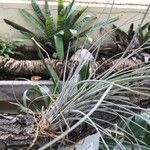
Tillandsia juncea
Bartram's airplant
Description
Source: leafsnapTillandsia juncea, commonly known as the pencil air plant, is an epiphytic species native to Central and South America. A member of the Bromeliaceae family, it is a popular ornamental plant admired for its unique appearance and low maintenance needs. The pencil air plant features long, thin leaves that grow in a rosette formation. These leaves are green with a slight bluish tint and lack scales or trichomes on their surface. The inflorescence is simple, with pink or purple flowers that bloom from the center of the rosette. Tillandsia juncea thrives in bright but indirect light and can tolerate temperatures ranging from 50-90°F (10-32°C). It requires minimal watering, as it absorbs moisture through its leaves from the surrounding environment. This makes it an ideal choice for those seeking an attractive indoor plant without the hassle of frequent watering. Besides its ornamental value, Tillandsia juncea also has medicinal properties. Its extracts have traditionally been used for their anti-inflammatory effects in treating skin conditions such as eczema and psoriasis. In summary, Tillandsia juncea is an intriguing epiphytic species that enhances the beauty of any indoor space while requiring minimal care.
Care Guide
💧 Water Every 7 days
The rush-like air plant thrives in humid environments and requires weekly watering to ensure optimal growth. This evergreen plant is often kept indoors and should be placed in well-draining containers to mimic its native tropical habitat. It prefers humidity to drought, so maintaining moist conditions is important for its health.
What do I do if I give too much water to a Rush-like air plant?
Overwatering can be a serious problem for Rush-like air plants, as it can cause their stems or leaves to rot. Unlike other plants, the excess water tends to accumulate in the center of the leaves, which can suffocate them and create a breeding ground for harmful microorganisms. In fact, overwatering is the main cause of death for Rush-like air plants kept indoors, while those maintained outdoors are less likely to be affected due to better ventilation. The signs of an overwatered Rush-like air plant include a darkened base and mushy roots. Additionally, the leaves may turn yellow and start falling out. If you notice these symptoms, it's important to remove any dead or dying parts of the plant and ensure it dries completely. Placing the plant on a dry surface with good air circulation can help, and using a fan may also be beneficial for larger plants. If the rot continues to spread, the Rush-like air plant will eventually die.
What should I do if my Rush-like air plant doesn't get enough water?
To determine when to water the plant, look for signs of wrinkled leaves or loose rolling leaves. In more severe cases, the leaf tips may also become brown and dry. If the rush-like air plant appears droopy, it may be underwatered, but it can be revived through spraying or soaking. However, once the leaf tips have turned brown and dried out, they cannot be restored, so it is crucial to establish a suitable watering schedule.
How often should I water an air plant that looks like Rush?
To care for the plant, you should mist it three or four times a week on average. However, if you live in a dry area or if the plant appears to be lacking water, you may need to increase watering frequency. For the Rush-like air plant, it is recommended to soak it in a bowl of water for 30 minutes to 1 hour every 1-2 weeks. In warmer months like spring and summer, people often choose to soak the plant once a week while in colder months like fall and winter, soaking may be less frequent. The specific watering schedule may vary depending on your city's climate, but generally, it doesn't differ significantly. These plants are relatively easy to care for, and after a few weeks, you will become familiar with their needs and can establish your own watering routine.
How should I water a Rush-like air plant?
Rush-like air plants, which can be kept as houseplants, absorb water through the pores on their leaves. In the wild, the water condenses on their leaves at night and is absorbed. To mimic this, you can mist water onto the leaves, making sure not to spray too much and avoid letting water accumulate in the center. Excess water in the center can lead to bacterial growth and suffocation of the leaves. It's best to mist the plant at night, using unchlorinated water if possible. Rainwater is ideal, but stream or lake water can also be used. Since the plants get nutrients from water, it's recommended to use water with minerals and nutrients instead of distilled water in the long term. Alternatively, you can water the plant by soaking it for about 30 minutes to an hour. After soaking, make sure to dry the plant thoroughly by placing it on its side or upside down on a paper towel or dry dish towel for about 2 hours. More frequent soaking may be necessary in the summer or in dry environments. Pay attention to the water temperature, aiming to keep it between 60 and 80 degrees Fahrenheit. If the water temperature is not suitable, leave it in the room for a while before watering the plant. You'll know it's time to water the plant when it appears wrinkled or the leaves roll and remain loose. Underwatered plants appear droopy and can be revived with continuous spraying or soaking. Once the leaf tips dry out and turn brown, they cannot be revived, so it's important to establish an appropriate watering schedule. Factors such as humidity and temperature should also be considered when determining the watering schedule. Rush-like air plants thrive in high humidity and warm conditions. In dry climates or with the use of air conditioning, more frequent watering may be necessary. Warmer temperatures require more water, while cooler temperatures require less. Increasing ambient humidity with a humidifier or pebble tray can benefit the plant. Adequate air circulation is also beneficial, but it can increase the evaporation rate, potentially leading to more frequent watering.
How does a Rush-like air plant get water naturally?
Rush-like air plants thrive by absorbing moisture from the humid air in their natural habitat. As low-maintenance houseplants, they require watering methods that mimic their natural growing conditions. Instead of traditional flower pots, these plants do best in rocky soil or when attached to the side of an object. Creative options include placing them in coconut shells, large seashells, or even wireframes.
☀️ Light Partial sun
A rush-like air plant does best with moderate light, avoiding both excessive and insufficient illumination. In its native habitat it occurs beneath the partial sun cover of taller vegetation. Too much exposure can scorch its leaves, while too little light reduces its vigor and hinders growth and flowering.
What are the sunlight requirements for a Rush-like air plant?
The Rush-like air plant, known botanically as Tillandsia juncea, thrives in environments that offer intermediate light levels. It has adapted to grow under the partial sun cover of higher vegetation in its native habitat, requiring about 3-6 hours of sunlight daily. While it can tolerate less than 3 hours of sunlight (full shade), providing the right balance of light and shade is crucial to ensure its growth and blooming. Overexposure to sunlight may lead to scorched leaves, and inadequate light might weaken the plant, affecting its health and reducing its ability to bloom.
How can artificial lighting be used for indoor Rush-like air plants?
Artificial lighting presents a viable solution for supporting the growth of Rush-like air plants indoors, especially in conditions where natural sunlight is lacking, such as during winter or in less sunny spaces. The use of LED lights is recommended due to their ability to be customized to provide specific wavelengths needed by plants. The appropriate watts per square foot vary by plant type: full sun plants need 30-50W/sq ft, partial sun 20-30W/sq ft, and full shade 10-20W/sq ft. Position the light source 12-36 inches above the plant to mimic natural sunlight and ensure it's on for 8-12 hours per day to simulate natural daylight hours effectively.
What symptoms indicate a Rush-like air plant is receiving inappropriate light?
Symptoms of inappropriate lighting for a Rush-like air plant include small or lighter-colored new leaves, indicating a lack of chlorophyll and essential nutrients. The plant may also exhibit leggy or sparse growth, faster leaf drop, slower or no new growth, and symptoms of chlorosis, where leaves lose their green color and turn yellow. Sunscald, leaf curling, wilting, and leaf scorching are additional signs of stress either due to insufficient light or overexposure to sunlight. These symptoms highlight the plant's struggle to adapt to its lighting environment, whether it's too much or too little light.
What solutions exist for addressing light-related issues in Rush-like air plants?
To address light-related issues in Rush-like air plants, gradual adaptation to changing light conditions is key. For indoor plants, gradually shifting them to sunnier spots each week until reaching 3-6 hours of direct sunlight daily can help. If the plant is large or not easily movable, using artificial light such as desk or ceiling lamps for at least 8 hours daily, or investing in professional plant grow lights, can provide the necessary light. Outdoors, plants should be moved gradually to sunnier locations to avoid shock and sunburn. Reducing obstructions, such as pruning trees or moving plants to locations with more sunlight and better drainage, can improve light exposure. It is important to note that parts of the plant affected by prior insufficient sunlight may not recover, but new growth should be healthier following these adjustments.
🌡️ Temperature 20–37.8°C
The rush-like air plant prefers warm conditions. If the temperature falls too low, it may stop growing or suffer frost damage. It tolerates high heat and humidity well and needs a consistent amount of moisture in its surroundings. However, very high temperature and humidity can make it vulnerable to fungal infections. In dry conditions, regular watering and misting are needed to keep the surrounding air sufficiently humid. The plant is sensitive to sudden temperature changes, so maintaining a fairly stable temperature is important.
What types of environments do Rush-like air plants thrive in?
Rush-like air plants, or Tillandsia juncea, thrive in warm environments. They have a strong tolerance for high temperatures and humidity, requiring a consistently moist surrounding. However, they are sensitive to very high temperatures and humidity levels, which can increase their susceptibility to fungal infections. In dryer conditions, it is necessary to regularly water and mist the plant to maintain adequate air humidity. Additionally, these tropical plants are sensitive to sudden temperature changes and prefer to have a relatively stable temperature environment.
How do I care for a Rush-like air plant during winter?
During winter, if the temperature drops below 5°C, it's recommended to move the Rush-like air plant indoors to protect it from the cold. Placing the plant near a south-facing window will ensure it receives sufficient sunlight. It's important to avoid positioning the plant near heaters or air conditioners to prevent excessive dryness. Keeping indoor temperatures above 20°C benefits the plant. If the temperature falls below this threshold, reduce watering and wait for the soil surface to dry before watering again, avoiding root rot. For outdoor overwintering, ensure the plant is in a sheltered, sunny spot. You might consider setting up a temporary greenhouse or wrapping the plant with plastic film or fabric for additional protection, while also reducing watering to keep the soil slightly moist.
What should I do if my Rush-like air plant is exposed to temperatures below 1°C?
If your Rush-like air plant is exposed to temperatures below 1°C, initially there may be no visible damage. However, after three to five days, the leaves might begin to wither and droop, and in severe cases, the entire plant may dry up. To treat frost damage, trim the frostbitten areas and immediately move the plant to a warm environment indoors. Select a spot near a south-facing window for ample sunlight. Also, ensure the plant is not placed near heaters or air conditioning vents to avoid excessive dryness.
How do I protect my Rush-like air plant from high temperatures?
During summer, it's crucial to keep Rush-like air plants below 41°C to prevent heat stress. Temperatures above 45°C can cause the leaves to dry and wither at the tips, halt growth, and increase the risk of root rot. Sunburn may also occur from excessive sunlight exposure. To mitigate high temperature damage, remove any withered parts of the plant and relocate it to a shaded area, especially protecting it from the midday and afternoon sun. Additionally, watering the plant in the morning and evening helps maintain both the plant and the surrounding environment's moisture levels.
💨 Humidity
🪴 Soil
🌱 Fertilizer
To promote growth in rush-like air plants, fertilize them monthly with a balanced fertilizer diluted to quarter strength. During the spring and summer, increase the frequency to every two weeks. Avoid fertilizing during the dormant period, which spans from fall to winter. Ensure the fertilizer is properly diluted to prevent root burn and apply it evenly for better vitality and appearance.
🪴 Pot & Repot
✂️ Pruning
Before a rush-like air plant dies, it produces seedlings at its base. To promote growth and maintain its appearance, prune any dead or infected parts. This also helps prevent insect infestations.
🌿 Propagating
🐛 Diseases & pets
☠️ Toxicity
Tillandsias, often known as air plants, come in a range of colors, none of which are harmful. Including dogs, cats, and rabbits, air plants are not hazardous to people or animals. Considering how easily pets can consume or harm this delicate plant, it is recommended to keep your Tillandsia juncea out of reach of them.
Characteristics
- Plant Type
- Herb
- Life Cycle
- Perennial
- Genus
- Tillandsia
- Family
- Bromeliaceae
- Hardiness Zone
- 9-11
- Mature Height
- 40 cm
- Mature Spread
- 20 cm
- Leaf Color
- Green, Gray, Silver
- Leaf Type
- Evergreen
- Flower Color
- Violet
- Flower Size
- 2.03 cm to 3.05 cm
- Bloom Time
- Summer
- Planting Time
- Spring, Summer, Autumn
- Harvest Time
- Late summer, Early fall, Mid fall
- Native Area
- Colombia, Belize, Cuba, Honduras, Mexico, Guatemala, Bolivia, Venezuela, Peru, El Salvador, Nicaragua, Ecuador, Costa Rica, Panama, Jamaica