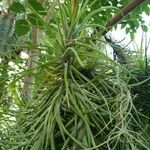
Tillandsia stricta
Airplant
Description
Source: leafsnapTillandsia stricta is a species in the genus Tillandsia. This species is native to South America and Trinidad.Two varieties are recognized: Tillandsia stricta var. disticha L.B.Sm - State of Paraná in Brazil Tillandsia stricta var. stricta - Trinidad, Guyana, Suriname, Venezuela, Brazil, Bolivia, Paraguay, Uruguay, Argentina
🌳 Besides their decorative value, the flower spikes of airplant serve as distinctive nesting sites for certain small animals. Their robust, upright form makes them an ideal platform for organisms like insects and arboreal frogs to deposit their eggs. This symbiotic association is a type of bioshelter and helps sustain biodiversity within its native ecosystem.
Care Guide
💧 Water
Air plants thrive in high humidity, reflecting their tropical rainforest origins. They prefer misting over direct watering. To maintain proper hydration without oversaturating them, soak or mist your air plants weekly. When grown indoors, it is essential to keep them consistently hydrated, especially during their active growing season, to ensure they remain healthy and vibrant.
If Airplant gets too much water, what should I do?
Overwatering can cause serious issues for Airplants, as their stems and leaves are prone to rotting. Unlike other plants, the excess water accumulates mainly in the center of the Airplant's leaves, leading to suffocation of the leaves and providing a breeding ground for microorganisms. In fact, overwatering is the primary cause of death for Airplants kept as houseplants. On the other hand, Airplants maintained outdoors are less likely to be affected by overwatering, thanks to better ventilation that promotes their health. The symptoms of an overwatered Airplant include a darkened base and mushy roots, as well as yellowing and falling leaves. If you notice these signs, it is important to remove any dead or dying parts and thoroughly dry the plant. Placing it on a dry surface with good air circulation, such as using a fan if the plant is large enough, can be helpful. It's crucial to address the issue promptly, as once the rot spreads, the Airplant will gradually die.
What can I do if my Airplant doesn't have enough water?
To determine when to water the plant, look for signs such as wrinkled appearance or rolled and loose leaves. In more severe situations, the leaf tips may dry out and turn brown. An underwatered airplant will appear droopy instead of sharp, but it can be revived by regular spraying or soaking. However, once the leaf tips dry out and turn brown, they cannot be saved. This underlines the importance of establishing a suitable watering schedule.
How frequently should I water my Airplant?
To take care of the plant, you should mist it about three or four times per week, on average. However, if you live in a dry area or if your plant needs more water, you may need to water it more often. One recommendation is to soak the Airplant in a bowl of water for 30 minutes to 1 hour every 1-2 weeks. Some people prefer to soak once a week in the spring and fall, while others do it more frequently in the summer and less frequently in the winter. Keep in mind that variations may exist depending on your city's climate, but overall, the watering schedule doesn't differ too much. With some time and observation, you will easily learn the plant's care requirements and establish your own watering routine.
How do I water an Airplant?
Airplants absorb water through their leaves, primarily at night when water condenses on the leaves and is absorbed through pores. To mimic this in a houseplant, you can mist water onto the leaves, making sure not to accumulate water in the center. Accumulated water can lead to bacterial growth, suffocate leaves, and cause the tips of the leaves to turn brown. Ideally, mist the plant at night using unchlorinated water, such as rainwater or stream/lake water rich in minerals and nutrients. If you prefer, you can also water the plant by soaking it for 30 minutes to an hour, but be sure to dry it thoroughly afterward by placing it on its side or upside down on a paper towel or dry dish towel for about 2 hours. During summer or in very dry environments, more frequent soaking may be necessary. Additionally, it is important to maintain the water temperature between 60 and 80 degrees Fahrenheit. You should water the plant when it appears wrinkled, the leaves roll and stay loose, or the leaf tips dry out and turn brown. Underwatered plants can be revived with continuous spraying or soaking, but dried-out leaf tips cannot recover. Factors such as humidity and temperature also impact watering frequency, with a dry climate and air conditioning reducing humidity and requiring more frequent watering. Warmer seasons call for more water, while high humidity reduces the need for watering. Increasing ambient humidity with a humidifier or pebble tray can be beneficial. Lastly, ample air circulation in the room is good for Airplants but increases evaporation and may require more frequent watering.
How does Airplant find water in its natural habitat?
Airplants absorb moisture from the humid air in their natural habitat. Although they are low-maintenance houseplants, watering them in a manner that mimics their wild growth is important. Instead of traditional flower pots, Airplants prefer rocky soil or being attached to something. Many people use coconut shells, large seashells, or wireframes for this purpose.
☀️ Light Partial sun
Airplants thrive in locations that receive substantial morning sun but are sheltered from the most intense midday rays. They can do well with generous sunlight, yet need protection from overexposure to avoid leaf burn. In their natural habitats they are often found under an overhead canopy that provides some sun shielding; in very bright conditions they become scorched and stressed.
What are the sunlight requirements for Airplants?
Airplants require varying degrees of sunlight depending on their environment. They thrive well in areas that get significant morning sunshine and are protected from the intense rays of the midday sun. While they can flourish under ample sun exposure, it's crucial to prevent overexposure to avoid leaf burn. In their natural habitats, Airplants usually benefit from some sun shielding provided by an overhead canopy, which protects them from becoming scorched and stressed in extremely bright conditions.
What artificial lighting is needed for Airplants indoors?
When natural sunlight is insufficient for Airplants, especially during winter or in less sunny spaces, artificial lighting becomes necessary. It is advisable to select the right type of artificial light, with LED lights being a popular choice due to their ability to provide specific wavelengths needed by plants. Full sun plants need 30-50W/sq ft, partial sun plants require 20-30W/sq ft, and full shade plants need 10-20W/sq ft of artificial light. The light source should be placed 12-36 inches above the plants to mimic natural sunlight, and most plants will need 8-12 hours of light per day.
What symptoms indicate a light deficiency in Airplants?
Symptoms of light deficiency in Airplants include smaller new leaves compared to mature ones, leggy or sparse growth resulting in a stretched-out appearance, faster leaf drop to conserve resources, slower or halted growth as the plant enters survival mode, and lighter-colored or irregularly patterned new leaves indicating a lack of chlorophyll and nutrients. Excessive sunlight exposure can lead to chlorosis, sunscald, leaf curling, wilting, and leaf scorching due to damage from intense sunlight.
How can I address light deficiency or overexposure in Airplants?
To optimize Airplants' growth and address light deficiency or overexposure, gradually adapt them to changing light conditions by shifting them to sunnier spots each week until they receive the optimal 3-6 hours of direct sunlight daily. For indoor plants that are large or not easily movable, consider using artificial light, keeping a desk or ceiling lamp on for at least 8 hours daily or investing in professional plant grow lights. Outdoors, move plants gradually to avoid sudden changes in light intensity which could result in sunburn. Additionally, reducing obstructions such as pruning branches from trees can help, and for smaller plants, consider transplanting during their dormant period to a location with better sunlight and drainage.
🌡️ Temperature 20–37.8°C
Airplant comes from habitats that usually experience temperatures of 68 to 100 °F (20 to 38 °C). Its preferred temperatures fall within that span. Some seasonal adjustments may be necessary to ensure optimal growth.
What is the ideal temperature range for Airplants?
Airplants, or Tillandsia stricta, thrive in environments with temperatures ranging from 68 to 100 °F (20 to 38 °C). These tropical plants prefer temperatures within this range for optimal growth. It's important to make seasonal adjustments to ensure they grow healthily. During winter, when temperatures can drop below 0°C, it's advised to move Airplants indoors, preferably near a south-facing window for sufficient sunlight, while avoiding direct exposure to heaters or air conditioners to prevent the air from becoming excessively dry.
How do you care for Airplants in cold weather?
In cold weather, Airplants need extra care to thrive. If the temperature drops below 0°C, it's recommended to bring the plants indoors to shield them from the cold. Indoor temperatures should be maintained above 20°C for the plant's well-being. Reduce watering frequencies and only water the plants when the soil surface has completely dried out to prevent issues like root rot. For Airplants that must remain outdoors, ensure they are in a sheltered, sunny spot. Protect them further with temporary greenhouses or coverings like plastic film or fabric, and keep the soil slightly moist while reducing watering.
What to do if an Airplant is exposed to low temperatures?
If an Airplant is exposed to temperatures below its preferred range, particularly under -5°C, the leaves may not show immediate symptoms but will begin to wither and droop after three to five days, potentially leading to the plant drying up entirely in severe cases. If this occurs, trim the frostbitten areas and move the plant to a warmer, indoor environment away from cold. A south-facing window is ideal for ensuring the plant receives plenty of sunlight. Additionally, keep the plant away from dry heat sources, such as heaters and air conditioning vents.
How should Airplants be cared for in hot temperatures?
In hot temperatures, particularly above 38°C, Airplants can suffer from dry and withered leaf tips, halted growth, and an increased risk of root rot. The intense heat and excessive sunlight exposure may also cause sunburn. To mitigate heat stress, remove any withered parts and relocate the plant to a cooler, shaded area, particularly away from direct midday and afternoon sun. Ensuring the plant and its surrounding environment are kept moist through morning and evening watering can help manage the effects of high temperatures.
💨 Humidity
🪴 Soil
🌱 Fertilizer
Fertilizer may aid in the development of a happy, healthy air plant by encouraging flowering, growth, and pup production. Your Tillandsia stricta, on the other hand, does not require fertilizer and will thrive without it. Your plant may be burned or even die if you use too much fertilizer. If you want to stimulate additional development, fertilize once a month with a bromeliad or Tillandsia fertilizer. These are meant to be taken in through the leaves. Common fertilizer is designed to be taken up by the roots of a plant, but air plants do not obtain their nutrients through their roots. When your Tillandsia stricta is blossoming, fertilizer is extremely beneficial.
🪴 Pot & Repot
✂️ Pruning
The air plant, known for its rosette shape and vibrant flowers, thrives when pruned from early spring to late winter. To improve airflow, trim damaged leaves using sterilized scissors. Removing spent blooms encourages new growth. Minimal pruning is necessary to maintain the plant's shape, which supports its health and longevity, ensuring an attractive display.
🌿 Propagating
🐛 Diseases & pets
☠️ Toxicity
Characteristics
- Plant Type
- Herb
- Life Cycle
- Perennial
- Genus
- Tillandsia
- Family
- Bromeliaceae
- Hardiness Zone
- 9-11
- Mature Height
- 10 cm to 49 cm
- Mature Spread
- 10 cm to 49 cm
- Leaf Color
- Green, Gray, Silver, White
- Leaf Type
- Evergreen
- Flower Color
- Violet
- Flower Size
- 2.54 cm
- Bloom Time
- Late spring, Early summer, Mid summer
- Planting Time
- Spring, Summer, Autumn, Winter
- Harvest Time
- Mid summer
- Native Area
- South America