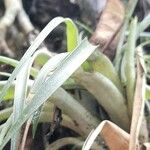
Tillandsia utriculata
Jumbie-pineapple · Wild pine · Giant airplant · Giant Wild Pine · Spreading airplant
Description
Source: leafsnapTillandsia utriculata, commonly known as the Giant Airplant, is an epiphytic species belonging to the Bromeliaceae family. Native to Central and South America, this plant thrives in diverse habitats such as rainforests, cloud forests, and mangroves. The Giant Airplant features long, thin leaves that grow in a rosette formation. These leaves are typically green or gray-green and have small scales on their surfaces, allowing the plant to absorb moisture from the air. The plant produces tubular flowers with strikingly bright pink or purple petals. As an epiphyte, Tillandsia utriculata does not require soil for growth. Instead, it attaches itself to other plants or objects using its roots and derives nutrients from rainwater and surrounding debris. Due to its unique appearance and ease of care, Tillandsia utriculata is often used as an ornamental plant. It can be grown both indoors and outdoors in warm climates with high humidity. Overall, Tillandsia utriculata is a fascinating species adapted to survive without soil, making it a popular choice for low-maintenance houseplants or decorative garden accents.
🌳 The giant air plant is notable for its remarkable abilities. It grows in treetops, obtaining essential nutrients from the air instead of from soil, which enables it to purify indoor air pollutants worldwide. Its silver-green foliage also naturally reflects light, enhancing its decorative appeal.
🎭 Nerds, goths, dreamers and people who love something a little different
Care Guide
💧 Water Every 7 days
The spreading airplant thrives in humid environments, showcasing its tropical origins. To maintain its hydration and vibrant foliage, it requires balanced daily watering. As an evergreen, the spreading airplant needs consistent moisture to keep its leaves healthy year-round.
What should I do if I give too much water to the Spreading airplant?
Overwatering can cause problems for Spreading airplants because their stems and leaves are prone to rot. Unlike other plants, overwatering mainly affects the center of the leaves of Spreading airplants, causing them to become waterlogged. This trapped water can suffocate the leaves and create an environment for microorganisms to grow. Overwatering is actually the leading cause of death for Spreading airplants kept as houseplants. However, if Spreading airplants are maintained outdoors, they are less likely to suffer from overwatering because good ventilation makes it easier to keep them healthy. Signs of an overwatered Spreading airplant include a dark base, mushy roots, yellowing leaves, and leaf loss. If your Spreading airplant is showing these signs, it's important to remove the dead and dying parts and thoroughly dry the plant. Placing it on a dry surface with good air circulation, and possibly using a fan, can help. If the rot continues to spread, the Spreading airplant will eventually die.
What should I do if the Spreading airplant doesn't have enough water?
Knowing when to water a plant is indicated by certain signs. Look for the plant appearing wrinkled or the leaves rolling and remaining loose. In more severe cases, the leaf tips may dry out and turn brown. If an underwatered spreading airplant is observed, it will seem droopy instead of sharp. Fortunately, continuous spraying or soaking can revive it. However, once the leaf tips have dried out and turned brown, they cannot be restored. Therefore, establishing a proper watering schedule is crucial.
How much water does Spreading airplant need?
To properly care for your Spreading airplant, you will generally need to mist it three or four times a week. However, if you live in an area with very dry air or if your plant is particularly thirsty, you should increase the frequency of watering. For optimal results, it is recommended to soak the plant in a bowl of water for 30 minutes to 1 hour every 1-2 weeks. During the spring and fall, most people opt for soaking once a week, while in the summer it may be necessary to do it more often, and in the winter, less frequently. Of course, your specific city climate can bring some variations, but overall the watering schedule doesn't differ significantly. These plants are easy to care for, and after a few weeks, you'll become familiar with their needs and can establish your own watering routine.
How do you water a spreading airplant?
Spreading airplants absorb water through their leaves, which condenses at night in the wild. To mimic this, mist the leaves with water without letting it accumulate in the center. Accumulated water can lead to bacterial growth and suffocate the leaves, so it's important to dry the plant after soaking it. Use unchlorinated water, such as rainwater, for best results. Soaking the plant for 30 minutes to an hour can also provide the necessary hydration, but drying it fully afterwards is crucial. In the summer or dry environments, more frequent soaking may be required. The water temperature should be kept between 60 and 80 degrees Fahrenheit. Water the plant when it appears wrinkled or the leaves start to droop. Spraying or soaking can revive an underwatered plant, but once the leaf tips turn brown, they cannot recover. Consider the humidity and temperature of your environment when determining watering frequency. High humidity reduces the need for frequent watering, but increased air circulation may require more water.
How does the Spreading airplant get water in its natural environment?
Spreading airplants rely on the humid air to get the moisture they need, making them low-maintenance houseplants. To ensure their growth mirrors their natural habitat, you should water them differently. Instead of regular flower pots, they prefer to grow in rocky soil or be affixed to the side of objects. People often use coconut shells, large seashells, or wireframes for this purpose.
☀️ Light Partial sun
The giant air plant grows best where it receives a moderate amount of sunlight each day, although it can tolerate stretches of very strong or very low light. Native to environments with fluctuating light, it is hardy under a range of sunlight conditions. Both too much and too little sun can result in less-than-ideal growth.
What are the sunlight requirements for spreading airplants?
Spreading airplants (Tillandsia utriculata) thrive in both partial sun, requiring about 3-6 hours of sunlight, and can also adapt to full sun or full shade conditions, which include areas receiving more than 6 hours of sunlight. It's important to observe the movement of sunlight in your garden to find spots that offer a balance of light and shade, ensuring the plant's well-being. These plants are versatile, native to environments where light conditions can vary significantly, making them resilient under both minimal and intense light exposures. However, both excessive and low sun exposure can lead to suboptimal growth conditions.
How can artificial lighting benefit spreading airplants and what are the recommendations?
For indoor spreading airplants, adequate lighting is crucial, especially in settings where natural sunlight is limited. Artificial lighting, such as LED lights that can be tailored to provide specific light wavelengths, acts as an excellent supplement. Full sun plants require 30-50W/sq ft, partial sun plants need 20-30W/sq ft, and full shade plants should get 10-20W/sq ft of artificial light. The light source should be placed 12-36 inches above the plant, mimicking natural sunlight as closely as possible, for a duration that replicates the natural daylight hours specific to the plant species, typically between 8-12 hours daily.
What are the common symptoms of inappropriate light conditions in spreading airplants?
In conditions of poor light, spreading airplants may show signs such as slower or halted growth, indicative of the plant entering a survival state with ceased leaf production. Insufficient sunlight can also impact the plant's flowering and fruiting capabilities, but these effects might not be immediately obvious. Other symptoms include chlorosis or the yellowing of leaves due to chlorophyll breakdown under excessive sunlight, sunscald marked by damaged leaves or stems from intense light exposure, leaf curling as a defense against too much sunlight, wilting from increased water loss, and leaf scorching characterized by brown, dry edges on leaves due to excessive sunlight. These issues illustrate the plant's struggle with either too much or too little sunlight.
What solutions can help manage light exposure for spreading airplants?
To optimize spreading airplants' growth, gradually adapt them to their ideal light conditions. For indoor plants, start by moving them to sunnier spots weekly until they receive the required 3-6 hours of direct sunlight or utilize artificial light sources like desk or ceiling lamps for at least 8 hours daily. Outdoor plants should be similarly acclimated to sunlight by gradually transitioning them to sunnier areas to prevent sunburn. Reducing obstructions such as pruning branches that shade your plants helps increase sunlight exposure. If needed, consider transplanting smaller plants during their dormant period to a location with ample sunlight and good drainage. Bear in mind that parts of the plant already affected by poor light may not recover, but new growth will be healthy following light condition adjustments.
🌡️ Temperature 20–37.8°C
The giant air plant is native to tropical and subtropical areas and thrives in warm temperatures of 68 to 100 ℉ (20 to 38 ℃). It favors bright, indirect light and high humidity but can endure some drought. In colder conditions, it is advisable to move the plant indoors or to a warmer environment.
What is the native habitat and preferred climate for the Spreading airplant?
The Spreading airplant, scientifically known as Tillandsia utriculata, is native to tropical and subtropical regions. It thrives in warm temperatures that range between 68 to 100°F (20 to 38°C). This plant enjoys bright indirect light with high humidity levels, though it can tolerate some drought conditions. In areas where temperatures drop below 5°C during winter, it's recommended to move the plant indoors to a warmer environment, ideally near a south-facing window to ensure it gets enough sunlight. It's important to avoid placing the plant too close to heaters or air conditioners to prevent the air from getting too dry around it. For the plant's well-being, indoor temperatures above 20°C are highly beneficial. In colder weather, reduce watering and only water again when the soil surface has dried out to avoid root rot. If the plant must remain outdoors during colder temperatures, protect it with a temporary greenhouse or wrapping materials and keep the soil slightly moist while reducing watering frequency.
How does the Spreading airplant react to low temperatures, and what are the solutions?
The Spreading airplant prefers warm environments and doesn't tolerate low temperatures very well, thriving best when temperatures are above 20°C. If temperatures drop below 5°C and especially under 1°C, the plant's leaves initially show no obvious symptoms but may start to wither and droop after three to five days. In severe cases, the whole plant may dry up. To protect against cold damage, it's advised to trim any frostbitten areas and immediately move the plant to a warm indoor environment. Placing the plant near a south-facing window ensures it receives ample sunlight. Additionally, avoid placing it near heaters or air conditioning vents, which can cause the air to become excessively dry and potentially harm the plant.
How should the Spreading airplant be cared for in high temperatures?
In high temperatures, specifically above 38°C, the Spreading airplant requires extra care to prevent heat stress. Exposure to temperatures over 43°C can lead to dry and withered leaf tips, halted growth, and increased risk of root rot. Excessive direct sunlight can also cause sunburn to the leaves. To mitigate these issues, remove any withered parts of the plant and relocate it to an area that provides shade during the midday and afternoon sun's peak hours. Furthermore, it's beneficial to water the plant in the morning and evening to maintain moisture for both the plant and its surrounding environment.
💨 Humidity
🪴 Soil
🌱 Fertilizer
The spreading air plant thrives when fertilized quarterly with a diluted solution of Balanced Nutrition Water Soluble Fertilizer at one-quarter strength. This promotes healthy foliage and blooms. In the winter, it's important to reduce the amount of fertilizer used. For optimal nutrient absorption, apply the fertilizer after watering, making sure to use precise amounts to avoid over-fertilization.
🪴 Pot & Repot
✂️ Pruning
The spreading air plant features rosettes of leaves and grows epiphytically, meaning it grows on other plants or structures without drawing nutrients from them. To promote its health, prune away any dead leaves and dried flower spikes in early spring. Regularly checking for pests and pruning helps improve airflow and light exposure, which enhances the plant's vitality and appearance.
🌿 Propagating
🐛 Diseases & pets
☠️ Toxicity
Characteristics
- Plant Type
- Herb
- Life Cycle
- Perennial
- Genus
- Tillandsia
- Family
- Bromeliaceae
- Hardiness Zone
- 10-12
- Mature Height
- 1.22 m to 2.13 m
- Mature Spread
- 61 cm to 91 cm
- Leaf Color
- Green, Blue, Silver
- Leaf Type
- Evergreen
- Flower Color
- White
- Flower Size
- 0.51 cm to 1.27 cm
- Bloom Time
- Early summer, Mid summer
- Planting Time
- Spring, Summer, Autumn
- Harvest Time
- Mid summer, Late summer, Early fall