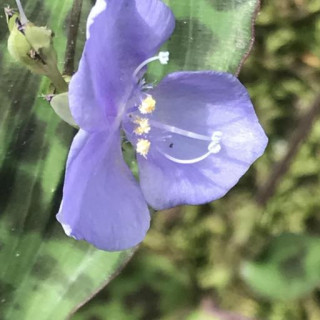
Tinantia pringlei
Spotted Widow’s Tears
Description
Source: leafsnapTinantia pringlei, sometimes known as the Mexican wandering Jew, is a perennial alpine plant in the dayflower family native to northeastern Mexico. The species is grown as an ornamental plant in temperate areas for its attractive spotted purple foliage and lavender flowers. It is also a common weed of greenhouses. The plants reproduce primarily or exclusively through self-pollination.
Care Guide
💧 Water
The spotted widow’s tears plant thrives in moderate humidity and needs consistent moisture to stay healthy. Ideally, it should be watered weekly. While it can tolerate brief droughts, the plant adapts by shedding its leaves during dry periods to conserve water. This resilience highlights its ability to withstand varying climatic conditions.
☀️ Light Partial sun
Spotted widow's tears is indigenous to habitats like forest understories and rocky areas, where it occurs in natural shade. It favors partial sun but can adjust to either full sun or full shade, demonstrating its versatile and hardy nature.
🌡️ Temperature 20–37.8°C
Spotted widow's tears comes from tropical areas, where the climate is typically warm and humid. Consequently, it is well suited to high temperatures and moisture. It does not tolerate sudden shifts in temperature and prefers a consistent thermal environment, so preventing temperature fluctuations indoors is important. It generally cannot withstand cold conditions and needs warmer temperatures to grow. If ambient temperatures fall too low, the plant may stop growing or even die.
💨 Humidity
🪴 Soil 6-7
🌱 Fertilizer
Appropriate fertilization is essential for Spotted widow's tears' health and appearance. Fertilize Spotted widow's tears in summer, repeating applications monthly throughout the season. Nutrients drive growth and support the plant's parts. Fertilization improves Spotted widow's tears' flower display, ensuring the best blooms.
🪴 Pot & Repot Every 12 months
✂️ Pruning
The Spotted Widow's Tears plant is known for its delicate, spotted leaves. To keep it healthy, it requires light pruning from early to late spring. Be sure to remove any dead stems and thin out crowded areas to improve air circulation and promote healthy growth. Regular pruning helps maintain its appealing shape and ensures vibrant development throughout the growing season.
🌿 Propagating
🐛 Diseases & pets
☠️ Toxicity
Characteristics
- Plant Type
- Herb
- Life Cycle
- Perennial
- Genus
- Tinantia
- Family
- Commelinaceae
- Hardiness Zone
- 9-11
- Mature Height
- 30 cm
- Mature Spread
- 30 cm
- Leaf Color
- Green, Dark Green
- Leaf Type
- Deciduous
- Flower Color
- Purple
- Flower Size
- 1.02 cm to 2.03 cm
- Bloom Time
- Late spring, Summer, Early fall
- Planting Time
- Spring, Summer, Autumn
- Harvest Time
- Mid summer, Late summer, Fall
- Native Area
- Mexico