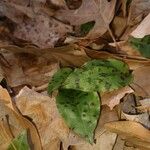
Tipularia discolor
Crippled-Cranefly · Cranefly Orchid
Description
Source: leafsnapTipularia discolor, commonly known as the cranefly orchid, is a terrestrial orchid species native to eastern North America. This unique plant grows from an underground tuber and produces a single leaf in the fall that persists through winter. In late summer, it sends up an erect stem adorned with small greenish-white flowers arranged in a loose raceme. These flowers, which lack nectar and fragrance, are pollinated by nocturnal moths. The cranefly orchid thrives in moist, acidic soils within shaded woodlands, ranging from southern Canada to Florida and westward to Texas. Due to habitat loss and over-collection, it is considered rare or endangered in some states. The plant’s common name derives from its resemblance to the elongated legs of crane flies, particularly when its stem stretches before flowering. The species name "discolor" refers to the contrasting colors of its leaf surfaces: dark green on top and purple underneath. Tipularia discolor has been used medicinally by Native Americans for various ailments such as fever, coughs, colds, headaches, and snakebites. However, it is crucial to note that any medicinal use should only be undertaken under professional guidance due to potential toxicity risks associated with the plant's alkaloid content. Overall, Tipularia discolor serves as an important indicator species for healthy woodland ecosystems while being appreciated for its unique beauty by nature enthusiasts who encounter this rare gem during their walks or hikes through eastern North America's forests.
🎭 Affection, Attractiveness
Care Guide
💧 Water Every 7 days
The Crippled Cranefly plant thrives in shaded, moist environments and prefers stable humidity levels. To care for it properly, water the plant once a week. As an indoor plant, it does well in a container, which allows you to precisely manage watering and soil moisture.
How should I water my Crippled Cranefly plant?
The watering method for the Crippled Cranefly depends on whether the plant is in an active growth phase or not. During active growth, water should be applied to the soil and occasional overhead watering can help the plant absorb moisture through its leaves, especially in warm weather. In contrast, during winter or cool and wet weather, it's best to only water the soil directly and avoid overhead watering. Signs that your Crippled Cranefly needs more water include thin and dry roots and leaves or discoloration. On the other hand, if the plant receives too much water, it will appear mushy and limp. It's recommended to grow the Crippled Cranefly in a pot with excellent drainage. During the growing season, water the plant multiple times per week, ensuring that each watering drains quickly to avoid standing water. The frequency of watering will depend on the pot size, with larger pots needing less frequent watering and smaller pots requiring more frequent watering. When watering, it's ideal to use rainwater or distilled water that matches the temperature of the air as closely as possible.
What should I do if I give my Crippled Cranefly too much or too little water?
To avoid killing your Crippled Cranefly plant, make sure the soil doesn't stay too wet for extended periods. These plants need frequent watering, but the soil should also drain water quickly. If the plant gets overwatered, it will become mushy and develop root rot. In that case, use sterile pruning shears to remove any rotted roots. Then, repot the plant in a container with proper drainage and fast-draining potting mix. However, Crippled Cranefly plants don't handle excessive repotting well, so it's important to water them correctly. If the plant starts to shrivel and feel dry, it's likely drying out faster than expected, so increase your watering frequency.
How often do I need to water my Crippled Cranefly?
During the active growth stage of your Crippled Cranefly, which is in the spring and summer, you should water it about once or twice a week. If there is hot and dry weather, you may need to water it three times a week or more. In the winter, your Crippled Cranefly also needs watering, but not as often. Watering it two to three times a month should be enough to keep it alive during the coldest months. However, if you keep your Crippled Cranefly indoors during winter, be aware that the soil may dry out faster than usual. This means you might need to increase the number of monthly waterings. In the fall, you can gradually reduce the frequency of watering from the multiple times per week during summer to a reduced schedule for winter.
What do I need to think about when giving water to my Crippled Cranefly at different times of the year and during different stages of growth?
When planning the watering schedule for your Crippled Cranefly, consider two important growth phases. The first phase is the active growth period, which occurs in spring and summer. During this time, the plant needs to be watered multiple times per week. The second phase is the rest period, which lasts for about two to three months in winter. During this period, the Crippled Cranefly requires less water and fertilizer. Watering once or twice per month is sufficient. To prepare for winter, gradually reduce watering frequency from multiple times per week in fall to the appropriate once or twice per month rate.
If I grow my Crippled Cranefly indoors, how should I water it differently?
The Crippled Cranefly needs a humid growing environment. Unfortunately, indoor locations usually lack the desired air moisture, leading to quicker drying of the plant and its soil compared to outdoor growth. To address this, consider using a humidifier in the growing room and watering the plant more often. It's important to note that although the plant prefers humidity, it also needs good air circulation to prevent excessive moisture buildup and resulting diseases. Adding a fan in the growing room will help maintain proper air circulation.
☀️ Light Full shade
Crippled Cranefly thrives in areas with moderate sunlight. Partial light encourages healthy growth, though it is not required. Native to places with dappled light, it can tolerate environments low in sun. Still, both excessive and insufficient light can hinder its development.
What are the sunlight requirements for Crippled Cranefly plants?
Crippled Cranefly, or Tipularia discolor, thrives with about 3-6 hours of sunlight daily. It's crucial to observe how sunlight moves through your garden to find spots that offer a balance of light and shade, ensuring the optimal growth of your plants. Although Crippled Cranefly originates from habitats with dappled light and can tolerate sun-scarce environments, plants need the right amount of sunlight for healthy development. Both excessive and insufficient light can hinder the growth of Crippled Cranefly.
What are the essentials for growing Crippled Cranefly indoors?
When growing Crippled Cranefly indoors, adequate lighting is essential, especially during winter or in less sunny spaces. Artificial lights, such as LED lights customized to provide specific wavelengths, can promote faster, healthier plant growth. The required artificial light intensity varies depending on the plant's natural light needs—ranging from 10-20W/sq ft for full shade plants up to 30-50W/sq ft for full sun plants. Placing the light source 12-36 inches above the plant and mimicking natural daylight hours, generally 8-12 hours per day, will help ensure optimal growth.
How can I identify and address light deficiency symptoms in Crippled Cranefly?
Symptoms of light deficiency in Crippled Cranefly include smaller new leaves, leggy or sparse growth, faster leaf drop, slowed or stopped growth, lighter-colored new leaves, chlorosis, sunscald, leaf curling, wilting, and leaf scorching. To address these issues indoors, gradually increase sunlight exposure or use artificial light, keeping a desk or ceiling lamp on for at least 8 hours daily, or investing in grow lights. Outdoors, move plants to sunnier spots gradually to avoid sunburn. Pruning obstructive branches and transplanting for better sunlight exposure are also effective strategies. However, parts of the plant that suffered from insufficient light may not recover, but new growth will be healthy with improved light conditions.
🌡️ Temperature 10–35°C
Crippled Cranefly originates from temperate regions and favors temperatures of 50 to 95 °F (10 to 35 ℃). During colder seasons, the temperature should be gradually lowered to replicate its natural habitat.
What is the native environment and temperature preference of Crippled Cranefly?
Crippled Cranefly, scientifically known as Tipularia discolor, is native to temperate environments and thrives in a temperature range of 50 to 95°F (10 to 35°C). To mimic its natural habitat, it's beneficial to progressively decrease temperatures during colder seasons. The plant possesses strong cold resistance and typically doesn't require special frost protection measures. However, ensuring the soil is moist before the first freeze can help prevent drought and water scarcity during winter and early spring.
How to protect Crippled Cranefly from extremely low winter temperatures?
Although Crippled Cranefly has a notable cold resistance, if winter temperatures are expected to drop below -25°C, providing cold protection is crucial. This can be achieved by covering the plant with insulating materials such as soil or straw. Such precautions help the plant withstand the harsh winter conditions and maintain its health and vitality.
What are the symptoms of low temperature exposure in Crippled Cranefly and how can they be addressed?
Crippled Cranefly is cold-tolerant, thriving best above 10°C and requiring conditions to be kept above -15°C during winter. Exposure to temperatures below -25°C may not exhibit noticeable changes immediately, but it can lead to decreased sprouting or lack of sprouting in spring. To mitigate this, it is recommended to remove any parts of the plant that have failed to sprout in spring, encouraging healthier growth.
What are the symptoms of high temperature exposure in Crippled Cranefly and how can they be addressed?
During the summer, it's important to ensure that temperatures around Crippled Cranefly do not exceed 35°C. Exposure to temperatures above 38°C can cause the leaves to lighten in color, curl, become susceptible to sunburn, and in severe cases, lead to the wilting and drying out of the entire plant. To combat this, trim away sunburned and dried parts of the plant, provide shade during the midday and afternoon sun either by relocating the plant or using a shade cloth, and water the plant during the cooler morning and evening hours to maintain soil moisture.
💨 Humidity
🪴 Soil 4-5
🌱 Fertilizer
Early spring, as the Crippled Cranefly comes out of dormancy and begins active growth, is the best time to fertilize it. Fertilizing supplies essential nutrients for healthy growth. Although the Crippled Cranefly has relatively low fertilizer requirements, applying fertilizer annually can improve its survival and encourage better, longer-lasting flowers.
🪴 Pot & Repot
✂️ Pruning
The Crippled Cranefly is distinguished by its uniquely colored leaves and tuberous roots. To encourage growth and flowering, perform minimal pruning in the spring, focusing only on removing dead parts. Regular maintenance helps improve air circulation and reduces the risk of diseases, which enhances the plant's beauty and longevity in a healthy environment.
🌿 Propagating
🐛 Diseases & pets
☠️ Toxicity
Characteristics
- Plant Type
- Herb
- Life Cycle
- Perennial
- Genus
- Tipularia
- Family
- Orchidaceae
- Hardiness Zone
- 6-9
- Mature Height
- 61 cm
- Mature Spread
- 15 cm
- Leaf Color
- Green, Purple, Lavender
- Leaf Type
- Deciduous
- Flower Color
- Lavender
- Flower Size
- 2.54 cm
- Bloom Time
- Mid summer, Late summer
- Planting Time
- Autumn
- Harvest Time
- Early fall, Mid fall