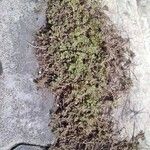
Tiquilia plicata
Fan-leaf tiquilia · Fanleaf crinklemat · Fanleaf crnklemat
Description
Source: leafsnapTiquilia plicata, the fanleaf crinklemat or fan-leaved tiquilia, is a perennial, subshrub-like plant of lower elevation deserts in the family Boraginaceae, the borages and forget-me-nots. It is found in the southwestern United States and northwestern Mexico, in the states of California, Nevada, Arizona, Sonora, and Baja California. It is a short, low-growing plant, seldom over 12 in tall. It has purple, lavender to bluish 5-lobed flowers; also small ovate leaves, crinkly with ridges, up to 1/2 in.
Care Guide
💧 Water
The fan-leaf crinklemat is well-suited to a schedule of weekly watering, which helps balance its moisture retention with drought resistance. For optimal health, it's important to water it regularly once a week and to plant it in well-draining soil. This prevents excess moisture buildup, which is crucial for successfully growing it outdoors in arid conditions.
☀️ Light Full sun
Fan-leaf crinklemat is a sun-loving, perennial herbaceous plant that comes from open habitats and is frequently found in meadows and grasslands. It prefers full sun but can also tolerate partial sun.
What are the sunlight requirements for Fan-leaf crinklemat?
Fan-leaf crinklemat (Tiquilia plicata) thrives in various sunlight conditions. For 'Full sun' exposure, it needs above 6 hours of sunlight daily. If the plant is in 'Partial sun', about 3-6 hours of sunlight is ideal. It's important to observe how sunlight moves through your garden throughout the day. This observation will help you pick locations that offer an optimal balance of light and shade, promoting the well-being of your Fan-leaf crinklemat plants.
🌡️ Temperature 20–37.8°C
Fan-leaf crinklemat can tolerate a wide range of temperatures, though its distribution may still be restricted by different combinations of moisture and heat. It does best in warm summer conditions with sufficient rainfall or regular watering. Extended periods of cloudy, rainy weather or prolonged high heat can raise the chance of Fan-leaf crinklemat dying. In winter, adequate protection from cold can increase the plant’s survival rate.
💨 Humidity
🪴 Soil 6-7
🌱 Fertilizer
One application of fertilizer in spring is typically enough for Fan-leaf crinklemat, though repeated feedings can maximize growth. Feed every month to month and a half. Fertilization improves leaf appearance and function, encouraging uniform color and a healthy texture. It also promotes root growth and nutrient uptake for long-term plant health.
🪴 Pot & Repot
✂️ Pruning
Fan-leaf crinklemat is characterized by its distinctive fan-shaped, crinkled leaves. For optimal results, prune the plant from early to late spring while it is actively growing. Key pruning techniques include removing damaged branches, thinning out crowded areas, and shaping the plant for aesthetic appeal. These practices promote vigorous flowering, improve the plant's health, and help prevent disease. For more detailed guidance, refer to reliable horticultural sources.
🌿 Propagating
🐛 Diseases & pets
☠️ Toxicity
Characteristics
- Plant Type
- Herb
- Life Cycle
- Perennial
- Genus
- Tiquilia
- Family
- Boraginaceae
- Hardiness Zone
- 9-11
- Mature Height
- 30 cm
- Mature Spread
- 30 cm
- Leaf Color
- Gray, Dark Gray
- Leaf Type
- Evergreen
- Flower Color
- Lavender
- Flower Size
- 0.51 cm
- Bloom Time
- Mid spring, Late spring, Summer, Early fall
- Planting Time
- Spring, Summer, Autumn
- Harvest Time
- Summer, Fall
- Native Area
- Mexico