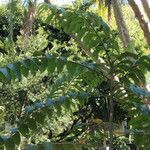
Toona ciliata
Red Cedar · Australian redcedar · Australian red-cedar · Australian-cedar · Toon
Description
Source: leafsnapToona ciliata is a forest tree in the mahogany family which grows throughout southern Asia from Afghanistan to Papua New Guinea and Australia.
Care Guide
💧 Water
Red cedar flourishes in the humid conditions typical of its native habitat and needs watering every two weeks. While it is moderately drought-tolerant, it remains resilient to changes in weather. This adaptability makes it ideal for temperate zones where the availability of water varies with the seasons.
How should I water my Red cedar tree in the best way?
To ensure excellent root development, it is helpful to place a garden hose at the base of the plant. It is important to avoid spraying the leaves directly, especially if the plant is exposed to direct sunlight outdoors. To keep the roots moist, you can use bubblers placed on each plant or soaker hoses that cover the entire garden or bed. When adding or removing plants, it is beneficial to use soaker hoses to promote deep root growth. Make sure to drain any excess water and wait for the soil to dry before watering again. Watering at ground level is advised to prevent diseases. On a sunny day, spraying the entire bush can be beneficial. Whether the plant is in a pot or in the ground, it is important to remember that Red cedar prefers deep watering rather than light sprinkling.
What do I do if I give Red cedar too much or too little water?
An overwatered Red cedar can display several signs of distress. The leaves may turn yellow, drop off, and wilt, giving the plant a dull and unhealthy appearance. Mushy stems are also common with overwatering. When these signs begin to show, it's important to adjust your watering schedule accordingly. However, wilting can also be a sign of under watering. In this case, the leaves will become crispy and dry instead of wilted. To determine if watering is needed, check the soil. If it is dry, a full watering is necessary. Although enough water will help the Red cedar recover, it may still exhibit dryness and yellow leaves for a few days due to damage to the root system. Once it returns to normal, the yellowing of the leaves will cease. When caring for a Red cedar indoors, always check the moisture levels in the pot. Avoid overwatering and look for signs of black spots, which indicates excess moisture. If black spots are present, allow the soil to dry by refraining from watering for a few days. Overwatering can lead to root rot, so it may be necessary to transfer the plant to a different pot if discolored and slimy roots are observed. Always take precautions to prevent root rot, such as avoiding overly soggy soil. When planting a Red cedar outdoors, ensure that the soil is adequately moist. If the soil feels too dry, it could indicate underwatering, and the plant will require adequate watering to recover.
How often do I need to water my Red cedar?
The Red cedar prefers to be watered deeply but less often. Especially when planted in pots, it's important to give them a gallon of water each time. Pots have limited water storage, so the soil dries out quickly. In cold regions, watering is necessary every 3 to 5 days. It's best to water early in the morning when the soil is dry, both indoors and outdoors. To determine if watering is needed, check the soil inside. When the top 2-3 inches of soil is dry, it's time for a thorough watering. During hot days, check the moisture daily as the soil in the pot can dry out rapidly. For gardens, irrigation of the soil is also necessary. In hot climates, watering once a week is recommended. Only water when you notice the top 2-3 inches of soil becoming too dry, indoors or outdoors. Take into account the amount of rainfall and avoid watering excessively to prevent root rot. If there is abundant rainfall, additional watering may not be needed. Red cedar mostly grows in spring and fall. When planted outdoors, add a layer of mulch 3 to 4 inches deep to conserve water. Sandy soil drains faster, so plants in this type of soil need more frequent watering. However, clay soil requires less frequent watering, allowing the plant to dry out for 2-3 days without developing root rot. Keep track of watering dates on the calendar, and if you notice the leaves drooping, it may be a sign that watering is needed a day earlier.
How much water should I give my Red cedar?
- The Red cedar generally needs about a gallon of water on a regular basis. - For potted plants, water them deeply until the water drips out of the bottom of the pot. Then, wait for the soil to dry before watering again. You can use a water calculator or moisture meter to determine how much water you've given your plant in a week. - During the flowering period, provide plenty of water but allow the moisture to evaporate afterwards to prevent root rot. - If the Red cedar is planted outdoors with sufficient rainfall, it may not need additional watering. - When the Red cedar is young or newly planted, ensure it receives 1-2 inches of rain per week. As it grows, it can rely solely on rainfall. Only when the weather is extremely hot or there is no rainfall for 2-3 weeks, consider giving the Red cedar a full watering during a cooler part of the day to prevent heat damage. Additional watering will be necessary during extended dry spells.
Do I need to water my Red cedar more or less depending on the time of year or the weather?
To care for a Red cedar tree, it is important to provide the right amount of water depending on the season and weather conditions. During the spring and fall, the soil should be kept moist but not overly soggy. Alternating dry and moist soil conditions will promote healthy growth. In the summer, hot weather can cause water to evaporate quickly, so more frequent watering may be necessary if there is a lack of rainfall. During winter, the Red cedar needs less water as it goes dormant and drops its leaves. Using a well-draining soil mixture like terracotta can help water evaporate faster. Once the tree begins to leaf out and go dormant, watering can be skipped as it can rely on fall and winter rains to survive the dormant period. When the Red cedar is in a pot, it has limited root growth, so it should be regularly watered, especially during the summer. Good drainage is crucial to prevent cold and wet roots. Watering the entire root system deeply once or twice a week is recommended, avoiding shallow sprinkles that may encourage fungal growth. Even during fall and winter dormancy, the tree should not be allowed to dry out completely. It is important to avoid overwatering and ensure proper drainage to prevent the tree from sitting in water for too long, as this can be detrimental to its health. Applying mulch can help reduce stress, conserve water, and encourage healthy blooms.
☀️ Light Full sun
The red cedar grows best in locations with plentiful, unobstructed sunlight. The sun's radiant energy is essential for its healthy growth and development. Accustomed to the bright conditions of its place of origin, red cedar can struggle when situated in areas with limited light. Both too little and too much light can negatively affect its vitality.
What are the sunlight requirements for Red Cedar?
Red Cedar requires full sun, meaning it needs above 6 hours of sunlight daily. It's essential to observe how sunlight moves through your garden to find spots that offer a balance of light and shade, ensuring the plants' optimal growth. The red cedar thrives when exposed to abundant, unobstructed sun rays, which are vital for its healthy growth and development. However, both insufficient and excessive light can negatively impact its vitality.
How can artificial lighting supplement sunlight for Red Cedar?
When natural sunlight is insufficient, especially in winter or less sunny spaces, artificial lights offer a crucial solution for indoor plants. Using the right type of artificial light, like LED lights, helps provide specific wavelengths necessary for plant growth. For plants needing full sun, 30-50W/sq ft of artificial light is recommended, 20-30W/sq ft for partial sun plants, and 10-20W/sq ft for full shade plants. Placing the light source 12-36 inches above the plant simulates natural sunlight effectively. Most plants thrive with 8-12 hours of artificial light per day.
What are the symptoms of insufficient or excessive sunlight in Red Cedar?
Red Cedar can tolerate partial shade but exhibits symptoms if light conditions are poor, including smaller new leaves, leggy or sparse growth, faster leaf drop, slower or halted growth, and lighter-colored new leaves due to insufficient sunlight. Excessive sunlight can cause chlorosis, sunscald, leaf curling, wilting, and leaf scorching, indicating damage to the plant.
What solutions can mitigate sunlight-related issues for Indoor and Outdoor Red Cedar?
To address insufficient sunlight for indoor Red Cedar, gradually move the plant to a sunnier spot each week to receive at least 6 hours of direct sunlight daily, utilizing a south-facing window. Using artificial light for large or non-movable plants for at least 8 hours daily can supplement the plant's light intake. For outdoor plants, gradually increasing exposure to sunlight helps avoid sunburn. Pruning obstructing trees and transplanting smaller plants to sunnier locations with good drainage can also improve sunlight access. Note that parts of plants affected by insufficient sunlight may not recover, but new growth should be healthy post-adjustment.
🌡️ Temperature 20–37.8°C
Red cedar naturally occurs in habitats where temperatures generally range from 68 to 100 °F (20 to 38 ℃). It especially thrives in these warmer conditions. If temperatures fall below its preferred range during certain seasons, adjustments to its surroundings may need to be made.
What are the ideal temperature conditions for growing Red cedar (Toona ciliata)?
Red cedar thrives in environments with temperatures ranging from 68 to 100°F (20 to 38°C), favoring warmer climates for optimal growth. It is important to adjust its environment during colder seasons to prevent harm, especially when temperatures fall below its preferred range. During winter, maintaining the temperature above 20°C and avoiding exposure to temperatures close to 0°C is crucial for the health of the Red cedar. If grown outdoors, it should be brought indoors in autumn and placed near a bright window, but kept at a distance from direct heat sources to ensure the plant's well-being.
How should Red cedar be cared for in low temperatures?
Red cedar is sensitive to cold temperatures and thrives best when the temperature is consistently above 20°C. It is crucial to keep the plant above freezing point during winter, as temperatures below -5°C can cause the leaves to lighten in color, which progressively turns brown or black after frost damage, leading to symptoms such as wilting and drooping. To care for Red cedar in low temperatures, trim off the frost-damaged parts and move the plant to a warmer, indoor environment immediately. Place it near a south-facing window for ample sunlight, but ensure it is not near heaters or air conditioning vents to avoid excessively dry air.
What steps should be taken if a Red cedar is exposed to high temperatures?
During summer, it's essential to ensure that Red cedar is kept in conditions where the temperature does not exceed 38°C to avoid heat stress. Exposure to temperatures beyond 43°C can lighten the leaf color and make the plant susceptible to sunburn. If your Red cedar encounters such high temperatures, trim away the sunburned and dried parts to prevent further damage. Relocate the plant to an area with shade, especially from the midday and afternoon sun, to protect it from excessive heat. Watering the plant in the morning and evening can also help keep the soil adequately moist, fostering a healthy growth environment.
💨 Humidity
🪴 Soil 5-7
🌱 Fertilizer
The care of Red cedar greatly depends on fertilization. Continuous nutrition during the growth period maintains the energy needed for radiant leaves and promotes general growth. If fertilization is overlooked, it could lead to unhealthy leaves, a decrease in aesthetic appeal, and inhibited or fragile growth susceptible to snapping.
Why should I put fertilizer on my Red cedar?
Red cedar needs regular fertilization because its showy leaves require a lot of energy to grow and stay healthy. However, the tree also needs energy for the growth of its stems, branches, roots, and other essential structures. If you don't fertilize it, there are two likely outcomes. Firstly, the leaves will lose their natural color and texture, making the tree look unhealthy and less attractive. Secondly, the tree's overall growth will slow down, and it may produce weak growth that is susceptible to breakage.
When should I fertilize my Red cedar?
Red cedar plants will benefit from occasional feedings, eliminating the need for a set feeding schedule upon planting. One simple way to fertilize your Red cedar is to apply fertilizer when watering the plant occasionally. During the growing season, it is important to provide a sufficient amount of water for your Red cedar. You can feed the plant once every two to three weeks, consistently throughout the period when it is producing new growth.
When is the best time to not fertilize my Red cedar?
You can maintain a regular fertilization schedule for your Red cedar throughout most of the year, especially during the active growing season of spring, summer, and early fall. However, it is important to note that during the winter, the Red cedar enters a dormant growth phase. During this phase, the plant does not experience significant new growth and uses less energy overall. Therefore, there is no need to fertilize the plant during the winter.
What kind of fertilizer does my Red cedar tree need?
When fertilizing a Red cedar, it is important to use a specific blend of nutrients, although each nutrient is present in low amounts. The ideal N-P-K ratio for the fertilizer is 3-1-2, but a general-purpose fertilizer with an even blend of nutrients can also be effective. Regardless of the type of fertilizer chosen, the ratio number for each nutrient should be 3 or lower. For liquid-based fertilizers, it may be beneficial to dilute the strength by half. Granular fertilizer is also an option with minimal downsides, but using liquid fertilizer while watering the Red cedar is generally the most practical choice.
How can I give my Red cedar tree plant food?
To easily fertilize a Red cedar, there are a couple of options. One option is to fertilize it while watering. To do this, gather fertilizer and a water container like a watering can. Dilute the fertilizer by mixing it with water, then pour the mixture onto the soil. This allows the fertilizer to reach the roots. Another option is to use granular fertilizer. Simply sprinkle some on the soil where the Red cedar is located. Granular fertilizers are slow-release, so you don't need to fertilize as often as with liquid fertilizers. In both cases, it's recommended to water the tree while fertilizing.
🪴 Pot & Repot
✂️ Pruning
Red cedar trees exhibit strong growth and attractive foliage. Pruning them in early spring is crucial for removing dead wood and promoting better air circulation. Regular pruning every 2 to 3 years not only improves the tree's structure but also helps deter pests. Additionally, keeping your pruning tools clean is important to prevent infections.
🌿 Propagating
🐛 Diseases & pets
☠️ Toxicity
Characteristics
- Plant Type
- Tree
- Life Cycle
- Perennial
- Genus
- Toona
- Family
- Meliaceae
- Hardiness Zone
- 9-12
- Mature Height
- 35.05 m
- Mature Spread
- 20.12 m
- Leaf Color
- Green, Blue
- Leaf Type
- Deciduous
- Flower Color
- White
- Flower Size
- 0.25 cm to 0.51 cm
- Bloom Time
- Late spring, Early summer
- Planting Time
- Spring, Summer, Autumn
- Harvest Time
- Late summer, Early fall, Mid fall
- Native Area
- Nepal, Sri Lanka, India, Malaysia, Philippines, Bangladesh, Pakistan, Laos, China, Indonesia, Cambodia, Vietnam, Myanmar, Papua New Guinea, Bhutan, Thailand