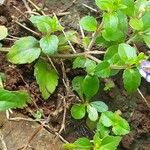
Torenia crustacea
Malaysian false pimpernel · Malayan False Pimpernel · Brittle false pimpernel · Round-fruited lindernia
Description
Source: leafsnapTorenia crustacea, commonly known as the coast torenia or shellflower, is a species of flowering plant in the family Linderniaceae. Native to coastal areas of eastern and southern Africa, as well as Madagascar and nearby islands, this plant typically thrives in sandy soils near beaches or mangroves. Torenia crustacea is a low-growing, herbaceous perennial that can reach up to 30 centimeters in height. It features small, oval-shaped leaves arranged oppositely on the stem. The trumpet-shaped flowers, each with five petals, come in shades of blue, purple, pink, or white, often accented with yellow markings on the throats. Blooming from spring through summer, the coast torenia attracts pollinators such as bees and butterflies with its nectar-rich flowers. It can be cultivated both indoors and outdoors, although it prefers partial shade to full sun exposure. In traditional African medicine, Torenia crustacea has been used for its medicinal properties, such as treating feverish conditions like malaria due to its anti-inflammatory attributes. Overall, Torenia crustacea is an attractive ornamental plant that adds color and beauty to any setting. Additionally, it offers valuable medicinal benefits for those who utilize it in traditional medicine practices across Africa.
🎭 Safety, Well-being
Care Guide
💧 Water Every 3 days
The Brittle False Pimpernel is native to tropical regions, where it flourishes in consistently moist and humid conditions. It requires soil that remains evenly moist, which means you should water it weekly. Extra attention is needed during its active growing season to support its delicate flowering process.
How should I water my Brittle False Pimpernel to keep it healthy?
To water Brittle False Pimpernel, you have various options such as using a garden hose with a spray nozzle, a watering can, or any common watering tool. This plant is not too particular about the type of water it receives, so rainwater, tap water, or filtered water will all work fine. However, it's best to avoid watering from overhead as it can harm the leaves and flowers and potentially lead to disease. A drip irrigation system is often a good choice for watering this plant, as it provides even and direct watering to the soil. If you have a Brittle False Pimpernel in a container, you can use a cup, watering can, or tap water to directly water the soil.
What should I do if I give my Brittle False Pimpernel too much water or too little water?
The solution for underwatering Brittle False Pimpernel is simple: water it more regularly when you notice it lacks moisture. On the other hand, overwatering can be a serious issue, leading to diseases and eventual decline or death if not caught early. To prevent this, it's important to choose an appropriate location with ample sunlight to dry the soil and good drainage to prevent waterlogging. If you have overwatered a potted Brittle False Pimpernel, consider changing it to a new pot with better drainage and loose soil when repotting.
How often should I give water to my Brittle False Pimpernel?
Brittle False Pimpernel requires regular watering throughout the growing season. In spring, water it once a week. As the season gets warmer, you may need to increase watering to two to three times a week. However, exceeding this rate can harm the plant. It's important to keep the soil moist but not wet, regardless of how often you water. When watering Brittle False Pimpernel in a pot, you'll need to water more frequently. Soil in pots can dry out faster, so plan to water container-grown plants a few times per week, as opposed to just once for plants in the ground.
How much water does my Brittle False Pimpernel plant need?
There are a few different ways to figure out how much water your Brittle False Pimpernel needs. One method is to gauge the soil's moisture by feeling it and watering until the top six inches feel moist. Another approach is to use a specific measurement, like about two gallons per week, taking into account the weather and soil dryness. However, following strict guidelines can cause overwatering if the plant needs less water. When growing in a container, a different method is required. Simply water enough to moisten all dry layers of soil, which can be tested by sticking a finger in the soil or observing excess water draining from the pot's holes.
How do I know if I'm giving enough water to my Brittle False Pimpernel?
Avoiding overwatering your Brittle False Pimpernel can be somewhat challenging because of their deep roots, which need to be moistened weekly. However, these plants are highly prone to root rot and browning if overwatered. Underwatering is less of a concern as these plants can survive without additional watering for some time. But if you neglect to water them for too long, you may observe wilting and dry leaves.
☀️ Light Full sun
The brittle False Pimpernel does best with plentiful sunlight, though it can tolerate periods of moderate light. It originates from habitats with abundant sun and has adapted to use those conditions effectively for essential processes. Too much or too little sunlight can have harmful effects on its health.
What are the sunlight requirements for Brittle False Pimpernel?
Brittle False Pimpernel thrives in environments with abundant sunlight, requiring full sun exposure of above 6 hours of sunlight daily but can also tolerate partial sun, meaning about 3-6 hours of sunlight. The plant's health can suffer if these sunlight levels are not met, so it's essential to watch how sunlight moves through your garden to choose spots that offer the right balance of light and shade.
What essentials should be considered for the growth of Brittle False Pimpernel?
The growth of Brittle False Pimpernel relies heavily on ample sunlight. Originating from environments where sun exposure is abundant, this plant has adapted to utilize sunlight effectively for its vital processes. If the natural sunlight is insufficient, especially during winter or in less sunny spaces, artificial lighting can be an essential solution. Specifically, indoor plants might need LED lights, which can be customized to provide the necessary wavelengths of light. The amount of artificial light required varies based on the plant's specific sun exposure needs: full sun plants need 30-50W/sq ft, partial sun plants need 20-30W/sq ft, and full shade plants need 10-20W/sq ft. Proper distance and duration of artificial light exposure are also crucial for mimicking natural sunlight conditions.
What are the symptoms of light deficiency or excessive sunlight in Brittle False Pimpernel?
Brittle False Pimpernel shows various symptoms when exposed to inadequate light or excessive sunlight. Light deficiency can lead to smaller new leaves, leggy or sparse growth, faster leaf drop, slower or halted growth, and lighter-colored new leaves. Under excessive sunlight, symptoms like chlorosis (loss of green color and yellowing of leaves), sunscald (damage to leaves or stems from intense exposure), leaf curling, wilting, and leaf scorching may occur. These symptoms reflect the plant's struggle to adapt to its light conditions, impacting its health and growth.
How can the growth of Brittle False Pimpernel be optimized in indoor, outdoor, and ground environments?
To optimize the growth of Brittle False Pimpernel in various environments, different strategies are recommended. Indoors, gradually increase sunlight exposure to at least 6 hours daily or use artificial light to supplement light needs. Outdoors, move plants to sunnier spots gradually to prevent sunburn. For plants in the ground, reduce obstructions like trees by pruning and consider transplanting smaller plants to sunnier locations during their dormant periods. Minimizing sudden changes in light exposure and ensuring adequate sunlight or artificial light can promote healthy new growth even if parts of the plant have been affected by previous light conditions.
🌡️ Temperature 20–37.8°C
Brittle False Pimpernel is native to areas with a temperate climate and generally grows best at 68 to 100.4 °F (20 to 38 ℃). In transitional seasons, it is helpful to reduce the temperature slightly to mimic the plant's natural temperate conditions.
What is the ideal temperature for growing Brittle False Pimpernel?
Brittle False Pimpernel thrives in temperatures ranging from 68 to 100.4 °F (20 to 38 °C). To mimic its natural environment, during transitionary seasons, it's recommended to slightly lower the heat level. The plant loves heat and suffers in cold temperatures. In autumn, it's advisable to move outdoor plants indoors, placing them near a bright window but away from heaters. Keeping the temperature above 20°C during winter promotes growth, while temperatures near 10°C or lower can harm the plant.
How does low temperature affect Brittle False Pimpernel and what are the solutions?
Brittle False Pimpernel is not tolerant of low temperatures and prefers conditions above 20°C, requiring temperatures to be kept above 10°C during winter. Exposure to temperatures below 5°C may cause the leaves to lighten in color, and frost damage can turn them brown or black, leading to wilting and drooping. To address frost damage, trim the damaged parts and move the plant to a warmer location indoors, preferably near a south-facing window for ample sunlight. Ensure the plant is not placed near heaters or air conditioning vents to avoid dry air.
How does high temperature affect Brittle False Pimpernel and what are the solutions?
In summer, Brittle False Pimpernel should be kept at temperatures below 38°C. Temperatures exceeding 43°C can lighten the leaf color and increase susceptibility to sunburn. To mitigate heat stress, trim the sunburned and dry parts of the plant. Relocate the plant to a shaded area during the midday and afternoon sun. Ensure the soil remains moist by watering the plant in the morning and evening.
💨 Humidity
🪴 Soil 5-6
🌱 Fertilizer
When most of the Brittle False Pimpernel's blooms have opened to full size, resume fertilizing. At the height of bloom production, apply fertilizer every three to four weeks, as weather permits. Once the plant begins producing fewer new blooms, stop fertilizing; there is no need to feed it when it can no longer produce more blooms.
🪴 Pot & Repot
✂️ Pruning
The Brittle False Pimpernel is known for its vibrant flowers and delicate foliage. To encourage growth and maintain its shape, it is best to prune this plant from early to late spring. Focus on removing spent flowers and trimming any overly long stems. Regular pruning improves air circulation, reduces the risk of disease, and helps keep the Brittle False Pimpernel healthy and visually appealing in the garden.
🌿 Propagating
🐛 Diseases & pets
☠️ Toxicity
Characteristics
- Plant Type
- Herb
- Life Cycle
- Annual, Perennial
- Genus
- Torenia
- Family
- Linderniaceae
- Hardiness Zone
- 11
- Mature Height
- 5 cm to 20 cm
- Mature Spread
- 15 cm to 25 cm
- Leaf Color
- Green
- Leaf Type
- Semi-evergreen
- Flower Color
- Lavender, White
- Flower Size
- 1.02 cm
- Bloom Time
- Summer, Early fall, Mid fall
- Planting Time
- Spring, Summer, Autumn
- Harvest Time
- Late summer, Fall, Early winter
- Native Area
- Sri Lanka, India, Malaysia, Madagascar, Pakistan, Nigeria, Guinea-Bissau, Fiji, Sierra Leone, Indonesia, Cambodia, Cameroon, Burundi, Ghana, South Korea, Congo, Nepal, Central African Republic, Peru, Philippines, Bangladesh, Laos, Guinea, China, Myanmar, Japan, Senegal, Côte d'Ivoire, Congo (DRC), Thailand, Gabon