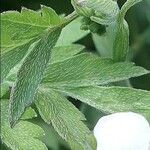
Torilis japonica
ماستونک ژاپنی، · Hedge Parsley · Upright Hedge-parsley · Erect hedgeparsley · Japanese hedge-parsley
Description
Source: leafsnapTorilis japonica, the erect hedgeparsley, upright hedge-parsley or Japanese hedge parsley, is a herbaceous flowering plant species in the celery family Apiaceae. Japanese hedge parsley is considered both an annual and biennial plant depending on the biogeographical location. This means Japanese hedge parsley can complete its life cycle in either one or two growing seasons depending on habitat. Japanese hedge parsley is typically found in areas with disturbed soils, pastures, margins, open woodland, near waste sites, or right-of-way habitats. It can withstand a variety of habitats, thriving in partial and full shaded areas, but also withstanding habitats with full sunlight penetration. It is considered an aggressive invasive species in North America; invading a wide range of habitats due to its environmental tolerance and tendency to outcompete native vegetation. This species is considered a threat in several areas that causes problems relating to overall environmental health and stability. Aside from its environmental implications, T. japonica has potential to fight several cancers through a terpene it produces called Torilin, extracted from its fruits.
Care Guide
💧 Water
Erect hedgeparsley, which originates from temperate understory regions, thrives in environments with consistent moisture. It benefits from regular weekly watering. While it has moderate drought tolerance, it requires well-drained soil to avoid waterlogging, especially during its active growing season, to ensure optimal flowering.
How should I water my Erect hedgeparsley?
To water Erect hedgeparsley, there are a few options you can choose from. You can use a garden hose with a spray nozzle, a watering can, or any other common watering tool. This plant is not too selective about the water it receives, so rainwater, tap water, or filtered water will do just fine. However, it's best to avoid watering from overhead as it can harm the leaves and flowers and may cause diseases. A drip irrigation system is often recommended for watering Erect hedgeparsley as it provides an even and direct application of water to the soil. If you have a container-grown Erect hedgeparsley, you can use a cup, watering can, or tap water to water it directly on the soil.
What should I do if I give my Erect hedgeparsley too much or too little water?
To remedy underwatering in Erect hedgeparsley, simply water the plant more regularly when you notice it lacking moisture. Overwatering, on the other hand, can be more problematic as it can lead to diseases and the decline and death of the plant. To prevent this, choose a growing location with ample sunlight to dry the soil and good drainage to prevent waterlogging. If you overwater your potted Erect hedgeparsley, consider changing it to a new pot with better soil drainage and sufficient drainage holes. Repot with loose soil and an efficiently draining pot.
How often do I need to water my Erect hedgeparsley plant?
To ensure proper growth, erect hedgeparsley requires regular watering during the growing season. In spring, water this plant once a week, but as the season progresses and the weather gets warmer, you may need to water it two to three times per week. However, be cautious not to overwater as it can harm the plant. Keep the soil moist but not wet, regardless of the watering frequency. When it comes to potted erect hedgeparsley, you'll need to water more frequently as the soil in pots tends to dry out faster. Typically, water container-grown plants a few times per week compared to just once per week for plants in the ground.
How much water does my Erect hedgeparsley plant require?
There are a few ways to decide how much water your Erect hedgeparsley needs. Some gardeners feel the soil to gauge its moisture level and water until the top six inches feel moist. Another option is to use a specific measurement, like two gallons per week, adjusting based on temperature and soil dryness. However, be careful not to overwater if your plant needs less than two gallons. When growing in a container, you should water enough to moisten all dry layers of soil. Check with your finger or look for excess water draining from the pot.
How can I know if I'm giving enough water to my Erect hedgeparsley?
Avoiding overwatering your Erect hedgeparsley can be challenging. These plants have deep roots and need weekly watering to keep the soil moist. However, they are highly prone to root rot and browning when overwatered. Underwatering is less of a concern as these plants can survive without supplemental watering for a period of time. But if you wait too long, they will start to wilt and you may see dry leaves.
☀️ Light Full sun
Erect hedgeparsley performs best in locations that receive abundant sunlight and prefers settings with considerable sun exposure. It can tolerate areas with only moderate light. Poor growth may result from insufficient light or from excessive exposure, the latter possibly causing leaf burn.
What are the sunlight requirements for Erect Hedgeparsley?
Erect hedgeparsley thrives in full sun, requiring above 6 hours of sunlight daily, but it can also manage in partial sun, with about 3-6 hours of sunlight. It's vital to observe the movement of sunlight through your garden to find spots that offer a balance of light and shade, ensuring the plants' well-being. In environments with less natural light or overly intense sunlight, adjustments such as providing shade or using artificial lighting may be necessary to prevent unfavorable growth conditions like diminished growth or leaf burn.
How does artificial lighting benefit indoor plants, and what are the guidelines for its use?
Indoor plants, including Erect hedgeparsley, require adequate lighting for optimal growth, especially when natural sunlight is insufficient. Artificial lights, such as LED lights, can be critical in promoting healthier growth by providing the necessary wavelengths. The guidelines for using artificial light include selecting the right type of light, setting the appropriate distance (12-36 inches above the plant), and determining the right duration of light exposure, typically 8-12 hours per day. The amount of artificial light needed varies by plant type: full sun plants require 30-50W/sq ft, partial sun plants require 20-30W/sq ft, and full shade plants need 10-20W/sq ft.
What are common symptoms of light deficiency or excess in Erect hedgeparsley?
Indoor Cultivation of erect hedgeparsley with insufficient light can lead to symptoms like smaller new leaves, longer spaces between leaves resulting in a leggy appearance, faster leaf drop, slower or halted growth, pale new leaves, and conditions like chlorosis and sunscald due to excessive sunlight. Other symptoms of light stress include leaf curling, wilting, and leaf scorching, which indicate issues with light exposure and can significantly impact the plant's health.
What solutions can improve light conditions for indoor and outdoor Erect hedgeparsley plants?
To optimize growth for erect hedgeparsley, gradually acclimate plants to sunnier areas, aiming for at least 6 hours of direct sunlight daily. For indoor plants, utilize south-facing windows, keep curtains open, or use artificial lighting like desk or ceiling lamps for 8 hours a day, or invest in professional grow lights. Outdoors, adjust plant positioning gradually to avoid sunburn from sudden exposure changes. Removing obstructions or transplanting can also enhance sunlight access. Note that parts of the plant damaged by insufficient light might not recover, but new growth should be healthy after adjusting light exposure.
🌡️ Temperature 10–37.8°C
Erect hedgeparsley is native to habitats where temperatures range from 68 to 100 °F (20 to 38 °C). It favors this warm range and may need temperature management across seasons to maintain healthy growth.
What is the indigenous temperature range for Erect hedgeparsley?
Erect hedgeparsley, botanically known as Torilis japonica, thrives in warm environments with temperatures ranging between 68°F (20°C) and 100°F (38°C). This range signifies the plant's preference for warmer climates, and to maintain its healthful growth, temperature management may be necessary during varying seasons.
Does Erect hedgeparsley need frost protection during winter?
Although Erect hedgeparsley exhibits strong cold resistance, special frost protection measures are generally not required. However, for winters where temperatures are expected to plummet below -25°C, it becomes essential to provide the plant with cold protection. This can be effectively managed by covering the plant with insulating materials such as soil or straw. Additionally, watering the plant abundantly before the first freeze in autumn helps the soil stay moist and enters a frozen state, combating drought and water scarcity during the winter and early spring.
How does Erect hedgeparsley react to low temperatures, and what are the solutions?
Erect hedgeparsley is cold-tolerant, ideally kept above 0°C during winter, and thrives best when temperatures are over 20°C. When temperatures fall below -25°C, the plant does not show immediate changes during winter; however, this may lead to reduced sprouting or even a lack of sprouting by springtime. A solution to this issue is to remove any plant parts that have failed to sprout in the spring.
What should be done if Erect hedgeparsley experiences high temperatures?
In the summer, it is critical to ensure the temperature around Erect hedgeparsley does not exceed 38°C. Exposed to temperatures above 43°C, the plant's leaves may lighten in color, curl, become prone to sunburn, or, in severe cases, the entire plant may wilt and dry. To mitigate these issues, sunburned and dried parts should be trimmed away. Moving the plant to a shaded location or using a shade cloth to protect it from the midday and afternoon sun is advisable. Additionally, watering the plant during cooler times of the day, such as in the morning and evening, helps maintain soil moisture.
💨 Humidity
🪴 Soil 6-7
🌱 Fertilizer
Erect hedgeparsley benefits from regular, light applications of fertilizer to encourage healthy leaf development. Fertilize Erect hedgeparsley roughly once a month during the summer. Nitrogen is essential for foliage, and supplying nitrogen-rich sources helps Erect hedgeparsley do well.
🪴 Pot & Repot
✂️ Pruning
🌿 Propagating
🐛 Diseases & pets
☠️ Toxicity
Characteristics
- Plant Type
- Herb
- Life Cycle
- Annual, Biennial
- Genus
- Torilis
- Family
- Apiaceae
- Hardiness Zone
- 6-12
- Mature Height
- 0.61 m to 1.83 m
- Mature Spread
- 20 cm to 49 cm
- Leaf Color
- Green
- Leaf Type
- Deciduous
- Flower Color
- White
- Flower Size
- 0.25 cm
- Bloom Time
- Late spring, Early summer, Mid summer
- Planting Time
- Spring, Summer
- Harvest Time
- Mid summer
- Native Area
- India, Austria, Turkey, Sweden, Slovakia, Montenegro, Pakistan, Croatia, Slovenia, Belarus, Russia, Germany, Indonesia, Estonia, Koppen, South Korea, Latvia, Romania, Belgium, Moldova, Portugal, Nepal, Netherlands, France, Czech Republic, Bulgaria, Armenia, Poland, Greece, Ukraine, Serbia, China, Lithuania, Norway, Afghanistan, Italy, Spain, Switzerland, Vietnam, Myanmar, Japan, Finland, Denmark, Bhutan, Iran, Albania, Ireland, United Kingdom, Hungary, Azerbaijan