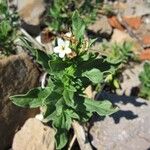
Tournefortia sibirica
Siberian sea rosemary
Description
Source: leafsnapTournefortia sibirica, commonly known as Siberian tea, is a perennial shrub from the Boraginaceae family. Native to temperate regions of Asia and Europe, this plant can grow up to 1.5 meters in height. Its woody stem is adorned with small, lance-shaped green leaves that are covered in fine hairs. During the summer, Siberian tea produces clusters of small white or blue flowers, which later give way to small black berries filled with numerous seeds. The plant is traditionally valued for its medicinal properties due to its high content of flavonoids, tannins, and essential oils. In addition to its medicinal uses, Siberian tea is also popular as an ornamental plant because of its attractive foliage and flowers. It thrives in well-drained soil with moderate watering and can be grown in full sun or partial shade. Overall, Tournefortia sibirica is a versatile plant that offers both medicinal benefits and aesthetic appeal, making it an excellent choice for gardeners looking to enhance their landscape designs.
Care Guide
💧 Water Every 7 days
Siberian sea rosemary is well-suited to arid conditions and has strong drought tolerance, making it adaptable to minimal water supply. Despite its resilience, it needs to be watered weekly. This evergreen plant retains its foliage throughout the year, even in environments with low water availability.
☀️ Light Full sun
Siberian sea rosemary is a sun-loving, perennial herbaceous plant native to open habitats and commonly found in meadows and grasslands. It favors full sun but can also tolerate partial sun.
What are the sunlight requirements for Siberian sea rosemary?
Siberian sea rosemary is a perennial herb that loves the sun and hails from open habitats, thriving in meadows and grasslands. Its ideal sunlight conditions are full sun, which means it should receive more than 6 hours of sunlight daily. However, it can also grow well under partial sun conditions, about 3-6 hours of sunlight. It's crucial to observe how sunlight moves through your garden to ensure you pick spots that offer a perfect blend of light and shade, contributing to the flourishing of your plants.
How does artificial lighting support Siberian sea rosemary growth indoors?
Indoor Siberian sea rosemary plants require adequate lighting, especially when natural sunlight is not sufficient, such as in winter or less sunny locations. Artificial lights, particularly LED lights, can be crucial for promoting healthy growth. They can be adjusted to provide specific light wavelengths needed by the plant. For full sun plants like Siberian sea rosemary, 30-50W/sq ft of artificial light is recommended, placed 12-36 inches above the plant to mimic natural sunlight. Ensuring the plant receives 8-12 hours of light per day is vital for its growth.
What are common symptoms of inadequate light in Siberian sea rosemary?
When Siberian sea rosemary does not get enough light, it may present several symptoms including smaller new leaves, leggy or sparse growth, premature leaf drop, halted or no new growth, and paler or irregularly colored new leaves. Conditions like chlorosis, causing leaves to turn yellow due to chlorophyll breakdown, sunscald with pale or bleached areas on the plant, leaf curling as a defense against too much sunlight, wilting due to loss of water through transpiration, and leaf scorching characterized by brown, dry edges, are also symptoms of improper light exposure.
How can you manage light exposure for Siberian sea rosemary?
Managing light exposure for Siberian sea rosemary involves several strategies depending on its growing location. Indoors, gradually move the plant to a location with at least 6 hours of direct sunlight daily, utilizing a south-facing window and keeping curtains open. Artificial lights, like desk or ceiling lamps, can also be used for at least 8 hours daily. When grown outdoors, move plants to sunnier spots gradually to avoid sunburn. If the plant is in the ground and experiencing sunlight blockage, consider pruning obstructions like trees or transplanting it during its dormant period, in late winter or early spring, to a more sun-exposed location with good drainage.
🌡️ Temperature 5–35°C
Siberian sea rosemary can tolerate a wide range of temperatures, but its distribution may still be constrained by certain combinations of moisture and heat. It grows best in warm summer climates with sufficient rainfall or watering. Long periods of cloudy, rainy weather or prolonged high temperatures can raise the chance of Siberian sea rosemary dying. In winter, adequate protection from cold can enhance the plant's survival rate.
💨 Humidity
🪴 Soil 6-7
🌱 Fertilizer
Usually one application of fertilizer in spring is enough for Siberian sea rosemary, although multiple feedings can maximize its growth. Feed every month to six weeks. Fertilizing improves the leaves' appearance and function, helping maintain even color and a healthy texture. It also encourages root development and better nutrient uptake, supporting long-term plant health.
🪴 Pot & Repot
✂️ Pruning
Siberian sea rosemary is known for its dense foliage and aromatic qualities. To shape the plant and encourage growth, prune it after flowering, between early to late spring. Use sharp tools to make cuts at a 45-degree angle, which helps improve airflow and reduces the risk of disease. For more detailed guidance, consult reliable sources.
🌿 Propagating
🐛 Diseases & pets
☠️ Toxicity
Characteristics
- Plant Type
- Herb
- Life Cycle
- Perennial
- Genus
- Tournefortia
- Family
- Boraginaceae
- Hardiness Zone
- 4-9
- Mature Height
- 40 cm
- Mature Spread
- 30 cm to 49 cm
- Leaf Color
- Green, Dark Green
- Leaf Type
- Semi-evergreen
- Flower Color
- White, Lavender
- Flower Size
- 2.03 cm to 4.06 cm
- Bloom Time
- Summer
- Planting Time
- Spring, Summer, Autumn
- Harvest Time
- Late summer, Early fall, Mid fall
- Native Area
- Uzbekistan, Russia, Turkey, Kazakhstan, Japan, Mongolia, Romania, Koppen, Iran, Bulgaria, Azerbaijan, South Korea, Ukraine, Turkmenistan, China