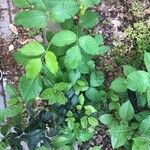
Toxicodendron pubescens
Poison-ivy · Eastern poison-oak · Atlantic poison-oak · Poison oak
Description
Source: leafsnapToxicodendron pubescens, commonly known as Atlantic poison oak, is a deciduous shrub belonging to the Anacardiaceae family. Native to the eastern United States, it thrives in diverse habitats such as forests, fields, and wetlands. The plant can reach a height of up to 3 meters and features alternate, trifoliate leaves with toothed margins. During the growing season, these leaves are green but turn red or yellow in autumn before falling off. Atlantic poison oak blooms from May to July, producing small greenish-white flowers. These are followed by small white berries that ripen from August through October. The plant contains urushiol oil, which can cause allergic reactions upon contact with the skin or inhalation of smoke from burning plants. Though it serves as an important food source for wildlife, including deer and birds, Atlantic poison oak can be hazardous to humans. Individuals who work or hike in areas where this plant is common should learn to identify it and take precautions, such as wearing protective clothing, to avoid contact. In summary, while Toxicodendron pubescens plays a vital role in its ecosystem, it poses a potential health risk to humans and should be approached with caution.
Care Guide
💧 Water Every 7 days
Atlantic poison oak, native to humid environments, thrives with consistent moisture and requires weekly watering. While it can tolerate drought conditions, it needs regular hydration, especially during its growing season, to support robust growth.
☀️ Light Full sun
Atlantic poison oak grows best with abundant daylight, though it can tolerate areas with moderate sun. Since it comes from habitats that receive steady all-day illumination, those light conditions support its growth. Both excessive sunlight and too little light can potentially impede its health and growth.
What are the sunlight requirements for Atlantic poison oak?
Atlantic poison oak requires abundant daylight for optimal growth, thriving best in environments with full sun, which means above 6 hours of direct sunlight. It can also adapt to partial sun conditions, approximately 3-6 hours of sunlight. However, both excessive and insufficient sun exposure can negatively affect its health and development. It's essential to observe the movement of sunlight in your garden to find the ideal balance that accommodates the needs of your plants.
How does artificial lighting support plant growth?
Artificial lighting is crucial for indoor plants, especially when natural sunlight is insufficient, like in winter or less sunny spaces. It promotes faster and healthier growth by providing the necessary light spectrum. LED lights are an excellent choice because they can be customized to supply specific wavelengths needed by plants. Full sun plants require 30-50W/sq ft, partial sun plants need 20-30W/sq ft, and full shade plants should get 10-20W/sq ft of artificial light. The light source should be placed 12-36 inches above the plant to mimic natural sunlight and be kept on for 8-12 hours per day to match the natural daylight hours.
What are the symptoms of inadequate lighting for Atlantic poison oak?
Inadequate lighting can cause several symptoms in Atlantic poison oak, including the growth of smaller than usual leaves, leggy or sparse growth, premature leaf drop to conserve resources, a halt in new growth indicating a survival mode due to poor light conditions, lighter-colored new leaves due to insufficient chlorophyll, and even chlorosis, which is the yellowing of leaves. Other symptoms may include sunscald, leaf curling as a defense mechanism against excessive sunlight, wilting due to loss of turgor pressure, and leaf scorching characterized by brown, dry edges on leaves.
How can I address the lighting needs of my Atlantic poison oak both indoors and outdoors?
To address the lighting needs of your Atlantic poison oak, gradually move the plant to a sunnier location, aiming for at least 6 hours of direct sunlight daily. Indoors, use a south-facing window or artificial grow lights for sufficient light exposure. Outdoors, ensure the plant is transitioned to sunnier spots weekly to avoid shock. If sunlight is blocked by obstacles like trees, consider pruning to improve sunlight penetration. For smaller plants, transplant them during their dormant period to a location with adequate sunlight and good drainage. Remember, affected parts may not recover, but new growth will be healthier with improved light exposure.
🌡️ Temperature 5–35°C
Atlantic poison oak is a plant that tolerates a wide range of climates, doing well in temperatures from 41 to 95 °F (5 to 35 ℃). Native to temperate areas, it prefers warm, mild conditions. Seasonal adjustments may be needed to keep it healthy during very high or very low temperatures.
What is the optimal temperature range for Atlantic poison oak?
Atlantic poison oak thrives in a broad range of climates, ideally between 41 to 95 °F (5 to 35 °C). It is native to temperate regions and prefers warm, moderate environments, indicating a need for seasonal adjustments to maintain health during extreme weather conditions. It has a strong resistance to cold, but during very cold winters, precautions should be taken if temperatures are expected to drop significantly.
How do you protect Atlantic poison oak during harsh winter temperatures?
Although Atlantic poison oak has strong cold resistance and usually doesn't need special frost protection, in winters where temperatures are expected to drop below the plant's cold tolerance level, providing cold protection is important. This can be achieved by covering the plant with protective materials like soil or straw. Additionally, watering the plant abundantly before the first freeze of autumn ensures the soil remains moist and enters a frozen state, preventing drought and water scarcity during the winter and early spring.
What should you do if Atlantic poison oak experiences temperatures below its cold tolerance?
If Atlantic poison oak is exposed to temperatures below its cold tolerance threshold, it might not show immediate damage in winter, but you may notice a decrease in sprouting or even no sprouting at all during springtime. In such cases, it's advisable to remove any parts of the plant that have failed to sprout in spring as a measure to promote its recovery and new growth.
How does high temperature affect Atlantic poison oak and what are the solutions?
High temperatures can cause significant stress to Atlantic poison oak, leading to symptoms such as leaves becoming lighter in color, prone to curling, susceptible to sunburn, and in severe cases, wilting and drying out of the entire plant. To alleviate these issues, trim away the sunburned and dried-up parts of the plant. If necessary, move the plant to a location that offers shade during the midday and afternoon sun, or use a shade cloth. Keeping the soil moist by watering in the morning and evening can also help reduce stress from high temperatures.
💨 Humidity
🪴 Soil 6-7
🌱 Fertilizer
Generally, one spring application of fertilizer is adequate for Atlantic poison oak, though repeated feedings can maximize growth. Apply fertilizer every one to one-and-a-half months. Fertilization improves leaf appearance and function, encouraging consistent color and a healthy texture. It also promotes root development and nutrient uptake, supporting the plant's long-term health.
🪴 Pot & Repot
✂️ Pruning
Atlantic poison oak has trifoliate leaves and can cause allergic reactions. To encourage growth and minimize sap spread, prune the plant from early to late spring. Be sure to remove any dead or diseased wood and thin out dense areas to improve airflow. Always wear protective gear to prevent skin irritation from contact.
🌿 Propagating
🐛 Diseases & pets
☠️ Toxicity
Characteristics
- Plant Type
- Herb, Shrub
- Life Cycle
- Perennial
- Genus
- Toxicodendron
- Family
- Anacardiaceae
- Hardiness Zone
- 5-9
- Mature Height
- 91 cm
- Mature Spread
- 0.91 m to 2.13 m
- Leaf Color
- Green, Dark Green
- Leaf Type
- Deciduous
- Flower Color
- Yellow, Green
- Flower Size
- 2.54 cm
- Bloom Time
- Mid spring, Late spring
- Planting Time
- Spring, Summer, Autumn
- Harvest Time
- Mid summer, Late summer, Early fall