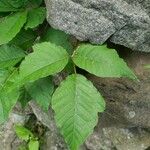
Toxicodendron radicans
Poison-ivy · Eastern Poison-ivy · Poison Oak · বিষলতা (Bangla) · Western poison-ivy
Description
Source: leafsnapToxicodendron radicans, commonly known as eastern poison ivy or poison ivy, is an allergenic Asian and Eastern North American flowering plant in the genus Toxicodendron. The species is well known for causing urushiol-induced contact dermatitis, an itchy, irritating, and sometimes painful rash, in most people who touch it. The rash is caused by urushiol, a clear liquid compound in the plant's sap. The species is variable in its appearance and habit, and despite its common name, it is not a true ivy (Hedera), but rather a member of the cashew and pistachio family (Anacardiaceae). T. radicans is commonly eaten by many animals and the seeds are consumed by birds, but poison ivy is most often thought of as an unwelcome weed. It is a different species from western poison ivy, T. rydbergii, which has similar effects.
💡 Poison ivy is a deciduous shrub with a smooth trunk, commonly found in the swamps of southeastern North America. As its name indicates, this plant can be harmful to the skin. Contact with poison ivy can cause irritation and rashes, and in more severe cases, symptoms can persist for several weeks.
🌳 Because it is poisonous, poison ivy is not generally valued for practical uses. Still, it serves as a bioindicator, so its presence can signal the condition of an ecosystem. Wide expanses of poison ivy often indicate disturbed soils or places where human activity has reduced normal ecological competition, allowing this hardy plant to succeed. Its frequent occurrence along woodland edges also gives hints about ecosystem changes and disturbances.
🎭 Peril, move cautiously in nature, judgment
Care Guide
💧 Water
Poison ivy thrives in environments with moderate humidity, preferring soil that is consistently moist, though it can also tolerate drought once it is well established. To keep the soil adequately moist, water the plant every three weeks. It is well-suited for outdoor growth and can adapt to different levels of rainfall, making it a resilient and low-maintenance option for gardeners.
When Should I Water My Poison Ivy?
Watering poison ivy correctly is key to its growth and health. You should water it when the soil's moisture level indicates it's dry or slightly moist to the touch at a depth of 1 to 2 inches. Look for other signs like wilted, drooping leaves, color changes or curling in the leaves, and an absence of morning dew as indicators that it's time to water. Be mindful of the risks of over and under-watering. Hot, dry weather conditions and a lack of rainfall mean you should check the soil more frequently. Each of these signs helps in maintaining the right watering schedule for optimal growth and health of your poison ivy.
How Should I Water My Poison Ivy?
Watering poison ivy requires consideration of its unique requirements. It thrives with good drainage and may often rely on natural rainwater, but in dry areas, it might need additional water. Bottom-watering is most effective, mimicking natural absorption and minimizing leaf contact. Drip irrigation is a suitable alternative, directing water to the roots and reducing foliage moisture, which can lead to disease. Using a moisture meter can help prevent overwatering by monitoring the soil's moisture level. Watering should be concentrated on the root zone, avoiding the foliage, and performed in the early morning for best results.
How Much Water Does Poison Ivy Really Need?
Poison ivy's water needs are considered medium. It's crucial to maintain soil moisture at a balance, avoiding waterlogged conditions. Typically, 1-2 liters of water per session for a medium-sized plant in a medium-sized pot is recommended, ensuring the soil is moist to the top 1-2 inches. Proper hydration is indicated by lush, vibrant leaves, firm stems, and continuous growth. Conversely, symptoms of over or underwatering include yellowing or wilted leaves and potential stunted growth or root diseases. Providing good drainage is essential for healthy plant maintenance.
What Kind of Water is Best for Poison Ivy?
Poison ivy thrives best when watered with distilled or rainwater, both free of harmful minerals and chemicals. Tap water can be used if it's dechlorinated by letting it sit out for at least 24 hours. This plant is sensitive to chlorine, fluoride, and excess minerals like calcium and magnesium. Distilled water or treatment of tap water for dechlorination can minimize these risks. Water temperature should be moderate, around 68-72°F (20-22°C), to avoid shocking the plant.
How Do Poison Ivy's Watering Needs Change with the Seasons?
Poison ivy's watering needs change seasonally. In spring, it may require more water as new growth emerges, depending on rainfall. During the hot summer months, despite being drought-tolerant, the plant may need extra water if conditions are dry. In autumn, watering requirements decrease as the plant prepares for dormancy, with natural rainfall often being sufficient. In winter, poison ivy needs little to no additional water as it enters a dormant state, with ambient moisture usually adequate unless conditions are exceptionally dry.
☀️ Light Partial sun
Poison ivy does best with moderate sunlight but can tolerate fully exposed conditions. When it comes from areas with filtered light, its condition is closely tied to how much sun it receives. Too much light can burn the leaves, while too little can prevent it from growing vigorously.
What are the sunlight requirements for poison ivy?
Poison ivy requires moderate sun exposure but can also thrive in fully exposed environments. It is accustomed to filtered sun from its natural habitat, with its health being significantly influenced by sunlight intake. Key to its care is understanding that while it can withstand a range of light conditions, from partial sun (3-6 hours of sunlight) to full sun (above 6 hours of sunlight), the balance of light is crucial. Excessive light may lead to leaf scorching, whereas insufficient sunlight could impede its growth. Observing how sunlight moves through your garden and choosing spots that provide a balance of light and shade will ensure the plant's happiness.
How does artificial lighting benefit indoor plants, and what are the recommendations for poison ivy?
Artificial lighting is essential for indoor plants, particularly when natural sunlight is insufficient, such as during winter or in less sunny spaces. It promotes faster, healthier growth by providing adequate lighting. For poison ivy and similar plants, the choice of artificial light, like LED lights, is important as it can be customized to provide specific wavelengths needed for growth. Full sun plants require 30-50W\/sq ft of artificial light, partial sun plants need 20-30W\/sq ft, and full shade plants need 10-20W\/sq ft. The light source should be placed 12-36 inches above the plant, mimicking natural sunlight conditions, and ensuring the plant receives 8-12 hours of light per day is crucial for optimal growth.
What are the symptoms of insufficient or excessive light exposure in poison ivy?
When poison ivy is grown indoors with insufficient light, several symptoms may appear. These include the development of small leaves, leggy or sparse growth, faster leaf drop, slower or no new growth, lighter-colored new leaves, and signs of stress such as chlorosis, sunscald, leaf curling, wilting, and leaf scorching. Each symptom reflects the plant's struggle with light conditions, whether it's from too little light leading to weak growth and loss of color or from excessive light causing physical damage to the leaves.
What solutions can address light-related issues in poison ivy?
To optimize poison ivy's growth in light-related conditions, gradually acclimate it to sunlight by shifting it to sunnier spots each week until it receives 3-6 hours of direct sunlight daily. For indoor plants that are large or not easily movable, consider using artificial light, like a desk or ceiling lamp for at least 8 hours daily, or invest in professional grow lights. Outdoors, plants should be gradually moved to better-lit areas to avoid sudden light intensity changes that could cause sunburn. Reducing obstructions by pruning and transplanting to sunnier locations with ample light and good drainage can also help, especially for smaller plants in the ground. However, parts of the plant affected by insufficient sunlight may not fully recover, but new growth should be healthy following these adjustments.
🌡️ Temperature 0–35°C
Poison ivy's native range includes cool to warm temperate regions with temperatures from 32 to 95 ℉ (0 to 35 ℃). It is observed to grow well in areas where the median annual temperature is about 60 to 80 ℉ (16 to 27 ℃). In winter, poison ivy becomes dormant and can survive temperatures as low as -22 ℉ (-30 ℃).
What is the native growth environment of poison ivy?
The native growth environment of poison ivy spans cool to warm temperate areas, with temperatures ranging from 32°F to 95°F (0°C to 35°C). It thrives in areas with a median annual temperature of around 60°F to 80°F (16°C to 27°C). Poison ivy enters a dormant state during winter but can survive temperatures as low as -22°F (-30°C). Due to its strong cold resistance, special frost protection measures are typically not necessary, but in cases where temperatures are expected to drop significantly, providing some protection by wrapping the trunk and branches with materials like non-woven fabric or cloth is advisable. Additionally, watering the plant abundantly before the first freeze in autumn to keep the soil moist can help prevent drought and water scarcity during winter and early spring.
How does poison ivy respond to temperature changes?
Poison ivy is notably cold-tolerant, optimal growth occurring above certain temperatures, yet able to survive lower winter temperatures with no noticeable damage during the cold season. However, if temperatures fall below critical thresholds, the plant's branches may become brittle and dry, leading to a lack of new shoots in spring. Conversely, in high temperatures beyond its tolerance, poison ivy's leaves may lighten in color, and the tips might dry and become withered, increasing susceptibility to sunburn. Managing these conditions involves pruning dead branches in spring and, during summer, trimming sunburned parts, providing shade, and keeping the soil moist with morning and evening watering.
💨 Humidity
🪴 Soil 6-7
🌱 Fertilizer
Fertilize your Poison ivy in early spring to encourage healthy growth. Regular feeding improves overall health, producing vigorous growth, increased tolerance of difficult conditions, and enhanced resistance to diseases and pests. Keep a consistent fertilization schedule for your Poison ivy to maintain vibrant foliage with richer color and a lush appearance.
🪴 Pot & Repot Every 12 months
✂️ Pruning
Poison Ivy is usually removed as it gives problems and not any help. The best season to remove this plant is during spring when the leaves are red and easy to spot.
🌿 Propagating
🐛 Diseases & pets
☠️ Toxicity
Characteristics
- Plant Type
- Vine
- Life Cycle
- Perennial
- Genus
- Toxicodendron
- Family
- Anacardiaceae
- Hardiness Zone
- 3-10
- Mature Height
- 0.61 m to 30.48 m
- Mature Spread
- 30 cm to 91 cm
- Leaf Color
- Green, Yellow, Red
- Leaf Type
- Deciduous, Evergreen
- Flower Color
- Green, White, Yellow
- Flower Size
- 0.25 cm to 1.27 cm
- Bloom Time
- Late spring, Early summer
- Planting Time
- Autumn
- Harvest Time
- Mid summer