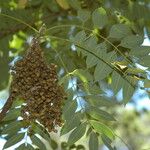
Toxicodendron succedaneum
Scarlet rhus · Rhustree · Japanese waxtree · Red-lac · Waxtree
Description
Source: leafsnapToxicodendron succedaneum, the wax tree, Japanese Hazenoki tree (Sumac or wax tree), sơn in Vietnam or charão in Portuguese, is a flowering plant species in the genus Toxicodendron found in Asia, although it has been planted elsewhere, most notably Australia and New Zealand. It is a large shrub or tree, up to 8 m tall, somewhat similar to a sumac tree. Because of its beautiful autumn foliage, it has been planted outside Asia as an ornamental plant, often by gardeners who were apparently unaware of the dangers of allergic reactions. It is now officially classified as a noxious weed in Australia and New Zealand. It is one of the city tree symbols of Kurume, Fukuoka, Japan. The larvae of the moths Eteoryctis deversa, Caloptilia aurifasciata, Caloptilia protiella, Caloptilia rhois and Callidrepana patrana feed on T. succedaneum.
🌳 The wax tree has attracted attention for its wax-rich berries, which could be used as a feedstock for biodiesel. This might provide a more environmentally friendly alternative to conventional fossil fuels, and research is ongoing into the effectiveness and sustainability of using wax tree as a biofuel source.
Care Guide
💧 Water
The wax tree is moderately drought-tolerant and thrives in environments with varying moisture levels. It should be watered every 1 to 2 weeks, allowing the soil to dry slightly between waterings. Adapted to temperate climates, the wax tree benefits from rainfall patterns that mimic the wet and dry cycles of its native habitat.
What's the best way to water my Wax tree?
To promote excellent root development, place a garden hose at the base of the plant. Avoid spraying the leaves directly, especially if they are exposed to direct sunlight outdoors. In order to moisten the roots, consider using bubblers or soaker hoses for each plant. When adding or removing plants, use soaker hoses that can cover the entire garden or bed to ensure deep root watering. Make sure to drain any excess water and wait for the soil to dry before watering again. Watering at ground level is recommended to prevent diseases. On a sunny day, it may be beneficial to spray the entire bush with water. Regardless of whether the plant is potted or in-ground, keep in mind that Wax trees prefer deep watering rather than light sprinkling.
If I give my Wax tree too much water or too little water, what should I do?
An overwatered Wax tree may exhibit yellowing, wilting, and dropping leaves, along with a dull and unhealthy appearance, characterized by mushy stems. If these signs appear, it is recommended to adjust your watering schedule accordingly. Wilting can also indicate under watering, with crispy and dry leaves being a common symptom. In such cases, check the soil moisture and if necessary, provide a thorough watering. However, despite sufficient water, the Wax tree may still display dryness and yellow leaves due to root damage. Once the tree returns to its normal state, the yellowing of leaves will cease. When keeping the Wax tree indoors, always monitor moisture levels, avoid overwatering, and address any signs of black spots by allowing the soil to dry out for a few days. Overwatering can lead to root rot, which may require transferring the plant to a different pot if discolored and slimy roots are observed. It is important to prevent root rot by avoiding excessively soggy soil. When planting the Wax tree outdoors, ensure adequate hydration by checking the soil's moisture level. If it feels too dry, this may indicate under watering, and providing sufficient water is necessary for the plant's recovery.
How much should I water my Wax tree?
The Wax tree prefers deep and infrequent watering, especially when planted in pots. Since the water storage in pots is limited, the soil tends to dry out quicker. In cold regions, watering is needed every 3 to 5 days. It's best to water it early in the morning, both indoors and outdoors, when the soil is dry. You can check if watering is required by examining the soil. If the top 2-3 inches of soil are dry, it's time for a full watering. On hot days, check the moisture daily as the heat can rapidly dry out the pot soil. If you have a garden, you'll need to irrigate the soil as well. In hot climates, watering once a week is sufficient. Only water when you notice that about 2 to 3 inches of soil are too dry, whether indoors or outdoors. Take rainfall into consideration and avoid adding extra water to prevent root rot. If there is ample rainfall, additional watering may not be needed. Wax trees usually grow during spring and fall. Outdoor plants benefit from mulch that is 3 to 4 inches deep to conserve water. Sandy soil requires more frequent watering due to its faster drainage, whereas clay soil needs less frequent watering to avoid root rot. It can be helpful to mark the water dates on the calendar and be mindful of drooping leaves, which could indicate a need for watering.
How much water should I give my Wax tree?
The Wax tree requires about a gallon of water on a regular basis. For potted plants, water them deeply until water drips from the bottom of the pot, then wait for the soil to dry before watering again. You can use a water calculator or moisture meter to determine how much water the plant has received in a week. During the flowering period, provide plenty of water but allow the moisture to evaporate afterwards to prevent root rot. If the Wax tree is planted outside and receives enough rainfall, it may not need additional watering. When the Wax tree is young or newly planted, ensure it receives 1-2 inches of rain per week. As the Wax tree grows, it can rely solely on rainfall. Only when the weather is hot or there has been no rain for 2-3 weeks, consider giving the Wax tree a thorough watering during cooler times of the day to prevent heat damage. Additional watering will be needed during extended dry periods.
Do I need to change how often I water my Wax tree depending on the time of year or the weather?
The Wax tree needs to be outdoors where it can receive rainwater. However, if the weather is persistently dry, you will need to water it. During the spring and fall growing seasons, the soil should be kept moist but not soggy. Alternating between dry and moist soil conditions will help the Wax tree thrive. In the summer, hot weather can cause water to evaporate quickly, so you may need to water more frequently if there is no rainfall. Generally, the Wax tree requires less water during the winter as it drops its leaves and goes dormant. Using a well-draining soil mixture, such as terracotta, can help water evaporate more quickly. Once the Wax tree starts to leaf out and go dormant in the spring, you can stop watering altogether, as it can rely on fall and winter rains to survive. When the Wax tree is potted, it has limited root growth, so it's important to keep it well-watered, especially in the summer. Ensure adequate drainage to prevent cold and wet roots, particularly during growth. It's best to water the Wax tree deeply at least once or twice a week, depending on the weather, rather than using shallow sprinkles that only reach the leaves. Avoid letting the Wax tree completely dry out in the fall or winter, even during dormancy. Overwatering should also be avoided, as sitting in water for too long can be harmful, and good drainage is essential, especially in winter. Additionally, applying mulch can help reduce stress, conserve water, and promote healthy blooms.
☀️ Light Partial sun
The wax tree prefers locations that receive steady, uninterrupted sunlight throughout the day for vigorous growth. It does not do well in shady spots; its photosynthesis performs best with plenty of sun. Its natural habitat is usually bathed in sunlight. Both too much and too little sun exposure can affect its growth and health.
What are the sunlight requirements for a Wax Tree?
The Wax Tree requires more than 6 hours of sunlight daily to flourish. It's crucial to observe the movement of sunlight in your garden to select spots that offer a balance of light and shade, ensuring the plant's well-being. This species thrives in consistent, direct sun throughout the day and struggles in shadowy areas, given its origin in sun-drenched habitats. Insufficient or excessive solar exposure can negatively affect its growth and health.
How can artificial lighting be used for Wax Trees indoors?
For indoor Wax Trees, artificial lighting is a beneficial solution when natural sunlight is scarce, especially in winter or less sunny spaces. LED lights are ideal, offering customization to meet the specific light wavelength needs of the plant. Full sun plants require 30-50W/sq ft of light, partial sun plants need 20-30W/sq ft, and shade plants need 10-20W/sq ft. The light source should be placed 12-36 inches above the plant, for 8-12 hours daily to mimic natural daylight hours.
What are the symptoms of insufficient sunlight in Wax Trees?
Wax Trees sensitive to light changes may exhibit symptoms such as smaller new leaves, leggy or sparse growth, faster leaf drop, slower or halted growth, pale or irregularly colored new leaves, chlorosis, sunscald, leaf curling, wilting, and leaf scorching. These symptoms reflect the plant's struggle with inadequate sunlight, indicating a need for better light exposure.
What solutions can improve sunlight exposure for Wax Trees?
To enhance sunlight exposure for Wax Trees, indoor plants should gradually be moved to receive at least 6 hours of direct sunlight daily, using a south-facing window or artificial lights for at least 8 hours a day. Outdoor plants should be moved gradually to sunnier spots to avoid sunburn. Minimizing obstructions by pruning trees or transplanting smaller plants during their dormant period to sunnier locations with good drainage can also help. Note, parts of the plant affected by previous insufficient light may not recover, but new growth will be healthy with improved lighting.
🌡️ Temperature 5–35°C
The wax tree originates from temperate regions and needs temperatures between 41 to 95 °F (5 to 35 ℃) for optimal growth. It tolerates seasonal changes well, but requires extra care during periods of extreme cold or heat.
What temperature is best for the Wax tree?
The Wax tree thrives best in temperatures between 65~80℉(18~27℃). During the primary growth phase, the highest tolerable temperature is 95℉(35℃), while the lowest tolerable temperature is 15℉(-10℃). This species can tolerate low temperatures and survive freezing winters. The ideal temperature range is as follows: Perfect: 65~80℉(18~27℃), Highest: 85~95℉(30~35℃), and Lowest: -5~15℉(-20~-10℃) or below.
Do I need to change the temperature for Wax tree at different stages of growth?
According to research, Wax tree shows stunted growth when exposed to prolonged high temperatures, particularly when the axillary buds and main shoots are developing. To promote robust growth after germination or transplanting, it is recommended to maintain consistent and cooler temperatures, around 65℉(18℃).
How can I protect my Wax tree from the cold weather?
When planting wax trees in the ground, they can tolerate freezing temperatures as long as the area doesn't go below 15℉ (-10℃) during winter. However, if planted in pots or containers, it is important to protect their roots from the cold. This can be done by wrapping the container in a blanket or bringing it indoors for complete protection.
If the temperature is too high/low, what harm will happen to the Wax tree?
The Wax tree faces greater harm from consistently high temperatures compared to low temperatures. When the plant becomes too hot, its seed germination and photosynthesis become less efficient due to heat stress hormone triggers. This is reflected in signs such as wilting, leaf browning, and even the potential death of the plant. On the other hand, if the Wax tree gets too cold, it will cease important functions like nutrient uptake and photosynthesis, possibly resulting in its death. Additionally, a single freezing event during the growing season might trigger a membrane phase transition, which can also lead to the cessation of plant functions and eventually the death of the plant.
What things should I remember about temperature for the Wax tree?
To ensure a healthy Wax tree with successful budding, flowering, and new growth, it's crucial to maintain consistent soil temperature. Achieve this by consistently watering, adding mulch to bare soil, and planting in the shade.
💨 Humidity
🪴 Soil 5-7
🌱 Fertilizer
Fertilize your Wax tree in early spring to encourage healthy growth. Regular feeding improves the tree’s overall health, producing vigorous growth, greater tolerance of harsh conditions, and enhanced resistance to diseases and pests. Keep a consistent fertilization schedule for your Wax tree to preserve vibrant, deeply colored foliage and a lush appearance.
Why should I add fertilizer to my Wax tree?
If you own a Wax tree, regardless of the type, regular fertilization is important for its overall health. Proper nutrients will help it grow stronger and tolerate difficult conditions and pests. The foliage of the Wax tree is its most attractive feature, so it's crucial to maintain it. This can be done by following a specific fertilization schedule, which will result in vibrant, lush leaves.
What is the right time to add fertilizer to my Wax tree?
To maintain healthy growth, it is recommended to fertilize your Wax tree for the first time in late winter or early spring. This provides the necessary nutrients for the tree to thrive once the weather becomes warmer. If you live in a warm climate region, it is beneficial to give your Wax tree an additional fertilizer feeding in early fall. This not only supplements the soil with nutrients for the following growing season but also improves the tree's ability to withstand the winter cold without foliage damage. Fertilizing earlier in the fall ensures that new branches have enough time to grow and become resilient for the cold winter.
When is the best time to not fertilize my Wax tree?
There are certain times of the year when you should avoid fertilizing your Wax tree. The first occasion is during the early and mid-winter months when the tree is dormant and doesn't require any feeding. It is also not advisable to fertilize the tree in late spring and throughout the summer. During this period, the weather tends to be hotter and drier, which can have a detrimental effect on the tree if fertilized. To prevent any problems, it is best to follow a fertilization schedule that only involves feeding in early spring and early fall.
What kind of fertilizer does my Wax tree need?
The most important nutrient for a Wax tree is usually nitrogen, but that doesn't mean phosphorus and potassium aren't important. In fact, your Wax tree needs a good amount of all three main nutrients, which is why a balanced fertilizer like a 10-10-10 can be effective. However, a more nuanced ratio of nutrients tends to promote optimal growth. Fertilizers with a slightly higher nitrogen content, such as a 10-6-4 ratio, often work well. You can choose between granular or liquid-based fertilizers when applying them.
How can I make my Wax tree grow better?
To fertilize your Wax tree, you have two options: using granular fertilizer or liquid fertilizer. With granular fertilizer, simply sprinkle it on the soil at the right time. The slow-release property of this fertilizer will gradually release nutrients into the soil over time. It's recommended to lightly water your Wax tree before applying the fertilizer. On the other hand, liquid fertilizer is less common but still an option. Mix the fertilizer with water and pour it around the base of your Wax tree. If needed, you can perform a soil test beforehand to determine if any pH adjustments are necessary.
🪴 Pot & Repot
✂️ Pruning
The wax tree is known for its glossy leaves and rapid growth. To keep it healthy, prune it in early spring by removing dead branches and thinning out crowded areas to improve air circulation. Be cautious with heavy pruning, as it can stress the tree; instead, aim to promote vigorous growth with moderate pruning. For specific pruning methods suited to the wax tree, consult reliable horticultural resources.
🌿 Propagating
🐛 Diseases & pets
☠️ Toxicity
Characteristics
- Plant Type
- Tree, Shrub
- Life Cycle
- Perennial
- Genus
- Toxicodendron
- Family
- Anacardiaceae
- Hardiness Zone
- 4-9
- Mature Height
- 7.92 m
- Mature Spread
- 4.88 m to 7.92 m
- Leaf Color
- Green, Dark Green
- Leaf Type
- Deciduous
- Flower Color
- Green
- Flower Size
- 0.20 cm
- Bloom Time
- Late spring, Early summer, Mid summer
- Planting Time
- Spring, Autumn
- Harvest Time
- Mid summer
- Native Area
- Nepal, India, Malaysia, Bangladesh, Pakistan, Laos, China, Indonesia, Cambodia, Vietnam, Myanmar, Japan, Koppen, Bhutan, South Korea, Thailand