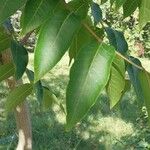
Toxicodendron vernicifluum
Chinese Lacquer · Chinese lacquertree · Japanese lacquertree · Japanese laquer tree · Japanese sumac
Description
Source: wikipedia (CC BY-SA)Toxicodendron vernicifluum, also known by the common name Chinese lacquer tree, is an Asian tree species of genus Toxicodendron native to China and the Indian subcontinent, and cultivated in regions of China, Japan and Korea. Other common names include poison sumac, Japanese lacquer tree, Japanese sumac, and varnish tree. The trees are cultivated and tapped for their toxic sap, which is used as a highly durable lacquer to make Chinese, Japanese, and Korean lacquerware.
Care Guide
💧 Water
The Chinese lacquer tree thrives in areas with moderate humidity and prefers consistent moisture, typically requiring watering every two weeks. As an evergreen, it retains its leaves throughout the year and can effectively manage its water needs during dry periods, making it a suitable choice for outdoor gardening.
☀️ Light Full sun
The Chinese lacquer tree comes from open habitats, like sunny meadows and forest margins, which supply abundant light. It performs best in full sun but can tolerate partial sun, adjusting well to different light conditions.
🌡️ Temperature 15–35°C
The Chinese lacquer tree is highly adaptable to a wide range of climates, from hot summers to cold winters. Nevertheless, it has an optimal temperature range for growth. If temperatures rise too high, the tree becomes vulnerable to heat and humidity stress, which can kill it. In areas where temperatures approach the lower limit of its cold tolerance, it is necessary to take insulating measures to protect the plant.
💨 Humidity
🪴 Soil 6-7
🌱 Fertilizer
Fertilize your Chinese lacquer tree in early spring to encourage healthy growth. Regular feeding improves the tree’s overall health, producing vigorous growth, greater tolerance of challenging conditions, and better resistance to diseases and pests. Keep a consistent fertilization routine for your Chinese lacquer tree to ensure foliage that is bright in color and lush in appearance.
🪴 Pot & Repot
✂️ Pruning
Pruning the Chinese lacquer tree in early spring, before new growth begins, promotes its health and shape by minimizing sap loss. Removing dead or overcrowded branches improves air circulation and light penetration, which helps prevent disease. Regular pruning also keeps the tree at a manageable size and enhances its ornamental appeal.
🌿 Propagating
🐛 Diseases & pets
☠️ Toxicity
Characteristics
- Plant Type
- Tree
- Life Cycle
- Perennial
- Genus
- Toxicodendron
- Family
- Anacardiaceae
- Hardiness Zone
- 7-10
- Mature Height
- 20.12 m
- Mature Spread
- 10.06 m
- Leaf Color
- Green, Dark Green
- Leaf Type
- Deciduous
- Flower Color
- Green
- Flower Size
- 0.13 cm
- Bloom Time
- Late spring, Early summer
- Planting Time
- Spring, Summer
- Harvest Time
- Late summer, Early fall, Mid fall
- Native Area
- Vietnam, Japan, Koppen, South Korea, China