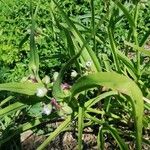
Tradescantia bracteata
Long-Bract Spiderwort · Longbract spiderwort · Spiderwort
Description
Source: leafsnapTradescantia bracteata, commonly known as the Small-Bracted Spiderwort, is a perennial herbaceous plant that belongs to the Commelinaceae family. Native to North America, it can be found in various habitats, including wetlands, prairies, and woodlands. This plant exhibits a clumping growth habit with long stems that can reach up to 60 cm in height. Its lance-shaped leaves are bluish-green, featuring parallel veins. The flowers are small and possess three petals, displaying colors ranging from pinkish-purple to blue-violet. Tradescantia bracteata is an easy-to-grow plant that requires minimal care. It prefers moist soil but can endure periods of drought once established. While it thrives in partial shade, it can also tolerate full sun if provided with adequate water. The Small-Bracted Spiderwort has been used medicinally by Native American tribes to treat skin irritations, stomach ailments, and respiratory problems. Overall, Tradescantia bracteata is an attractive ornamental plant that enhances the beauty of any garden or landscape while also offering medicinal benefits to those who seek them.
Care Guide
💧 Water Every 7 days
Long-bract spiderwort thrives in prairie habitats, preferring consistent moisture but capable of tolerating short dry spells. For optimal growth, it's ideal to water it weekly. As a hardy perennial in temperate zones, its water needs decrease during dormancy, reflecting the natural seasonal rainfall patterns.
☀️ Light Full sun
Long-bract spiderwort prefers plentiful light. It grows satisfactorily in places with strong sun exposure, yet it also tolerates fairly less sunny settings. Both too much sunlight and too little can impair its overall development. This characteristic is related to the light conditions of its native habitat.
What is the ideal sunlight requirement for Long-bract spiderwort?
Long-bract spiderwort thrives best in environments that provide full sun, which means it requires above 6 hours of sunlight daily. It can also tolerate partial sun conditions, about 3-6 hours of sunlight, but its growth is most plausible in abundant light exposure. Its resilience in less sunny conditions points to its adaptability, although both overexposure and underexposure to sunlight can impede its overall development. This attribute mirrors the light characteristics of its native habitat, suggesting a preference for ample sunlight while still being somewhat flexible.
How do artificial lights benefit Long-bract spiderwort grown indoors?
Indoor plants like Long-bract spiderwort require adequate lighting for optimal growth, especially when natural sunlight is insufficient, such as during winter or in less sunny spaces. Artificial lights provide a vital solution, promoting faster, healthier growth. LED lights, which can be customized for specific wavelengths needed by the plant, are a popular choice. Full sun plants need 30-50W/sq ft of artificial light, partial sun plants need 20-30W/sq ft, and full shade plants need 10-20W/sq ft. The light source should be placed 12-36 inches above the plant to mimic natural sunlight, and the duration should mimic natural daylight hours, usually 8-12 hours per day.
What signs indicate Long-bract spiderwort is not receiving enough light?
If Long-bract spiderwort is not receiving enough light, it may exhibit several symptoms indicating light deficiency. These symptoms include smaller new leaves compared to previous ones, leggy or sparse growth, faster leaf drop, slower or no new growth, and lighter-colored new leaves. These signs point to the plant entering a survival mode due to poor lighting conditions, where its growth becomes delayed or stops altogether, and it conserves resources by shedding older leaves early.
What are the effects of too much sunlight on Long-bract spiderwort?
Excessive sunlight exposure can adversely affect Long-bract spiderwort, leading to conditions such as chlorosis, where leaves lose their green color and turn yellow due to a breakdown of chlorophyll. Sunscald can also occur, displaying as pale, bleached areas on plant tissue. Leaf curling, wilting, and leaf scorching are other symptoms manifesting from overexposure to sunlight, showcasing damage like brown, dry, and crispy patches on leaves, which result in a reduction of the plant's photosynthetic capacity and overall health.
How can you address sunlight-related issues for Long-bract spiderwort?
To mitigate sunlight-related issues for Long-bract spiderwort, it's essential to ensure it receives the right amount of sunlight. Gradually moving the plant to sunnier locations each week until it gets at least 6 hours of direct sunlight daily can significantly benefit its growth. Indoor plants might require the use of artificial light if relocation is not feasible. For outdoor plants, avoiding sudden changes in light intensity is crucial to prevent sunburn. Pruning obstructions like tree branches can increase sun exposure. If the plant is small enough, consider transplanting it during its dormant period to a location with ample sunlight and good drainage, ensuring new growth after increasing light exposure will be healthy.
🌡️ Temperature 5–35°C
Long-bract spiderwort is native to regions with mild to moderate temperatures, typically ranging from 41 to 95 °F (5 to 35 °C). Although it can tolerate various climates, for optimal growth keep conditions close to its natural habitat and adjust for seasonal variations when necessary.
What is the native temperature range for growing Long-bract spiderwort?
Long-bract spiderwort thrives in environments with moderate to mild temperatures, typically ranging from 41 to 95 °F (5 to 35 °C). To ensure optimal growth, it is beneficial to maintain a temperature close to this native habitat and adjust for seasonal shifts accordingly. The plant exhibits a strong resistance to cold, so special frost protection measures are not usually necessary. However, with winter temperatures expected to fall below -30°C, providing cold protection by covering the plant with soil or straw is recommended. Additionally, watering the plant abundantly before the first freeze in autumn to keep the soil moist can help prevent drought and water scarcity during winter and early spring.
How does Long-bract spiderwort react to low temperatures during winter?
Long-bract spiderwort is remarkably cold-tolerant, best thriving when temperatures remain above 5°C. During winter, it is advised to keep the plant above -25°C. If temperatures dip below -30°C, there might not be noticeable alterations in its state during winter, but there could be a diminished sprouting or even a lack of sprouting come springtime. To manage such conditions, removing any parts of the plant that have failed to sprout in spring is the recommended solution.
What should be done if Long-bract spiderwort experiences high temperatures?
In the summer months, Long-bract spiderwort should ideally be kept below 35°C. Exceeding 38°C might cause the leaves to lighten in color, become prone to curling, and more susceptible to sunburn. In severe cases, the plant may wilt and dry out. Trimming away sunburned and dry sections is advisable under such circumstances. Additionally, moving the plant to a shade or employing a shade cloth to shield it from the midday and afternoon sun can be beneficial. Ensuring the soil remains moist by watering in the morning and evening is also crucial to the plant's well-being during high temperatures.
💨 Humidity
🪴 Soil 5-7
🌱 Fertilizer
The best time to fertilize a Long-bract spiderwort is in early spring, as it comes out of dormancy and begins active growth. Fertilizing supplies important nutrients needed for healthy development. While Long-bract spiderwort does not require heavy feeding, applying fertilizer once a year can improve its chances of survival and encourage stronger, longer-lasting blooms.
🪴 Pot & Repot
✂️ Pruning
Pruning long-bract spiderwort between early and late spring encourages better growth and blooming. By removing dead stems and spent flowers, you can promote a second bloom. Regular trimming also helps prevent the plants from becoming leggy. Ensuring proper air circulation can reduce the risk of disease. Always use clean, sharp tools to make precise cuts, which supports the overall health of the plant.
🌿 Propagating
🐛 Diseases & pets
☠️ Toxicity
Characteristics
- Plant Type
- Herb
- Life Cycle
- Perennial
- Genus
- Tradescantia
- Family
- Commelinaceae
- Hardiness Zone
- 4-9
- Mature Height
- 30 cm to 91 cm
- Mature Spread
- 30 cm to 46 cm
- Leaf Color
- Green, Dark Green
- Leaf Type
- Semi-evergreen
- Flower Color
- Purple, Lavender
- Flower Size
- 2.54 cm
- Bloom Time
- Mid spring, Late spring, Summer, Early fall
- Planting Time
- Spring, Summer
- Harvest Time
- Summer, Early fall, Mid fall