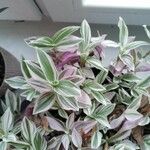
Tradescantia fluminensis
برگ بیدی سبز · برگ بیدی صورتی · گل یخ · تصویر زمینه موبایل · Wandering-Jew
Description
Source: leafsnapTradescantia fluminensis is a species of spiderwort native to South America. It is one of several plants known by the common name wandering Jew, but now also commonly called wandering trad. It is also known as small-leaf spiderwort, river spiderwort, inch plant, and wandering willie. The genus is named after the English naturalists and explorers John Tradescant the Elder (c. 1570s – 1638) and John Tradescant the Younger (1608–1662).
💡 The small-leaf spiderwort, scientifically known as Tradescantia fluminensis, has sometimes been referred to as the Wandering Jew. This name references the classic French novel written in 1845, which tells a tragic story about a cholera epidemic that follows the Wandering Jew wherever he goes. Despite its name and its charm as a houseplant, this plant is considered an invasive weed in certain regions.
🌳 Small-leaf spiderwort fulfills two functions in nature: it is valued as an ornamental for its shimmering leaves, and it also serves an important environmental role in Brazil. There, it assists in detecting lead contamination in soil because its leaves absorb lead, making it an unexpected ally in monitoring soil health.
🎭 Eternal life, hopefulness, ethical authority
Care Guide
💧 Water Every week
The small-leaf spiderwort originates from the humid and shaded regions of South America. It thrives in environments with consistent moisture while avoiding waterlogging. To meet its moderate water needs, it should be watered weekly. As an evergreen indoor plant, it benefits from higher humidity levels, which enhance its lush foliage and overall health.
When Should I Water My Small-leaf Spiderwort?
Watering your small-leaf spiderwort properly is crucial for its health and vitality. Start by checking the potting mix's top 1-2 inches; if it's dry to the touch, it's time to water. Be mindful that a hard, crusty soil surface might not accurately indicate dryness. Observe the plant for signs of thirst, like more pronounced drooping or changes in leaf color to brown or yellow, especially starting from the tips and edges. If you notice a slowdown in growth during spring and summer, this could also indicate it needs more water. It’s important to balance watering; too much can lead to root rot due to waterlogging, while too little can cause dehydration, making the plant weak against pests and diseases.
How Should I Water My Small-leaf Spiderwort?
For optimal hydration of your small-leaf spiderwort, consider bottom-watering. This method allows the roots to absorb moisture from below, reducing the risk of fungal diseases by avoiding over-wetting the soil surface. After watering, ensure you empty any excess water from the saucer. If using a watering can, choose one with a narrow spout to direct water straight to the base and minimize foliage moisture, reducing the risk of fungal problems. The key aim is to hydrate the roots while keeping leaf wetness to a minimum.
How Much Water Does Small-leaf Spiderwort Really Need?
The small-leaf spiderwort, which thrives in moist environments, requires a consistent amount of water. The pot size should be right for the plant, ensuring proper drainage to avoid waterlogging. A general watering rule is to soak the soil thoroughly until water flows out from the pot's drainage holes, allowing the top inch of soil to dry out between waterings. Adjust the watering frequency based on environmental conditions, with the plant possibly needing water once or twice a week. Properly hydrated plants should have green, turgid leaves, regular new leaf production, and firm, upright stems. Signs of overwatering include yellowing leaves and a foul soil odor, while underwatered plants might wilt and have dry, crispy leaves.
What Kind of Water is Best for Small-leaf Spiderwort?
Small-leaf spiderwort flourishes with certain water types, showing high sensitivity to water quality. Rainwater is ideal due to its purity and lack of harsh chemicals or additives. Distilled water is a good alternative as it is free from minerals and contaminants. If tap water is your only option, treat it to remove chlorine and minimize potential adverse effects, as the plant is moderately sensitive to chlorine and highly sensitive to fluoride, which can cause issues like leaf burn or discoloration. Let tap water sit for 24 hours for chlorine to evaporate or use filtration and reverse osmosis methods to make it safer. Remember, small-leaf spiderwort prefers water at room temperature (around 68-72°F or 20-22°C).
How Do Small-leaf Spiderwort's Watering Needs Change with the Seasons?
As seasons change, so does the watering necessity for your small-leaf spiderwort. In spring, with the plant in its active growth phase, keep the soil evenly moist with regular watering. During the hot summers, water less frequently, allowing the topsoil to dry slightly between watering sessions, being mindful of root rot risks. For autumn, reduce watering further as the plant prepares for dormancy, maintaining lightly moist soil. In winter, water your small-leaf spiderwort minimally, as its water requirements drop significantly during this dormant period. Let the topsoil dry out well between waterings.
☀️ Light Partial sun
Small-leaf spiderwort prefers a balanced amount of sunlight, doing well in spots with some sun and tolerating both more brightly lit and more shaded areas. Its native habitat where it grows demonstrates this balance. Excessive sun can dry out the plant, while insufficient light can hinder its growth.
What are the sunlight requirements for small-leaf spiderwort?
Small-leaf spiderwort thrives in locations with a balance of sunlight, capable of growing in both partially sunny and fully sunny or shaded areas. It generally needs about 3-6 hours of sunlight to flourish. However, it is important to observe how sunlight moves through your garden to choose spots that provide the ideal balance of light and shade, ensuring the plant's health and happiness.
How does the origin habitat of small-leaf spiderwort influence its growth?
The origin habitat of small-leaf spiderwort shows its preference for solar balance, indicating its adaptability to various sunlight conditions. This affinity for balance allows it to thrive in environments that receive different amounts of sunlight throughout the day. Excessive sun exposure can dry out the plant, while insufficient light may hinder its growth, highlighting the importance of finding the right spot that mirrors its natural habitat.
What artificial lighting requirements do indoor small-leaf spiderwort plants have?
For optimal growth indoors, small-leaf spiderwort plants may require artificial lighting, especially in conditions where natural sunlight is limited. LED lights are recommended because they can be tailored to provide specific wavelengths needed by plants. Full sun plants need 30-50W/sq. ft., partial sun plants require 20-30W/sq. ft., and full shade plants benefit from 10-20W/sq. ft. The artificial light should be placed 12-36 inches above the plant and turned on for 8-12 hours per day to mimic natural sunlight conditions.
What are some symptoms of inadequate light conditions in small-leaf spiderwort?
Inadequate light conditions can lead to several symptoms in small-leaf spiderwort, including slower or no new growth as the plant enters survival mode, lighter-colored new leaves indicating a lack of chlorophyll, chlorosis or yellowing of leaves, sunscald marked by pale or necrotic areas from intense sunlight, leaf curling as a defense against excessive light, wilting due to increased water loss, and leaf scorching appearing as brown or crispy edges from too much sunlight. These symptoms highlight the plant's sensitivity to its lighting environment.
How can you address light-related issues for small-leaf spiderwort?
To optimize small-leaf spiderwort's exposure to light, gradually shift it to sunnier spots each week until it receives the ideal 3-6 hours of direct sunlight. For indoor plants that are large or hard to move, consider using artificial light for at least 8 hours daily. Outdoors, avoid drastic changes to prevent sunburn and gradually move plants to receive appropriate sunlight. Reducing obstructions such as pruning trees or transplanting smaller plants can also help. Note that parts of the plant suffering from insufficient light may not recover, but new growth should be healthy with improved light conditions.
🌡️ Temperature 20–37.8°C
Small-leaf spiderwort is a temperate woody plant that prefers temperatures between 68 to 100 ℉ (20 to 38 ℃). In its native habitat it thrives in warm, humid conditions. During the winter months it may need temperature adjustments to maintain its health.
What are the ideal temperature conditions for Small-leaf spiderwort?
Small-leaf spiderwort, scientifically known as Tradescantia fluminensis, thrives in temperate conditions, preferring temperatures ranging between 68 to 100°F (20 to 38°C). It is a heat-loving plant native to warm and humid environments. During winter, it's crucial to adjust the living conditions to prevent cold damage by ensuring the temperature stays above a certain minimum. Specifically, the plant must be protected from temperatures nearing its cold tolerance threshold by moving it indoors away from direct heat sources but ensuring it still has access to bright light.
What should I do if my Small-leaf spiderwort is exposed to low temperatures?
If your Small-leaf spiderwort experiences low temperatures, it might show signs of stress such as a change in leaf color to lighter shades, eventually turning brown or black after frost damage. The plant also may wilt or droop. To counter these symptoms, you should trim off the frost-damaged parts of the plant and move it to a warmer, indoor environment immediately. Place the plant near a south-facing window to ensure it receives ample sunlight but keep it away from direct heat sources such as heaters or air conditioning vents to avoid air dryness.
How do I care for my Small-leaf spiderwort during high temperatures?
During high temperature periods, especially in the summer, ensure your Small-leaf spiderwort does not get exposed to temperatures exceeding its high-temperature tolerance limit. Signs of excessive heat include leaves lightening in color and susceptibility to sunburn. To mitigate heat stress, trim away sunburned or dried parts of the plant. Relocate the plant to a shaded area during the most intense midday and afternoon sun. Maintain soil moisture by watering the plant in the cooler morning or evening hours.
💨 Humidity normal (40-60%)
This plant will thrive in moderate humidity, which is probably the level in your home. However, misting it a few times a week can be very beneficial. Make sure the room has good ventilation.
🪴 Soil 5-7
🌱 Fertilizer
Small-leaf spiderwort needs the most fertilizer during its active growth period, primarily in spring, summer, and early fall. Fertilizing is needed to supply essential nutrients that the soil may lack, encouraging healthy root and stem growth and enhancing the attractive foliage, which is an important characteristic of this plant.
Why do I have to add fertilizer to my Small-leaf spiderwort plant?
All plants, including the Small-leaf spiderwort, need soil nutrients to grow. However, it's not always certain that the soil in your garden will have all the necessary nutrients. This is where fertilization and soil amendments come in, as they ensure that your plants not only receive basic nutrients but also the specific nutrients they require. For the Small-leaf spiderwort, fertilizer is especially important for the healthy development of its roots and stems throughout the growing season. Fertilization also helps this plant achieve a beautiful set of leaves, which is essential since its foliage is its main ornamental appeal.
When should I fertilize my Small-leaf spiderwort?
During the active growth phase of Small-leaf spiderwort, which usually occurs in spring, summer, and early fall, it requires the most fertilizer. Once winter is over, you should feed it every two to four weeks. Keep up this feeding schedule until fall, when you can gradually decrease the amount of fertilizer given. Eventually, stop feeding the Small-leaf spiderwort completely in preparation for winter, as its growth will slow down during this time.
When is the best time to not use fertilizer on my Small-leaf spiderwort?
For most of the year, including spring, summer, and most of the fall, it's important to regularly feed your Small-leaf spiderwort. However, there are exceptions. If you notice that your plant has received too much fertilizer or if you have fertilized it incorrectly, causing fertilizer burn or other issues, you'll need to address those before continuing with regular feeding. The only time you should avoid fertilizing a Small-leaf spiderwort is during winter. If you have this plant indoors in a cold winter area, it will go into a dormant phase. Feeding the plant during this dormant phase is not only unnecessary and unhelpful for its growth, but it is also likely to cause fertilizer burn.
What kind of fertilizer does my Small-leaf spiderwort need?
The fertilizer for Small-leaf spiderwort requires a specific blend of nutrients, each in relatively low amounts. An ideal fertilizer should have an N-P-K ratio of 3-1-2, but a general-purpose fertilizer with even nutrient blend can also work well. However, when using a balanced fertilizer, the volume of each nutrient should not exceed 10 in the ratio. You can choose between granular or liquid-based fertilizer. If using liquid fertilizer, it's usually best to dilute it by half. While granular fertilizer has few downsides, using liquid fertilizer is often the most sensible choice, especially if you water your Small-leaf spiderwort while feeding it.
How can I give nutrients to my Small-leaf spiderwort?
To properly fertilize your Small-leaf spiderwort, follow the instructions provided with the fertilizer. In general, it's best to fertilize while watering the plant to avoid damaging the roots. If you're using a slow-release granular fertilizer, sprinkle it on the soil and water right away. With a liquid-based fertilizer, dilute it with water, apply it to the soil, and then water a little more. It's particularly important to dilute the fertilizer by at least half in spring and fall when the plant's growth is increasing or slowing down, respectively.
🪴 Pot & Repot 2-3 years
Repot Small-leaf spiderwort in early spring, selecting a pot only slightly larger than the current one with adequate drainage. Use a well-draining potting mix and make sure the root ball sits at the same level as before. Gently loosen any root-bound roots. After repotting, water thoroughly and place the plant in a warm, shady spot. Regular pruning will keep its size in check and stimulate new growth.
✂️ Pruning
The Small-Leaf Spiderwort has glossy, compact leaves and benefits from regular pruning between early and late spring. This practice promotes bushiness and helps prevent the plant from becoming invasive. By removing dead stems and pinching back new growth, you can improve air circulation and reduce the risk of disease. It's important to always use clean, sharp tools when pruning.
🌿 Propagating
🐛 Diseases & pets
☠️ Toxicity
Characteristics
- Plant Type
- Vine, Herb
- Life Cycle
- Perennial
- Genus
- Tradescantia
- Family
- Commelinaceae
- Hardiness Zone
- 9-12
- Mature Height
- 61 cm
- Mature Spread
- 23 cm to 61 cm
- Leaf Color
- Green, Purple
- Leaf Type
- Evergreen
- Flower Color
- White
- Flower Size
- 1.27 cm to 2.54 cm
- Bloom Time
- Late spring, Early summer, Mid summer
- Planting Time
- Spring, Summer, Autumn, Winter
- Harvest Time
- Summer
- Native Area
- Brazil, Uruguay, Bolivia, Argentina