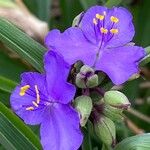
Tradescantia gigantea
Spiderwort · Giant spiderwort
Description
Source: wikipedia (CC BY-SA)Tradescantia gigantea, called giant spiderwort or gigantic spiderwort is a perennial herb in the spiderwort family found in prairies in Texas and Louisiana.
Care Guide
💧 Water
Giant spiderwort thrives in moist environments, needing consistent hydration and evenly moist soil. It is best to water it weekly. Outdoors, it grows well in garden beds, benefiting from rainwater and natural climate conditions for strong growth.
☀️ Light Partial sun
The giant spiderwort plant does best with moderate sun exposure, which is important for its general health and growth. Its native habitat receives moderate sunlight, matching this preference. Excessive light can cause leaf burn, while too little light can result in stunted growth. The plant's sunlight needs do not change significantly across different growth stages.
What are the sun requirements for Giant Spiderwort?
Giant Spiderwort (Tradescantia gigantea) thrives best under moderate sun exposure, approximately 3-6 hours of sunlight per day, which mirrors its native environment's medium sun levels. Too much sunlight may lead to leaf burn, whereas insufficient sunlight can cause stunted growth. It's crucial to observe how sunlight moves through your garden to find spots that offer a perfect balance of light and shade, ensuring optimal plant health.
How can artificial lighting benefit indoor Giant Spiderwort plants?
When natural sunlight is not sufficient, especially during winter or in less sunny spaces, artificial lighting becomes crucial for the growth of indoor Giant Spiderwort plants. Optimal growth is facilitated by using artificial lights, like LED lights, which can be adjusted to provide specific wavelengths necessary for the plants. The amount of artificial light needed varies depending on the type of plant, with full sun plants requiring 30-50W/sq ft, partial sun plants 20-30W/sq ft, and full shade plants 10-20W/sq ft. Proper placement (12-36 inches above the plant) and duration (mimicking natural daylight hours, usually 8-12 hours per day) of artificial lights are key factors to consider.
What are the symptoms of inadequate light for Giant Spiderwort?
When Giant Spiderwort receives insufficient light, several symptoms may appear, including smaller new leaves, leggy or sparse growth, faster leaf drop, slower or halted new growth, pale or irregularly colored new leaves, chlorosis (yellowing of leaves due to chlorophyll breakdown), sunscald, leaf curling, wilting, and leaf scorching. These symptoms reflect the plant's struggle with inadequate sunlight, affecting its overall health and growth.
What solutions can address insufficient sunlight for indoor and outdoor Giant Spiderwort plants?
To address insufficient sunlight for Giant Spiderwort plants, gradual adaptation is key. For indoor plants, shift them to sunnier spots each week until they receive 3-6 hours of direct sunlight daily or use artificial light for at least 8 hours daily if the plant is large. For outdoor plants, gradually move them to better sunlight spots weekly to prevent sunburn. If sunlight is blocked by obstructions like trees, consider pruning to improve sunlight exposure. Transplanting smaller plants during their dormant period to a sunnier location with good drainage can also be beneficial. Note that parts of the plant affected by insufficient sunlight may not recover, but new growth should be healthier after adjusting the light exposure.
🌡️ Temperature 15–32.2°C
Giant spiderwort naturally occurs in habitats where temperatures range from 59 to 90 °F (15 to 32 ℃). It grows most successfully in those conditions. Seasonal shifts in temperature should be monitored so that care can be adjusted accordingly.
What is the ideal temperature range for Giant Spiderwort?
Giant spiderwort, or Tradescantia gigantea, is native to environments with temperatures ranging from 59 to 90 °F (15 to 32 °C). It thrives best within these conditions, indicating the importance of monitoring seasonal temperature changes to adjust care practices accordingly. The plant exhibits strong cold resistance, meaning special frost protection measures are generally unnecessary during winter. However, if winter temperatures are anticipated to drop below -10°C, providing cold protection by covering the plant with soil or straw is recommended. In preparation for the first freeze in the autumn, it is advisable to water the plant abundantly so that the soil remains moist and enters a frozen state, which helps prevent drought and water scarcity for the plant during winter and early spring.
How does Giant Spiderwort react to low temperatures?
Giant Spiderwort is cold-tolerant and fares best when the temperature stays above 15°C. Through winter, it's crucial to ensure the temperature does not drop below -5°C. Although the plant may not show immediate changes when the temperature falls below -10°C, a decrease in sprouting or even a complete lack of sprouting may occur during spring. If this happens, it is suggested to remove any parts of the plant that have failed to sprout as part of the spring care routine.
What should I do if Giant Spiderwort experiences high temperatures?
During summer, it's important to keep Giant Spiderwort below 32°C to avoid stress from high temperatures. If the temperature surpasses 35°C, the plant's leaves may become lighter, prone to curling, susceptible to sunburn, and in severe cases, the entire plant may wilt and dry up. To mitigate these effects, trim away sunburned and dried-up parts of the plant. Relocating the plant to a shaded area or using a shade cloth to protect it from the midday and afternoon sun can help. Additionally, watering the plant in the morning and evening will help maintain soil moisture and promote plant health.
💨 Humidity
🪴 Soil 6-7
🌱 Fertilizer
Early spring, when the Giant spiderwort is coming out of dormancy and beginning active growth, is the best time to fertilize. Fertilization supplies essential nutrients needed for healthy development. Although Giant spiderwort has modest fertilizer requirements, feeding it annually can improve its survival and encourage better, longer-lasting flowers.
🪴 Pot & Repot
✂️ Pruning
Giant spiderwort is known for its beautiful blooms and vigorous growth. For optimal plant health, prune it between late winter and early spring. This helps remove dead stems and thin out overcrowded areas, improving airflow. Regular deadheading encourages continuous flowering, while pruning revitalizes the plant and prevents it from becoming invasive. These practices ensure a vibrant and attractive garden display.
🌿 Propagating
🐛 Diseases & pets
☠️ Toxicity
Characteristics
- Plant Type
- Herb
- Life Cycle
- Perennial
- Genus
- Tradescantia
- Family
- Commelinaceae
- Hardiness Zone
- 8
- Mature Height
- 61 cm to 91 cm
- Mature Spread
- 30 cm to 46 cm
- Leaf Color
- Green, Dark Green
- Leaf Type
- Evergreen
- Flower Color
- Lavender
- Flower Size
- 2.54 cm to 5.08 cm
- Bloom Time
- Mid spring, Late spring, Summer
- Planting Time
- Spring, Summer, Autumn
- Harvest Time
- Summer, Early fall, Mid fall