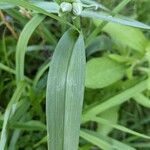
Tradescantia occidentalis
Western spiderwort · Prairie Spiderwort · Spiderwort
Description
Source: leafsnapTradescantia occidentalis, the prairie spiderwort or western spiderwort, is a plant in the dayflower family, Commelinaceae. It is common and widespread across the western Great Plains of the United States, as well as in Arizona, New Mexico, southern Utah, and Sonora, but is listed as a threatened species in Canada.Like in a few other species of Tradescantia, the cells of the stamen hairs of Western spiderwort are normally colored blue, but when exposed neutron radiation or other forms of ionizing radiation, the cells mutate and change color to pink. Thus the plant can be used as a bioassay for radiation.
🌳 Aside from its decorative appeal, western Spiderwort has a distinct potential as a bioindicator of environmental health, particularly within its native habitats. Because it is sensitive to certain soil conditions, researchers have considered using western Spiderwort to track ecosystem changes and detect heavy metals or other pollutants in the soil. This ability to reflect ecological well-being could be crucial for conservation efforts and for restoring natural balance.
🎭 Affection
Care Guide
💧 Water
Western Spiderwort thrives in prairies and prefers moderate moisture. To maintain the right balance, water it weekly, although it is resilient to drought. This herbaceous perennial adjusts its growth according to seasonal rainfall patterns and is typically found growing outdoors.
What should I do if I give my Western Spiderwort too much or too little water?
If you have overwatered your Western Spiderwort and are worried about disease, you should take immediate action. The best solution is usually to remove the plant from its current spot and let the roots dry a bit before replanting it in a well-draining soil. If you grow it in a pot, consider using a pot with better drainage. On the other hand, if you have underwatered your plant, simply increase the frequency of watering.
How often should I give water to my Western Spiderwort plant?
Western Spiderwort needs a lot of water throughout the growing season. To meet this need, it is recommended to water it regularly, especially during the spring and summer. In the beginning of the growing season, watering once or twice a week should be sufficient. As the season goes on, you should increase the frequency of watering. During the summer, it may be necessary to water it twice a day or even more, depending on the weather. Once the major growth phases have passed, you can water it once a week until the end of the growing season.
How much water does my Western Spiderwort plant need?
Western Spiderwort plants are very popular and widely grown by gardeners, so we have a good understanding of how to care for them. One important aspect is knowing how much water they need. On average, Western Spiderwort plants require about 1 - 1.5 inches of water per week, which should be spread out evenly during your weekly watering session. As the weather gets hotter, you may need to increase the amount of water, but in general, around two inches per week is a good guideline.
How do I know if I am watering my Western Spiderwort plant enough?
Watering issues can be problematic for your Western Spiderwort, showing similar symptoms whether it's underwatered or overwatered. Both can cause foliage discoloration and wilting. Underwatering is characterized by curling and drooping leaves, accompanied by reduced leaf vitality. This lack of water can stunt growth and hinder overall development, especially since this plant thrives with ample water. On the other hand, overwatering can lead to diseases like rot and unpleasant odors from saturated soil. While underwatering symptoms tend to appear faster, overwatering can be identified by excessive standing water or waterlogged soil.
How should I water my Western Spiderwort plant throughout the year?
Your Western Spiderwort's water needs will change throughout the seasons. In spring and summer, water once a week. During the heat of summer, increase watering to once or twice a day. In late summer and fall, water once a week. After harvest, stop watering as the plant has reached the end of its life cycle. Adjust the amount of water based on the plant's growth stage. Provide consistent soil moisture when the plant is young and encourage root development. When the plant produces flowers, it may need more water. During fruit development, water the plant the most, sometimes more than twice a day. After that stage, the water needs will decrease significantly.
☀️ Light Full sun
For vigorous growth, western Spiderwort prefers strong, consistent sunlight. It also tolerates moderate sunlight, a characteristic that reflects its native habitat. Excessive exposure can cause wilting, while insufficient light may lead to nutrient deficiencies that reduce the plant's vigor.
What are the sunlight requirements for Western Spiderwort?
Western Spiderwort (Tradescantia occidentalis) thrives best in full sunlight, requiring above 6 hours of sunlight daily for optimal growth. It can also adapt to partial sun conditions, which means about 3-6 hours of sunlight. It's important to observe the sunlight movement through your garden to ensure the plants receive the right balance of light and shade for their wellbeing. Overexposure to sunlight may lead to symptoms such as wilting, chlorosis, sunscald, leaf curling, and leaf scorching, while underexposure can result in symptoms like small leaves, leggy or sparse growth, faster leaf drop, delayed or stopped growth, and lighter-colored new leaves.
Can artificial lighting be used for Western Spiderwort, and how?
Yes, artificial lighting can be a vital solution for growing Western Spiderwort indoors or in conditions where natural sunlight is insufficient, especially during winter or in less sunny spaces. It's advisable to select the right type of artificial light, such as LED lights, which can be customized to provide specific wavelengths needed by the plants. The required intensity of artificial light varies by plant type: full sun plants need 30-50W/sq ft, partial sun plants require 20-30W/sq ft, and full shade plants 10-20W/sq ft. The light source should be placed 12-36 inches above the plant to mimic natural sunlight, and the duration should mirror natural daylight hours, with most plants needing 8-12 hours of light per day.
What symptoms indicate insufficient sunlight for Western Spiderwort?
When Western Spiderwort does not receive enough sunlight, it may show various symptoms indicating light deficiency. These can include smaller new leaves compared to mature ones, a leggy or sparse appearance due to longer spaces between leaves or stems, faster leaf drop as the plant conserves resources, delayed or no new growth as the plant enters survival mode, lighter-colored new leaves signaling a lack of chlorophyll, and in cases of overexposure, chlorosis (loss of leaf greenness), sunscald, leaf curling, wilting, and leaf scorching.
What solutions are recommended for light-related issues in Western Spiderwort?
To address light-related issues in Western Spiderwort, gradual relocation to sunnier spots is suggested, aiming for at least 6 hours of direct sunlight daily. For indoor plants, using a south-facing window or artificial light like desk lamps or professional grow lights for at minimum 8 hours a day can help. Outdoor plants should be moved gradually to prevent sunburn. If obstructions limit sunlight, such as trees, consider pruning to improve light access. For smaller plants, transplanting during the dormant period (late winter or early spring) to a location with ample sunlight and good drainage is advisable. Note that parts of the plant affected by insufficient light may not recover, but new growth following increased light exposure will be healthy.
🌡️ Temperature 5–35°C
Western Spiderwort occurs naturally in habitats with temperatures between 41 and 95°F (5 to 35℃). It prefers moderate temperatures and may need adjustments during extreme seasonal changes.
What is the ideal temperature range for Western Spiderwort?
Western Spiderwort thrives in environments where the temperature ranges between 41°F (5°C) and 95°F (35°C). This plant prefers moderate temperatures and might need adjustments during extreme seasonal changes. To facilitate its growth, it is crucial to maintain temperatures above 5°C during winter seasons, ensuring that the minimum temperature does not drop below freezing point to prevent freezing damage. When outdoor temperatures approach -5°C (25°F) in winter, it's advisable to protect Western Spiderwort by bringing it indoors or using a temporary greenhouse or protective materials like plastic film or fabric.
How does Western Spiderwort react to low temperatures?
Western Spiderwort has a moderate tolerance to low temperatures but prefers staying within 5°C to 35°C. Exposure to temperatures below -25°C can lead to leaf discoloration, and falling below -30°C may cause leaves to darken, show signs of water-soaked necrosis, wilting, and drooping, with their color gradually turning brown. To remedy frost damage, trim the frost-damaged parts and immediately move the plant to a warmer environment indoors or set up a makeshift greenhouse. A south-facing window indoors can provide sufficient sunlight, and supplemental lighting might be necessary if natural light is insufficient.
What should I do if Western Spiderwort is exposed to high temperatures?
In the summer months, it's important to ensure that Western Spiderwort's surrounding temperature remains below 35°C. Exposure to temperatures above 38°C can slow the plant's growth, lighten the color of its leaves, and increase the susceptibility to sunburn. If sunburn occurs, trim away the sunburned and dried parts of the plant. To mitigate the effects of high temperatures, move the plant to a shadier location, particularly one that avoids the afternoon sun, and water it in the morning and evening to maintain soil moisture.
💨 Humidity
🪴 Soil 6-7
🌱 Fertilizer
Western Spiderwort species do well with one or two applications of organic natural fertilizers that provide potassium and phosphorus. Apply the fertilizer before planting, work it into the soil and water thoroughly. Usually a single application is adequate, but a second application can be made once seedlings are established. Avoid overusing fertilizer, since too much can harm the plants.
🪴 Pot & Repot
✂️ Pruning
To encourage robust growth and prolonged blooming, prune Western Spiderwort carefully, ideally from early to late spring. Use sharp, clean shears to make the cuts. This helps prevent disease, promotes bushiness, and enhances visual appeal by redirecting energy to new, healthier growth.
🌿 Propagating
🐛 Diseases & pets
☠️ Toxicity
Characteristics
- Plant Type
- Herb
- Life Cycle
- Perennial
- Genus
- Tradescantia
- Family
- Commelinaceae
- Hardiness Zone
- 4-9
- Mature Height
- 0 cm to 30 cm
- Mature Spread
- 46 cm
- Leaf Color
- Green, Dark Green
- Leaf Type
- Evergreen
- Flower Color
- Blue, Purple, Pink
- Flower Size
- 2.54 cm
- Bloom Time
- Late spring, Early summer, Mid summer
- Planting Time
- Autumn, Winter, Spring
- Harvest Time
- Early summer, Mid summer
- Native Area
- Mexico