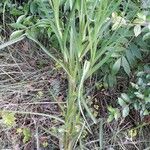
Tragopogon dubius
Yellow salsify · Goat's beard · Common salsify · Greater goatsbeard · Meadow goatsbeard
Description
Source: leafsnapTragopogon dubius (yellow salsify, western salsify, western goat's-beard, wild oysterplant, yellow goat's beard, goat's beard, goatsbeard, common salsify, salsify) is a species of salsify native to southern and central Europe and western Asia and found as far north and west as northern France. Although it has been reported from Kashmir and India, recent evidence suggests that specimens from these areas may be a different species. Western salsify has been introduced into North America where it has become widespread, being reported from all the continental United States except for a few in the far south-east, and all provinces of Canada except Newfoundland and the northern territories. Like most salsifies, the western salsify grows as an annual or occasionally biennial forb, reaching a height of typically 20–60 cm but sometimes almost a metre. It grows typically in warm, sheltered spots with moist soil. Its yellow flower head is 4–6 cm in diameter and is likely to be seen in late spring or early summer. Buds are blue-green, tall, and tapered. The inflorescence opens early in the morning and often closes up by late afternoon. Later the plant forms a seed head that resembles that of the dandelions but is distinctly larger. The seeds themselves (known as achenes) are 2–4 cm long but featherweight, weighing about 8 mg each on average. There is some natural variation between the central and peripheral achenes in the seedhead, with the peripheral ones being generally darker and heavier, and having a higher concentration of phenolic compounds; this may enhance their survival potential. Western salsify is quite similar to the generally more common meadow salsify, T. pratensis, but the bracts which show behind the flower head, a distinctive feature of salsifies, are longer and more noticeable. Although not particularly closely related to meadow salsify or the common salsify or oyster plant (T. porrifolius), the western salsify hybridises readily with both, and in North America its hybrids have given rise to the new alloploid hybrid species T. mirus and T. miscellus. Because western salsify is a widespread plant, it has a large number of alternative common names. They include western goat's beard, wild oysterplant, yellow salsify, yellow goat's beard, meadow goat's beard, goat's beard, goatsbeard, common salsify, or salsify. Some of these are also, or more commonly, used for other species, and are better avoided. A synonym, Tragopogon major, may also be encountered. The basal leaves can be eaten raw or cooked. Native Americans ate the roots, which are best cooked, and are said to taste like oysters.
🌳 Beyond its decorative appeal, yellow salsify is a culinary delight: its roots and budding sprouts are eaten as wholesome vegetables in Europe. Moreover, the bright yellow flowers contain a kind of latex, offering a renewable alternative for making eco-friendly rubber goods like tires and erasers.
Care Guide
💧 Water
Yellow salsify thrives in moderate moisture conditions, needing weekly watering to keep the soil balanced. Originally from temperate regions, it adapts well to seasonal rainfall. This plant optimizes water uptake during its peak growth periods, as is typical in its natural meadow habitats.
How should I water my Yellow salsify plant?
Yellow salsify can be watered using various tools, such as a garden hose with a spray nozzle or a watering can. It is not picky about the type of water it receives, whether it's rainwater, tap water, or filtered water. However, it's best to avoid watering this plant from overhead as it may damage the leaves and flowers and cause diseases. Setting up a drip irrigation system is often the most effective watering method for Yellow salsify, as it ensures even and direct application of water to the soil. When watering a container-grown Yellow salsify, you can use a cup, watering can, or tap to directly water the soil.
What should I do if I give too much or too little water to my Yellow salsify?
The solution for underwatering Yellow salsify is simple: when you see that your plant lacks moisture, start watering it more regularly. On the other hand, overwatering can be much more problematic if not caught early. Overwatered Yellow salsify can develop diseases that cause it to decline and die. To avoid this, choose a suitable growing location with ample sunlight to dry the soil and good drainage to prevent water pooling. If you overwater Yellow salsify in a pot, you may need to transfer it to a new pot. Ensure the new container has proper drainage holes and loose soil for efficient water flow.
How many times should I water my Yellow salsify?
Yellow salsify requires regular watering throughout its growing season. In the spring, it is recommended to water the plant once per week. As the season progresses and becomes warmer, you may need to increase watering to two to three times per week. However, exceeding this watering frequency can harm the plant. It is important to keep the soil consistently moist but not overly wet. Watering yellow salsify in a pot is slightly different. Potted plants may dry out more quickly due to the soil heating up. Therefore, you should water container-grown yellow salsify a few times per week, compared to just once per week for plants in the ground.
How much water does my Yellow salsify plant need?
There are a few different ways to determine how much water to give your Yellow salsify. Some gardeners check the soil for moisture and water until the top six inches are moist. Another option is to use a set measurement, typically around two gallons per week, considering the weather and soil dryness. However, strict guidelines may lead to overwatering if the plant needs less. When growing Yellow salsify in a container, you should water until all the dry soil layers are moist, which can be tested by sticking your finger in the soil. Another indicator is a slight trickle of excess water from the pot's drainage holes.
How do I know if I'm watering my Yellow salsify enough?
Avoiding overwatering your Yellow salsify can be tricky. These plants have deep roots that require weekly watering, but they are also prone to root rot and browning from overwatering. Underwatering is less of a concern as they can survive without extra watering for some time, but if left too long without water, they may wilt and develop dry leaves.
☀️ Light Full sun
Yellow salsify prefers ample sunlight for optimal development and growth. In its native habitats it is often adapted to cope in areas with less consistent sun. However, both excessive and insufficient sunlight can harm its health and vigor.
What are the sunlight requirements for Yellow Salsify?
Yellow Salsify requires generous exposure to sunlight for optimal growth, with its ideal conditions being full sun or at least above 6 hours of sunlight to partial sun, which is about 3-6 hours of sunlight daily. Observing how sunlight moves through your garden and picking spots that offer a balance of light and shade ensures the plant's health and happiness. Its native environments have conditioned it to tolerate varying sun exposure, but both too much and too little sunlight can negatively affect its vitality.
How does artificial lighting support Yellow Salsify's indoor growth?
For Yellow Salsify grown indoors, adequate lighting is essential, especially when natural sunlight is insufficient, such as during winter or in less sunny spaces. Artificial lights, like LED lights, are recommended because they can be customized to provide specific wavelengths needed by plants. Full sun plants require 30-50W/sq ft of artificial light, partial sun plants 20-30W/sq ft, and full shade plants 10-20W/sq ft. The light source should be placed 12-36 inches above the plant to mimic natural sunlight, and most plants need 8-12 hours of light per day.
What symptoms indicate light deficiency in Yellow Salsify?
When Yellow Salsify is grown indoors under inadequate light, it may show symptoms of light deficiency such as small leaves, leggy or sparse growth, faster leaf drop, slower or no new growth, and lighter-colored new leaves. These symptoms suggest the plant is struggling with insufficient sunlight, affecting its overall health and ability to photosynthesize efficiently.
How to address Yellow Salsify's symptoms of excessive sunlight?
Excessive sunlight can lead to issues like chlorosis, sunscald, leaf curling, wilting, and leaf scorching in Yellow Salsify. To address these symptoms, indoor plants can be gradually moved to a sunnier location each week until they receive the recommended sunlight exposure. Use south-facing windows and keep curtains open during the day for maximum light. For outdoor plants, gradually moving them to sunnier spots helps them adapt without risk of sunburn. For garden plants, reducing obstructions such as pruning trees can improve sunlight access. Transplanting during the dormant period to a sunnier location is advised for smaller plants.
🌡️ Temperature 0–35°C
Yellow salsify is a plant native to habitats where the temperature ranges from 68 to 95 °F (20 to 35 ℃). It favors the warmer part of that range. In colder seasons, consider adjusting conditions to meet yellow salsify's preferred temperature requirement.
What are the ideal temperature conditions for growing Yellow Salsify?
Yellow salsify (Tragopogon dubius) thrives in environments where the temperature ranges between 68 to 95°F (20 to 35°C), preferring the warmer temperatures within this bracket. It demonstrates strong cold resistance, making special frost protection measures generally unnecessary. However, in the anticipation of winter temperatures falling below -40°C, it's crucial to implement cold protection strategies, such as covering the plant with soil or straw. To prepare for colder seasons, especially before the first freeze of autumn, it's recommended to water the plant copiously to keep the soil moist, which helps prevent water scarcity during winter and early spring.
How does Yellow Salsify react to low temperatures, and what are the solutions?
Despite its cold tolerance, Yellow Salsify performs best when temperatures remain above 20°C and should ideally stay above 0°C during winter. When temperatures plummet below -40°C, the plant might not show immediate changes but could experience a decrease in or absence of sprouting come spring. To counteract any negative impacts of low temperatures, particularly seen in reduced or failed sprouting, it's advised to remove any parts of the plant that have failed to sprout in spring as a solution.
What should be done if Yellow Salsify is exposed to high temperatures?
During the warmer months, maintaining the temperature around Yellow Salsify below 35°C is essential. Exposure to temperatures above 38°C can lead to the leaves becoming lighter, curling, being more prone to sunburn, and in extreme cases, can result in wilting and drying out of the entire plant. To mitigate the adverse effects of high temperatures, damaged parts should be trimmed away, and if possible, the plant should be moved to a shaded location or covered with a shade cloth to protect it from the midday and afternoon sun. Additionally, watering the plant in the morning and evening will help keep the soil moist, providing further relief from the heat.
💨 Humidity
🪴 Soil 6-7
🌱 Fertilizer
Yellow salsify responds well to regular, dilute applications of fertilizer to encourage healthy leaf growth. Fertilize yellow salsify roughly once a month during the summer. Nitrogen is important for foliage, and providing nitrogen-rich sources helps yellow salsify thrive.
Why should I put fertilizer on my Yellow salsify plant?
Not all plants require added fertilizers as they are able to obtain all the necessary nutrients on their own. However, yellow salsify, like other plants, uses nutrients for growth and internal processes. Nitrogen, phosphorus, and potassium are the main nutrients that plants need, with nitrogen being particularly important for foliage growth. Yellow salsify may struggle to obtain enough nitrogen from the soil, which is why many gardeners choose to provide additional nitrogen supplements.
When should I fertilize my Yellow salsify for the best results?
Yellow salsify generally grows well and can benefit from a monthly fertilizer application during its active growth period. This is typically in the spring and summer months. It's important to note that you should avoid fertilizing during the fall and winter since the plant becomes less active and requires fewer nutrients. To determine when to start fertilizing, keep an eye out for signs of new growth. Regardless of whether the plant is grown outside or in a container, the fertilization schedule remains the same. However, if you're growing yellow salsify in a container, you may not need to fertilize for the first one to two months. Container soil is typically nutrient-rich, so it's recommended to start fertilizing after the plant has been in the same soil for a while.
When is the best time to not fertilize my Yellow salsify?
To keep your Yellow salsify healthy, avoid fertilizing it if it is already sick or has pests. Additionally, refrain from fertilizing a dehydrated plant as it can worsen the problem. Only use fertilizer on healthy plants. When watering, be cautious not to splash fertilizer onto the leaves or stem as this can cause burned spots. Unless you are using a specific foliar fertilizer, ensure the fertilizer does not directly touch the plant.
Which fertilizer does my Yellow salsify plant need?
Fertilizers contain a variety of important nutrients like nitrogen, potassium, phosphorus, iron, manganese, and zinc. These nutrients are essential for promoting growth in Yellow salsify. Using a balanced fertilizer, such as an all-purpose fertilizer with a 10-10-10 NPK number, is recommended for Yellow salsify. Alternatively, natural fertilizers like blood meal or worm castings can also be used. If you prioritize leaf growth, you can choose a fertilizer that has a higher nitrogen content, like fish fertilizer. It's important to consider your specific goals for growing Yellow salsify - if you're not concerned about flowers or seeds, then focusing on leaf development may be sufficient.
How can I make my Yellow salsify grow better?
To ensure the proper fertilization of your Yellow salsify, it is important to follow the instructions provided with the specific fertilizer you have purchased. To avoid over-fertilizing, it is advisable to initially use half-strength fertilizer. Over-fertilizing is a common mistake because Yellow salsify often requires frequent fertilization. Remember that it is easier to add more fertilizer later if needed rather than trying to save an over-fertilized plant. Before applying fertilizer, make sure the soil is not dry. It should be somewhat moist already to facilitate better absorption of the fertilizer and prevent fertilizer burn. After applying dry fertilizers, it is recommended to water the soil. There are different methods of applying fertilizers, depending on the type. Some fertilizers are meant to be mixed into the soil during planting, while others are applied on top of the soil and then watered in. For Yellow salsify, a water soluble fertilizer is often a convenient choice. Simply mix the fertilizer solution with water in a watering can, following the recommended dosage for Yellow salsify, and then water the plant as usual. If you prefer a low-maintenance option, slow-release granules or fertilizer spikes can also be effective as they provide nutrients over a longer period without the need for monthly fertilization.
🪴 Pot & Repot
When repotting Yellow salsify, choose a pot that is 1–2 inches (2.5–5.1 cm) larger in diameter and ensure it has good drainage. Use a well-draining potting mix, and consider adding perlite to increase drainage. Repot in spring or early summer, water thoroughly afterward, and place it in a shady spot at first.
✂️ Pruning
Yellow salsify is a plant with tall, dandelion-like flowers that produces numerous seeds. To control its height and prevent excessive self-seeding, it is best to prune the plant from early to late spring. You should remove spent flowers and thin out crowded areas to improve air circulation. Be sure to use sharp, clean tools for pruning, as this helps to reduce the risk of disease.
🌿 Propagating
🐛 Diseases & pets
☠️ Toxicity
Tragopogon dubius has no toxic effects reported.
Characteristics
- Plant Type
- Herb
- Life Cycle
- Annual, Biennial, Perennial
- Genus
- Tragopogon
- Family
- Asteraceae
- Hardiness Zone
- 2-9
- Mature Height
- 30 cm to 76 cm
- Mature Spread
- 30 cm to 37 cm
- Leaf Color
- Green, Blue
- Leaf Type
- Deciduous
- Flower Color
- Yellow
- Flower Size
- 4.06 cm to 6.35 cm
- Bloom Time
- Late spring, Early summer, Mid summer
- Planting Time
- Spring
- Harvest Time
- Early summer, Mid summer