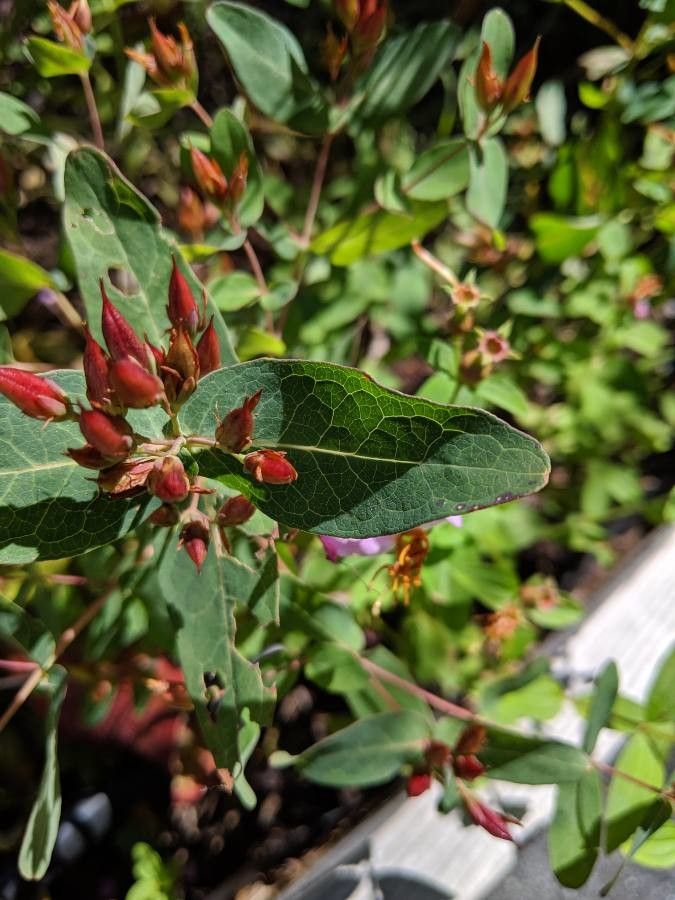
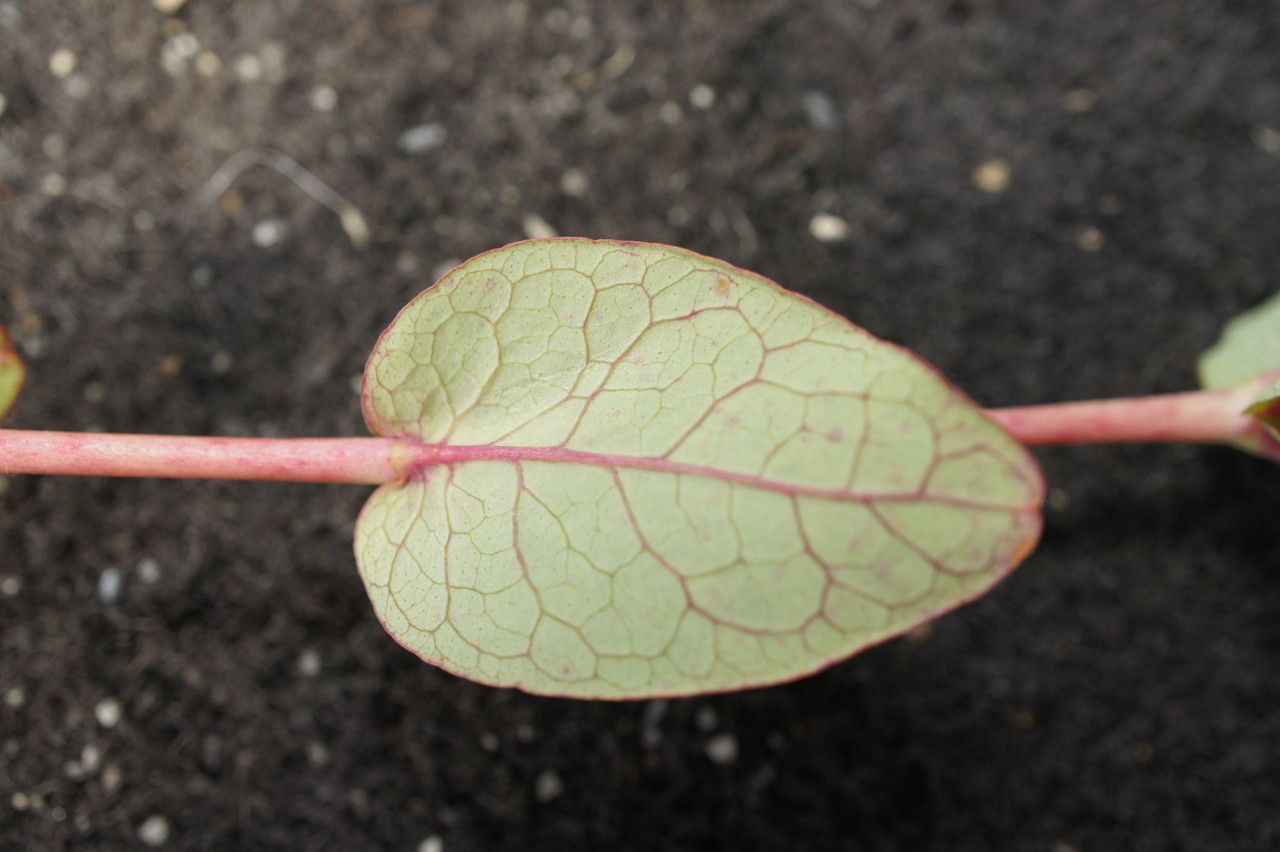
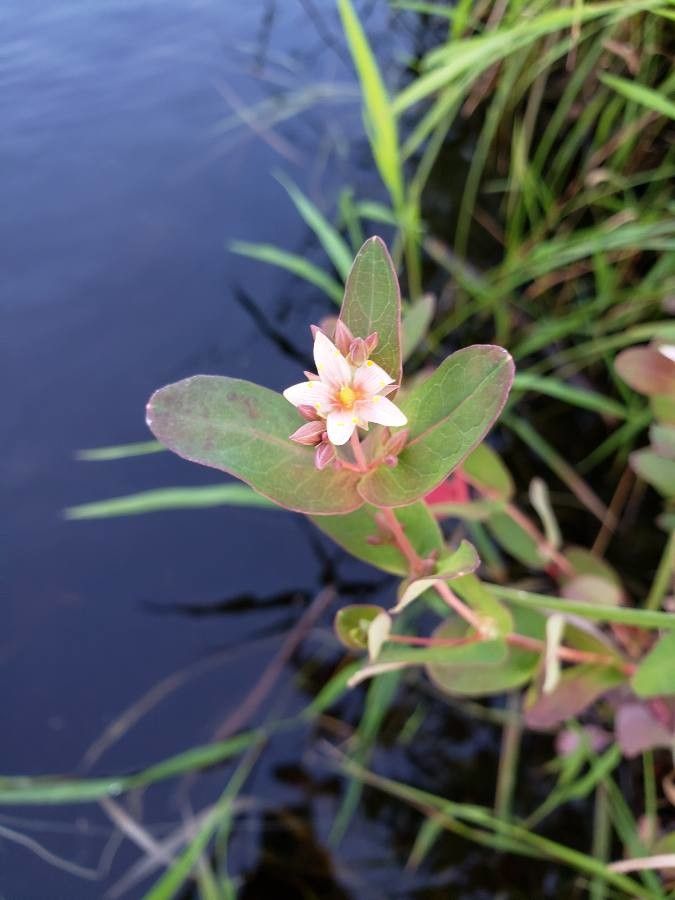
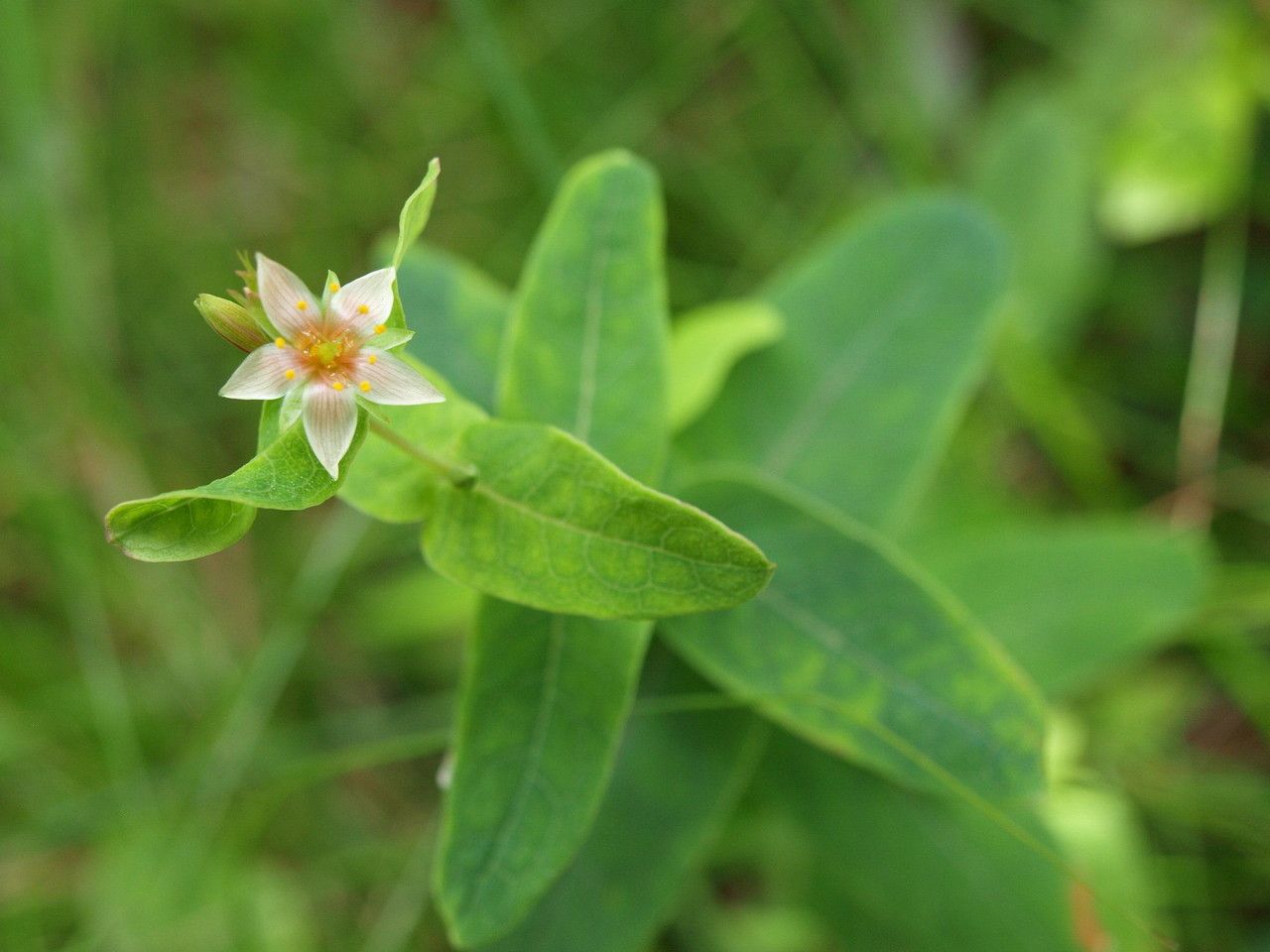
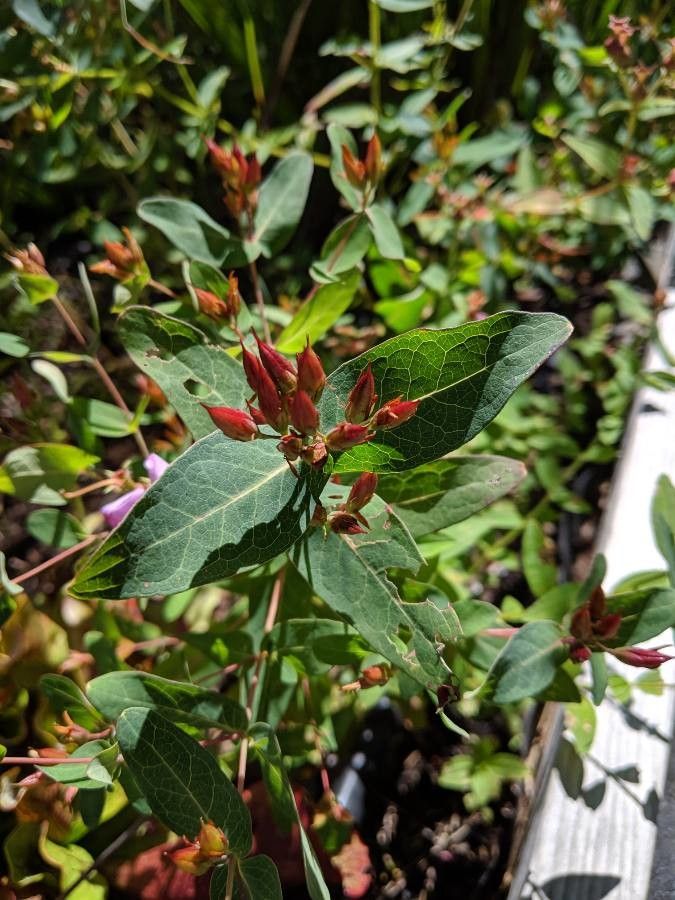
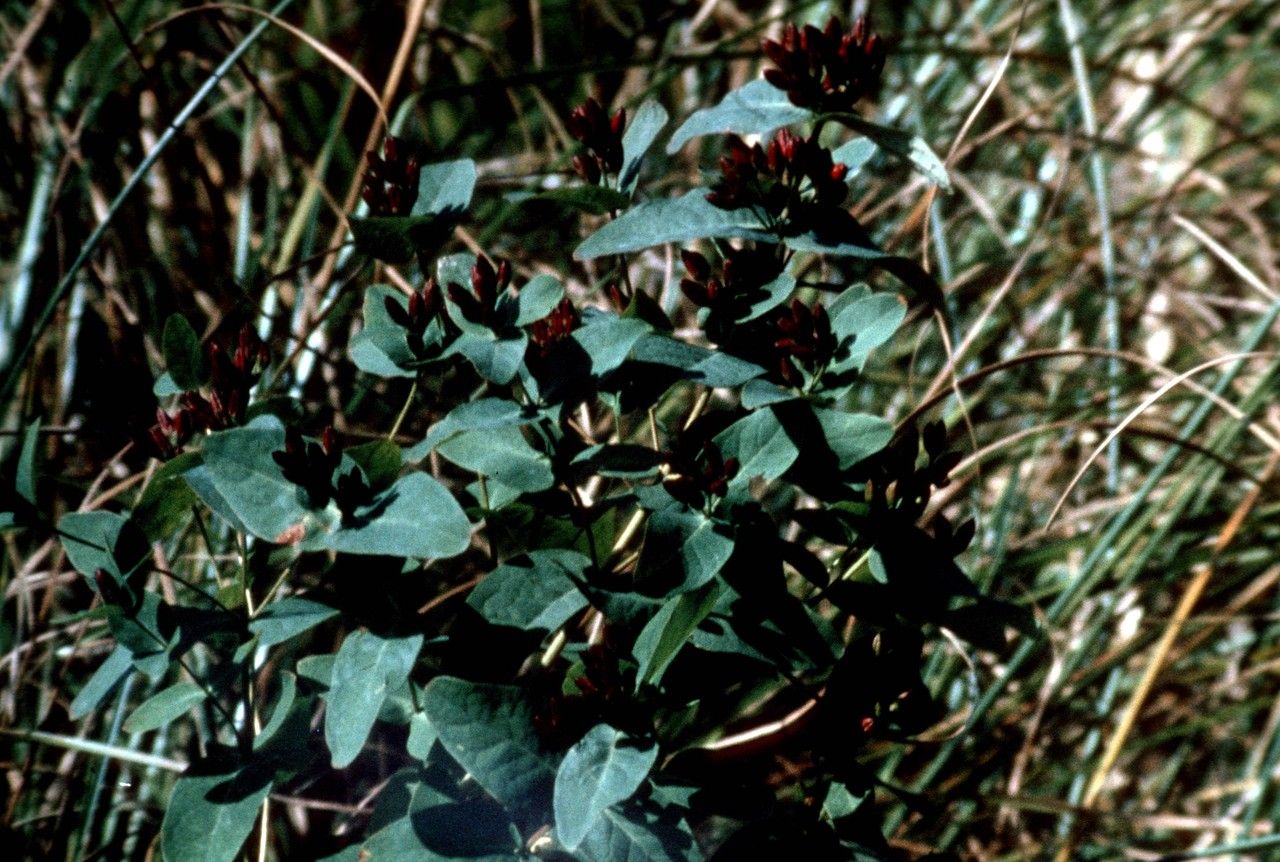
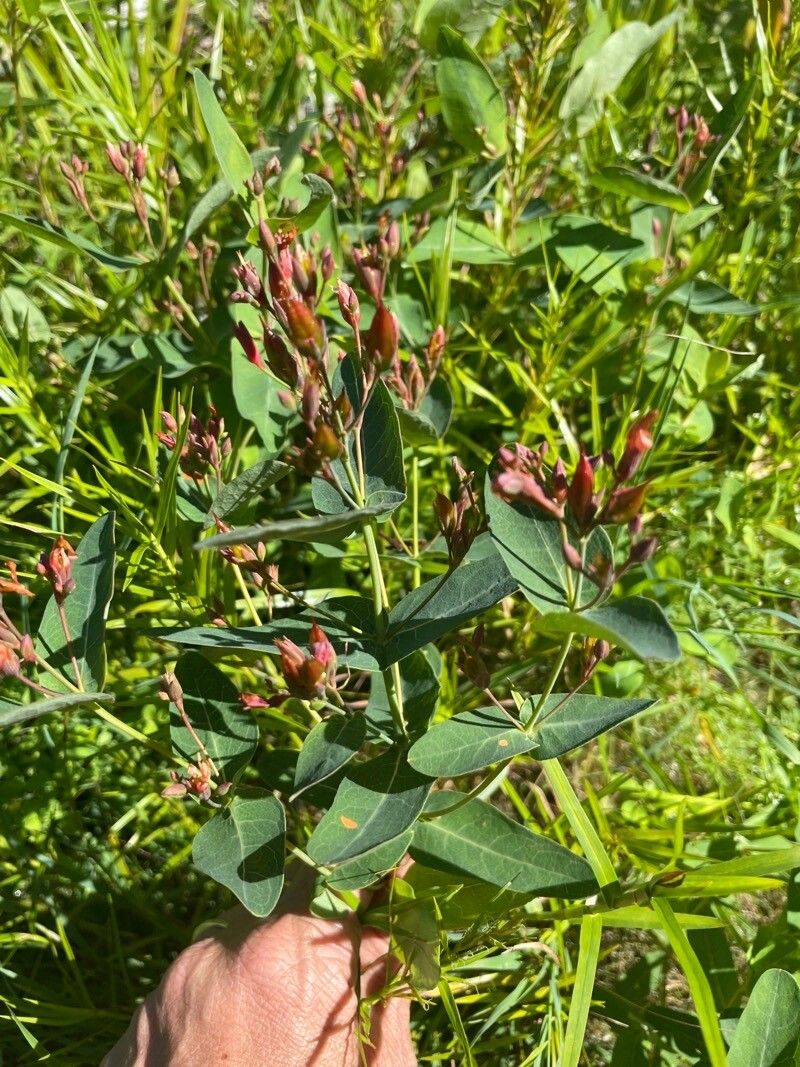
Hypericum virginicum (Triadenum virginicum), the marsh St. Johns-wort or Virginia marsh St. Johnswort, is a species of flowering plant in the family Hypericaceae. It is native to the central and eastern United States and eastern Canada.Hypericum virginicum is a small herbaceous plant growing up to 70 cm (28 in) in height. Its leaves are sessile and opposite, sometimes clasping. The flowers grow up to 15 mm (0.6 in) in diameter, with 5 pink petals. It flowers in the summer to early fall and grows in bogs, wet meadows, fens, swamps, and along lakeshores. It can be distinguished from the closely related Hypericum fraseri by its longer, acute sepals, and longer styles.Alexander Garden first observed this plant in 1754, but following correspondence with Jane Colden realized that she had previously collected and recorded the same species in 1753, one year before his discovery. As such, Jane Colden held naming rights for what both naturalists thought would be a newly described genus. Colden generously offered to name it Gardenia in Garden's honor, however this was later rejected by Carl Linnaeus when John Ellis also proposed naming the cape jasmine Gardenia jasminoides in Garden's honor. As cape jasmine had been collected earlier (at least by 1680) it received priority in naming. In the end it was originally described as Hypericum virginicum by Linnaeus in 1759. In 1837 Rafinesque proposed placing it a new genus, Triadenum, acknowledging, perhaps unknowingly, Jane Colden's original belief that Hypericum virginicum was sufficiently unique to warrant its own genus. Members of the genus Triadenum have white to pink petals, always 9 stamens, and three staminodal glands alternating between the stamen fascicles.
Virginia marsh St. John's wort has strong disease resistance and is generally not prone to illnesses. Still, it can be affected by pests and diseases present in its surroundings. Such infections are typically mild. Regarding care, this plant needs moderate maintenance. It should be pruned regularly to maintain a tidy appearance and encourage healthy growth. Applying fertilizer can also help stimulate flowering. Virginia marsh St. John's wort is well suited to anyone with outdoor space, such as a garden or patio, and does not require extensive gardening experience. It may demand more attention if grown indoors.
How to keep Triadenum Virginicum.
Light
Virginia marsh St. John's wort generally thrives in places with moderate sunlight. This preference for partly bright conditions stays consistent through every stage of its growth. It originates in habitats where constant full sun is uncommon. Excessive exposure can cause growth problems, while insufficient light may lead to stunted development.
Water
The Virginia marsh St. John's wort flourishes in wetland habitats, where it thrives in high humidity and abundant water. To keep it healthy, it needs to be watered weekly. This deciduous plant loses its leaves each year and relies on the rainy season for growth and survival. It is commonly found in marshy areas.
Temperature
Virginia marsh St. John's wort is native to areas with temperatures of 59 to 95 °F (15 to 35 ℃). It prefers not to change its temperature tolerance seasonally. Any temperature variation within that range is considered suitable.
Fertilizer
The best time to fertilize a Virginia marsh St. John's wort is in early spring, when it is coming out of dormancy and beginning active growth. Fertilization supplies essential nutrients needed for healthy development. Although this plant has relatively low fertilizer requirements, applying fertilizer annually can improve its survival and encourage better, longer-lasting flowers.
Pruning
Virginia marsh St. John's wort thrives in wetlands and displays vibrant pink blooms. For optimal growth, prune the plant from early to late spring. This helps remove dead stems, improves air circulation, and promotes vigorous flowering. Additionally, regularly trimming spent flowers can extend the blooming season, enhancing its decorative appeal in gardens.
Botanical profile.
- Plant Type
- Herb
- Life Cycle
- Perennial
- Genus
- Triadenum
- Family
- Hypericaceae
- Hardiness Zone
- 8-10
- Mature Height
- 61 cm
- Mature Spread
- 1.52 m
- Leaf Color
- Green
- Leaf Type
- Semi-evergreen
- Flower Color
- Pink
- Flower Size
- 1.52 cm
- Bloom Time
- Mid summer, Late summer, Early fall
- Planting Time
- Spring, Summer
- Harvest Time
- Fall
Other names.
Reader questions.
What are the sunlight requirements for Virginia marsh St. John's wort?
Virginia marsh St. John's wort thrives in moderate levels of sunshine, requiring about 3-6 hours of sunlight each day. It's important to watch how sunlight moves through your garden to choose spots that offer a balance of light and shade, ensuring the plant's happiness. Avoid both overexposure, as it may hinder growth, and underexposure, as it could lead to stunted development.
What is the native temperature range for Virginia marsh St. John's wort?
Virginia marsh St. John's wort, or Triadenum virginicum, thrives in environments with temperatures ranging from 59 to 95 °F (15 to 35 °C). It is native to areas that maintain temperature variations within this range throughout the seasons, showing a preference for steady temperature conditions without much adjustment to changing seasonal temperatures.
How can artificial lighting assist in the growth of indoor Virginia marsh St. John's wort?
Indoor Virginia marsh St. John's wort requires adequate lighting, especially when natural sunlight is insufficient. Artificial lights, like LEDs, are valuable for providing the necessary wavelengths for optimal growth. For full sun plants, 30-50W/sq ft of artificial light is needed, partial sun plants require 20-30W/sq ft, and full shade plants need 10-20W/sq ft. Ensure the light source is placed 12-36 inches above the plant and mimic natural daylight hours, usually 8-12 hours per day, to promote healthier development.
Does Virginia marsh St. John's wort have any cold tolerance?
Yes, Virginia marsh St. John's wort does have some cold tolerance. It generally does not need additional protective measures when temperatures are above -5°C. However, for temperatures expected to drop below -5°C, taking temporary cold protection measures, such as wrapping the plant with materials like plastic film or fabric, is necessary. These protections should be removed once the temperature rises to suitable levels again.
What are the symptoms of light deficiency in Virginia marsh St. John's wort?
Virginia marsh St. John's wort shows several symptoms when exposed to insufficient light, including smaller new leaves, leggy or sparse growth, late leaf drop, slower new growth, and lighter-colored leaves. Conditions such as leaf curling, wilting, leaf scorching, chlorosis, and sunscald also indicate issues with light exposure. These symptoms reflect the plant's struggle in suboptimal light conditions, impacting its overall health and growth.
How should you care for Virginia marsh St. John's wort in low temperatures?
In low temperatures, Virginia marsh St. John's wort exhibits moderate tolerance and performs best when kept above 15°C. It should not be exposed to temperatures below -5°C during winter. If temperatures fall below -10°C, the leaves might droop; they can recover in mild cases, but severe cold can cause wilting and leaf loss. To protect it from frost damage, trim the frost-damaged parts and, before the onset of low temperatures, wrap the plant with non-woven fabric or cloth and set up a wind barrier to shield it from cold winds.
What remedies can counteract insufficient sunlight for Virginia marsh St. John's wort?
To remedy insufficient sunlight for Virginia marsh St. John's wort, gradually move the plant to sunnier spots to adapt it to brighter conditions. For indoor plants, shift them weekly towards more direct light or use artificial lighting, like desk or ceiling lamps, for at least 8 hours a day. Outdoors, find the optimal sunlight spot through gradual relocation. To reduce obstructions, prune trees that block sunlight or transplant smaller plants to sunnier locations during their dormant periods. While parts of the plant already affected may not recover, new growth should flourish with improved light exposure.
How does high temperature affect Virginia marsh St. John's wort and what measures can be taken?
Virginia marsh St. John's wort is sensitive to high temperatures, particularly above 35°C. Exceeding 41°C can cause the leaves to lighten in color, dry, and curl, making the plant more prone to sunburn. To manage this issue, trim away sunburned and dried parts. Relocate the plant to a shaded area away from midday and afternoon sun or use shade cloth to reduce heat exposure. Additionally, watering the plant in the morning and evening helps keep the soil moist and supports the plant in high temperature conditions.