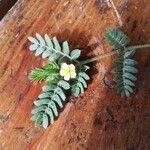
Tribulus terrestris
Goathead · Caltrop · Tribulus · Cat's-head · Common dubbletjie
Description
Source: leafsnapTribulus terrestris, commonly known as puncture vine or goat's head, is a small annual plant in the Zygophyllaceae family. Native to warm temperate and tropical regions, it can be found across Europe, Asia, Africa, and Australia. This plant grows prostrate, with stems that can reach up to 1 meter in length. Its leaves are pinnately compound, featuring 4-8 pairs of oblong leaflets. The small, yellow flowers have five petals arranged in a star shape. For centuries, Tribulus terrestris has been used in traditional medicine to treat various ailments, including urinary tract infections, kidney problems, high blood pressure, and sexual dysfunction. It is believed to possess anti-inflammatory properties due to its saponin content, which also gives it a bitter taste. In recent years, Tribulus terrestris has become popular among athletes, as it is thought to enhance athletic performance by naturally increasing testosterone levels without causing adverse health effects. Overall, Tribulus terrestris is an intriguing plant with numerous potential health benefits, making it a valuable subject for further research into its medicinal properties.
🌳 Puncture vine creates problems for farmers and gardeners, but it also provides a useful perspective on soil chemistry. It is recognized for indicating the presence of certain metals in the soil, especially selenium. Because it accumulates selenium, farmers and botanists use puncture vine as a bioindicator to evaluate soil nutrient levels. This trait can aid in managing soil health and guiding farming practices, making puncture vine an unexpected ally in sustainable agriculture.
🎭 Inebriating,
Care Guide
💧 Water Every 7 days
Puncture Vine flourishes in dry environments due to its high drought tolerance and minimal moisture requirements. To keep it healthy, water the plant weekly, taking care not to over-saturate the soil. It thrives in well-draining soil and is typically grown outdoors, as waterlogged conditions can harm the plant's health.
How should I water my Puncture Vine?
To water Puncture Vine, you have a few options: use a garden hose with a spray nozzle, a watering can, or any other common watering tool. This plant isn't too picky about its water source and can thrive with rainwater, tap water, or filtered water. However, it's best to avoid watering from above as it can damage leaves and flowers and potentially cause disease. Instead, setting up a drip irrigation system is often the most effective way to water Puncture Vine. These systems deliver water evenly and directly to the soil. If you have a Puncture Vine in a container, the same watering approach can be used with tools like a cup, watering can, or tap water directly applied to the soil.
What do I do if I give my Puncture Vine too much or too little water?
To remedy underwatering Puncture Vine, simply water it more regularly when you notice it lacks moisture. Overwatering, on the other hand, can be a more serious issue that may lead to diseases and plant decline. To prevent this, choose a sunny location with well-drained soil to avoid waterlogged conditions. If you overwater a potted Puncture Vine, consider repotting it in a container with good drainage and loose soil.
How frequently should I water my Puncture Vine?
To best care for your Puncture Vine plant, make sure to water it regularly throughout the growing season. In the spring, watering once per week should be sufficient. However, as the weather gets warmer, you may need to increase the frequency to two or three times per week. It is important not to exceed this rate as it can harm the plant. It is also crucial to maintain moist soil but not overly wet, regardless of how often you water. If you have a potted Puncture Vine, you'll need to water it more frequently compared to a plant in the ground. Generally, plan to water a potted plant a few times per week, whereas an in-ground plant can be watered once per week.
How much water does my Puncture Vine plant require?
Determining how much water to give your Puncture Vine can be done in a few different ways. One method is to feel the soil for moisture and water until the first six inches are moist. Another option is to use a set measurement, such as two gallons per week, taking into account factors like heat and soil dryness. However, following strict guidelines may result in overwatering if your plant requires less. When growing Puncture Vine in a container, you'll need to use a different approach. Ensure all layers of dry soil are moistened by using your finger to feel for moisture or watering until excess water drips from the drainage holes.
How can I know if I am giving enough water to my Puncture Vine?
Avoiding overwatering your Puncture Vine can be a bit tricky. On one hand, their deep roots require weekly watering. On the other hand, Puncture Vines are highly prone to root rot, which can lead to browning of the plant. Underwatering is less of an issue as Puncture Vines can survive without frequent watering. However, if you go too long without watering, they may start to wilt and show dry leaves.
☀️ Light Full sun
Puncture Vine prefers abundant sunlight but can cope with moderate exposure. In its native range it receives ample sun, indicating the plant does well under those conditions. Too much sun can damage it, while too little light can result in stunted growth or poor health.
What are the sunlight requirements for plants?
Plants typically require varying amounts of sunlight to thrive. Full sun plants need more than 6 hours of direct sunlight daily, whereas partial sun plants can thrive with about 3-6 hours of sunlight. It's crucial to observe how sunlight moves through your garden to choose the best spots for your plants, ensuring a balance of light and shade to keep them healthy. The Puncture Vine, for example, favors a generous amount of sun but can also manage with moderate sun exposure, indicating its flexibility in sun requirements. Overexposure or insufficient light can have negative impacts, highlighting the importance of providing the right amount of sunlight.
How should indoor plants be lit with artificial lighting?
When natural sunlight is insufficient, particularly during winter or in less sunny spaces, artificial lighting can significantly benefit indoor plants. For optimal growth, LED lights are recommended due to their ability to provide specific light wavelengths needed by plants. Full sun plants require 30-50 watts per square foot, partial sun plants need 20-30 watts per square foot, and full shade plants require 10-20 watts per square foot of artificial light. The light source should be placed 12-36 inches above the plant, mimicking natural sunlight as closely as possible. Moreover, the lighting duration should replicate natural daylight hours, which is typically 8-12 hours per day, to promote healthier growth.
What are the symptoms of light deficiency or overexposure in Puncture Vine?
Puncture Vine can show various symptoms under inadequate light conditions or overexposure. Symptoms of light deficiency include smaller new leaves, leggy or sparse growth, faster leaf drop, halted growth, and lighter-colored new leaves signaling poor health. Overexposure can lead to chlorosis, where leaves lose color and turn yellow; sunscald, resulting in damaged leaves or stems; leaf curling as a defense mechanism to reduce water loss; wilting due to increased transpiration; and leaf scorching, characterized by brown, dry edges on leaves. These symptoms highlight the plant's struggle to adapt to its lighting environment.
What solutions can address light-related issues for plants indoors and outdoors?
To combat light-related issues, a gradual approach to increasing sunlight exposure is recommended for both indoor and outdoor plants. Indoors, gradually relocate your plants to sunnier spots, ensuring at least 6 hours of direct sunlight daily. Using a south-facing window helps maximize sunlight exposure. If moving the plant is not feasible, consider supplementing with artificial light, keeping lamps on for at least 8 hours daily. Outdoors, similarly, move your plants progressively to sunnier locations to avoid shock. It's important to note that parts of the plant damaged by inadequate light might not recover, but new growth will appear healthy after adjusting to better lighting. Additionally, identifying and reducing obstructions, such as pruning trees that block sunlight, or transplanting smaller plants during their dormant period to a sunnier location with good drainage, can also help improve light conditions.
🌡️ Temperature 15–32.2°C
Puncture Vine is native to warm climates where temperatures range from 68 to 95 °F (20 to 35 ℃). It prefers and does well within this temperature band. Seasonal care may involve protecting it from severe cold or excessive heat, since its temperate nature does not tolerate such extremes.
What is the ideal environment for Puncture Vine?
Puncture Vine, botanically known as Tribulus terrestris, is native to warm environments, thriving best in temperatures ranging from 68 to 95 °F (20 to 35 °C). It prefers these temperate conditions and may require protection against extreme cold or heat due to its temperate nature. Although it possesses strong cold resistance and usually doesn't need special frost protection measures, care should be taken when winter temperatures are expected to fall below -10°C. Prepping for winter involves covering the plant with insulating materials like soil or straw and watering abundantly before the first freeze, ensuring the soil remains moist to prevent drought and water scarcity during the colder seasons.
How does Puncture Vine respond to low temperatures?
Puncture Vine is notably cold-tolerant, flourishing best when the temperature stays above 20°C and should ideally be kept above 0°C during winter. If temperatures drop below -10°C, there might not be any noticeable changes during winter itself, but there could be a reduced capacity for the vine to sprout or an absence of sprouting as spring arrives. To mitigate these issues, removing parts that have failed to sprout in spring can encourage healthier growth.
How to care for Puncture Vine in high temperatures?
During the summer months, it's important for the Puncture Vine to be kept under 35°C. Should the temperature soar above 38°C, the plant's leaves might show signs of distress, such as becoming lighter, curling, experiencing sunburn, or, in severe cases, wilting and drying up completely. To handle this situation, trim away the affected parts, relocate the plant to a shaded area or use shade cloth to protect it from midday and afternoon sun. Additionally, it's beneficial to water the plant in the morning and evening to maintain soil moisture and help the plant cope with the heat.
💨 Humidity
🪴 Soil 5-8
🌱 Fertilizer
Puncture Vine responds well to regular, weak applications of fertilizer to encourage healthy leaf growth. You should apply fertilizer to Puncture Vine about once a month during the summer. Nitrogen is essential for foliage, and providing nitrogen-rich sources helps Puncture Vine thrive.
🪴 Pot & Repot
✂️ Pruning
🌿 Propagating
🐛 Diseases & pets
☠️ Toxicity
Characteristics
- Plant Type
- Herb
- Life Cycle
- Annual, Biennial
- Genus
- Tribulus
- Family
- Zygophyllaceae
- Hardiness Zone
- 8
- Mature Height
- 15 cm
- Mature Spread
- 0.61 m to 1.52 m
- Leaf Color
- Green
- Leaf Type
- Deciduous
- Flower Color
- Yellow
- Flower Size
- 2.54 cm to 5.08 cm
- Bloom Time
- Summer
- Planting Time
- Spring
- Harvest Time
- Mid summer, Late summer, Early fall
- Native Area
- Burkina Faso, Libya, Sri Lanka, India, Turkey, United Arab Emirates, Mexico, Slovakia, Madagascar, Montenegro, Pakistan, Thailand, Nigeria, Slovenia, Croatia, Morocco, Belarus, Uganda, Tanzania, Benin, Cameroon, Mozambique, Ethiopia, Romania, Central African Republic, Portugal, Saudi Arabia, Malawi, Tunisia, Bulgaria, Bangladesh, Cyprus, Ukraine, Chad, China, Lebanon, Afghanistan, Syria, Kyrgyzstan, Kazakhstan, Italy, Mongolia, Togo, Senegal, Eswatini, Iran, Azerbaijan, Kuwait, Congo (DRC), Djibouti, Somalia, Egypt, Angola, Austria, Namibia, Rwanda, Yemen, Kenya, Niger, Zimbabwe, Uzbekistan, Russia, Mali, Iraq, Cambodia, Burundi, Oman, Ghana, South Korea, Qatar, Botswana, France, Nepal, Tajikistan, South Africa, Sudan, Mauritania, Armenia, Zambia, Greece, Guinea, Serbia, Spain, Vietnam, Myanmar, Bhutan, Albania, Algeria, Hungary, Turkmenistan