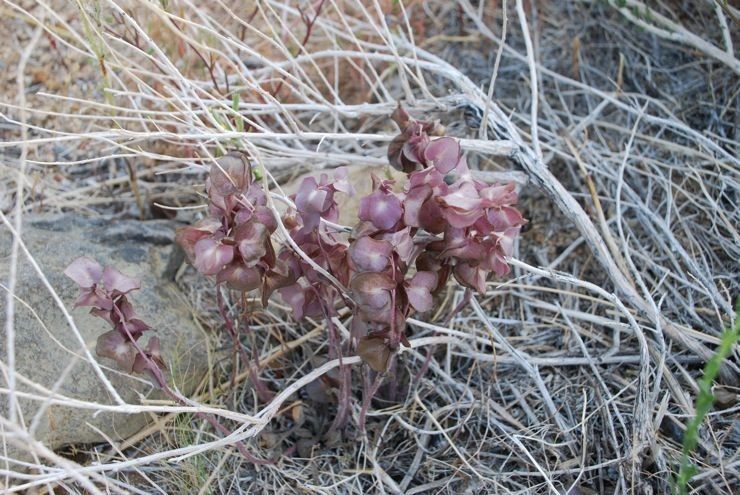
Tricardia watsonii, commonly known as Watson's tricardia, is a perennial herbaceous plant in the Melastomataceae family. It is native to the southwestern United States, particularly in Arizona, New Mexico, and Texas.
This plant features a woody base with multiple stems that can grow up to 60 centimeters tall. The leaves are oval-shaped with serrated edges, arranged in opposite pairs along the stem. The flowers of Tricardia watsonii are small, pinkish-purple, and grow in clusters at the ends of the stems.
Tricardia watsonii thrives in dry habitats such as rocky slopes or desert washes, at elevations ranging from 1,000 to 2,500 meters above sea level. It typically blooms from May to September.
Native American tribes have used this plant for medicinal purposes, including treating stomach ailments and skin irritations caused by poison ivy or oak.
Overall, Tricardia watsonii is an intriguing plant species that enhances the beauty of its natural habitat while offering medicinal benefits to those who have learned to use it effectively over time.
How to keep Tricardia Watsonii.
Pruning
Three Hearts benefits from pruning between early and late spring. This involves removing dead or diseased branches to improve the plant's health and encourage new growth. Additionally, thinning out overcrowded areas allows for better air circulation and light penetration. This seasonal care enhances flowering, boosts vitality, and helps maintain the plant's aesthetic form.
Botanical profile.
- Plant Type
- Herb
- Life Cycle
- Perennial
- Genus
- Tricardia
- Family
- Boraginaceae