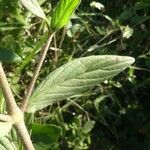
Trichodesma zeylanicum
Camelbush · Cattlebush · Rough bluebell · African borage · Lateweed
Description
Source: leafsnapTrichodesma zeylanicum is a herbaceous plant that belongs to the Boraginaceae family. It is commonly found in tropical and subtropical regions of Asia, Africa, and Australia. The plant grows up to 1 meter in height and has a hairy stem with lance-shaped leaves arranged alternately. The flowers of Trichodesma zeylanicum are small and blue or purple, forming clusters at the ends of branches. The fruit is a small capsule containing four seeds. This plant possesses various medicinal properties, including anti-inflammatory, analgesic, antipyretic, diuretic, and laxative effects. Traditionally, it has been used to treat ailments such as fever, coughs, colds, and asthma. Ecologically, Trichodesma zeylanicum plays an important role by attracting pollinators like bees, which aid in the pollination of nearby plants. Overall, Trichodesma zeylanicum is a valuable herbaceous plant with medicinal properties that can be used to treat various ailments. Additionally, it contributes significantly to the ecosystem by attracting pollinators, thereby aiding in the pollination of surrounding plants.
Care Guide
💧 Water Every 7 days
☀️ Light Full sun
Camel bush comes from bright, open habitats and does best in full sun. It will tolerate partial shade but favors direct sunlight for peak growth. This plant, which can be annual or biennial, is noted for its sun-loving habit.
🌡️ Temperature 20–37.8°C
Camel bush comes from tropical areas, where the climate is usually warm and humid. Therefore it is well suited to high temperatures and humidity. It is not fond of abrupt temperature changes and prefers a consistent temperature, so avoid fluctuations indoors. It generally does not tolerate cold and needs higher temperatures to grow. If the ambient temperature falls too low, the plant may stop growing or even die.
💨 Humidity
🪴 Soil 6-8
🌱 Fertilizer
When most of the Camel bush's blooms have fully opened, resume fertilizing. At the height of bloom production, begin feeding again every three to four weeks, as the weather allows. Then, when the Camel bush produces fewer new blooms, stop fertilizing; there’s no need to feed the plant when it can no longer produce additional blooms.
🪴 Pot & Repot
✂️ Pruning
For optimal growth and air circulation, it's beneficial to prune camel bush in early spring, removing any dead or damaged branches. This approach encourages bushier development without the risk of stress from over-pruning. Consistent maintenance enhances the plant's vitality and flowering potential, leading to a healthier plant overall.
🌿 Propagating
🐛 Diseases & pets
☠️ Toxicity
Characteristics
- Plant Type
- Herb
- Life Cycle
- Annual
- Genus
- Trichodesma
- Family
- Boraginaceae
- Hardiness Zone
- 9-11
- Mature Height
- 30 cm to 91 cm
- Mature Spread
- 30 cm to 61 cm
- Leaf Color
- Green
- Leaf Type
- Deciduous
- Flower Size
- 1.02 cm to 1.52 cm
- Bloom Time
- Late spring, Summer, Early fall
- Planting Time
- Spring, Summer, Autumn
- Harvest Time
- Mid summer, Late summer, Fall
- Native Area
- Sri Lanka, Malawi, India, Angola, South Africa, Zambia, Madagascar, Sudan, Philippines, Yemen, Kenya, Uganda, Tanzania, Zimbabwe, Indonesia, Vietnam, Mozambique, Myanmar, Eswatini, Ethiopia, Botswana