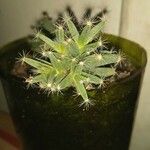
Trichodiadema densum
African bonsai · Miniature desert rose · Mini Desert Rose
Description
Source: leafsnapTrichodiadema densum is a succulent flowering plant in the fig-marigold family Aizoaceae, native to the Willowmore region of the Western Cape Province, South Africa.
Care Guide
💧 Water
The desert rose is well-suited for arid environments, as it stores water in its succulent leaves and requires very little moisture. Water it sparingly, approximately once every three weeks, and make sure it is planted in well-draining soil to prevent root rot. While it can benefit from occasional rain, the desert rose is primarily adapted to warm climates.
☀️ Light Full sun
Desert rose is a sun-loving plant that thrives in strong light and performs best with plenty of sunlight. It can tolerate spots with lower light, but reaches its fullest development when given ample sun exposure. Its native habitat implies it is accustomed to direct, unfiltered sunlight. Too little light limits its growth, while excessive exposure may cause discoloration.
What are the sunlight requirements for a Desert Rose?
The Desert Rose thrives best under strong, abundant sunlight, demonstrating its optimal growth when exposed to conditions mimicking its natural habitat, which is accustomed to unfiltered solar rays. It requires above 6 hours of sunlight to be considered in full sun. However, it can also adapt to partial sun conditions, which involves about 3-6 hours of sunlight. Insufficient sunlight leads to hampered growth, whereas too much direct exposure without any relief can cause discoloration of the leaves. It's essential to watch how sunlight moves through your garden, selecting locations that provide a balance of light and shade, ensuring the plants' wellbeing and happiness.
How does artificial lighting affect Desert Rose indoor plants?
For Desert Rose plants grown indoors where natural sunlight may be insufficient, especially during winter or in less sunny spaces, artificial lighting serves as an essential alternative. It promotes faster, healthier growth by providing adequate light. LED lights are recommended due to their ability to offer specific wavelengths needed by plants. Full sun plants require 30-50W per square foot of artificial light, partial sun plants need 20-30W per square foot, and full shade plants should have 10-20W per square foot. The light source should be placed 12-36 inches above the plant, simulating natural sunlight as closely as possible, and the plants generally need 8-12 hours of light per day.
What are signs of insufficient light in Desert Rose plants?
When Desert Rose plants are placed in areas with suboptimal lighting, they may exhibit several symptoms indicating light deficiency. These include producing smaller new leaves compared to older ones, leggy or sparse growth with elongated spaces between leaves or stems leading to a stretched-out appearance, faster leaf drop as a conservation measure under low light conditions, delayed growth or complete cessation of new growth, leaves developing pale or irregular color patterns due to lack of chlorophyll, and the occurrence of chlorosis,where leaves lose their green coloring and turn yellow. Excessive sunlight can cause sunscald, wilting, leaf curling, and leaf scorching. These symptoms highlight the plant's struggle with inadequate or excessive light exposure.
How can you address lighting issues for Desert Rose plants?
To ensure optimal growth for Desert Rose plants facing lighting issues, a gradual adjustment to more suitable light conditions is recommended. For indoor plants, gradually moving them to sunnier locations each week until they receive at least 6 hours of direct sunlight daily is advised. A south-facing window with open curtains during daylight hours helps maximize sunlight exposure. If natural light is insufficient, consider augmenting with artificial light sources for at least 8 hours daily. For outdoor plants, similarly, adjust their location gradually to prevent shock and potential sunburn. If physical obstructions limit sunlight, consider pruning or relocating the plant to sunnier locations, ensuring good drainage. Note that while affected parts may not recover, new growth will be healthy with improved light conditions.
🌡️ Temperature 20–37.8°C
Desert rose is a plant native to regions where temperatures range from 68 to 100 °F (20 to 38 ℃). In colder months, consider modifying its surroundings to mimic that preferred temperature range for optimal growth.
What are the essential care tips for a Desert Rose plant?
The Desert Rose, known botanically as Trichodiadema densum, thrives in temperatures ranging from 68 to 100°F (20 to 38°C). During colder seasons, it's crucial to simulate this preferred temperature range for optimal growth. The plant loves heat and enters a dormant state in winter. If the temperature drops below 0°C, it's advised to move the plant indoors, preferably near a south-facing window, to ensure it gets enough sunlight. In case of inadequate natural light, supplemental lighting can be used. Watering should be reduced or stopped when temperatures fall below 20°C to prevent root rot. Outdoor plants should not be watered at all during low temperatures. If possible, setting up a temporary greenhouse or using materials like plastic film or fabric to insulate the plant can be beneficial.
How should I care for my Desert Rose during low temperatures?
During low temperatures, it's essential to keep the Desert Rose above 0°C to prevent damage, as it's not tolerant of cold and grows best above 20°C. Exposure to temperatures below -5°C can lead to the plant becoming weak, wilting, and prone to root rot. If mild frost damage occurs, symptoms may not appear immediately but the plant will gradually wither over a week. To combat frost damage, trim off frostbitten areas and check for root rot. Rotted roots need to be cut off, and the plant can be propagated through cuttings. Moving the plant to a warm indoor environment near a south-facing window will ensure ample sunlight. Supplemental lighting should be used if natural light is insufficient.
What precautions should I take for my Desert Rose during high temperatures?
During the summer, the Desert Rose should be kept below 38°C to avoid heat stress. Temperatures above 43°C halt the plant’s growth, leading to water loss, wilting, and an increased risk of sunburn. To mitigate damage from high temperatures, remove sunburned and rotten parts of the plant. Provide shade from the afternoon sun until the plant recovers and begins growing again. If the plant suffers from root rot due to excessive heat, stop watering until new roots form.
💨 Humidity
🪴 Soil 6-7
🌱 Fertilizer
For the Desert rose, light applications of fertilizer 1-2 times a year during the growing season are adequate. Do not fertilize in winter or summer when the plant is dormant. Use less fertilizer for repotted plants and wait a couple of months after repotting before you start feeding. Fertilizing helps maintain healthy growth and promotes blooms.
🪴 Pot & Repot Every 2 years
When repotting Desert rose, choose a pot slightly larger than the current one that provides good drainage. Use a gritty, well-draining cactus or succulent mix. Gently lift the plant from its old pot, remove excess soil, and place it at the same depth in the new container. Wait a few days before watering so any root damage can heal. Repot in spring or fall and keep the plant in a brightly lit spot.
✂️ Pruning
To keep your desert rose in shape, you may need to prune it, especially in the spring and autumn when the branches become dense. You can propagate the plant by cutting thick stems with leaves. Apply sulfur powder to the cut areas to prevent infection, and let them heal before planting. Use slightly damp soil to ensure successful rooting.
🌿 Propagating
🐛 Diseases & pets
☠️ Toxicity
Characteristics
- Plant Type
- Succulent
- Life Cycle
- Perennial
- Genus
- Trichodiadema
- Family
- Aizoaceae
- Hardiness Zone
- 9-12
- Mature Height
- 5 cm to 10 cm
- Mature Spread
- 10 cm to 49 cm
- Leaf Color
- Green
- Leaf Type
- Evergreen
- Flower Color
- Purple, Pink
- Flower Size
- 2.54 cm to 5.08 cm
- Bloom Time
- Mid spring, Late spring, Early summer, Mid summer
- Planting Time
- Spring, Summer, Autumn
- Harvest Time
- Summer, Early fall
- Native Area
- South Africa