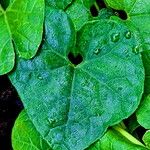
Trichosanthes costata
Care Guide
💧 Water
☀️ Light Full sun
Trichosanthes cochinchinensis is native to open habitats like sunlit fields and the periphery of woods, where there is plenty of light. It flourishes at its best in direct sunlight yet can withstand semi-sunlight, showing good adaptability to different lighting circumstances.
🌡️ Temperature 20–37.8°C
Trichosanthes cochinchinensis is native to tropical areas characterized by high heat and humidity. Consequently, it's thoroughly suited to weather conditions that are consistently warm and humid. The plant doesn't fare well in quickly changing temperatures and needs a steady climate; hence, indoor temperature swings should be avoided. It typically has a low tolerance for cooler climates and demands warmer conditions to grow. Should the ambient temperature fall too far, the plant could stop growing or potentially perish.
💨 Humidity
🪴 Soil 6-7
🌱 Fertilizer
The optimal period to fertilize a Trichosanthes cochinchinensis is at the onset of spring when it awakens from a dormant state. This action propels general growth and the progression of blooms. The process of fertilization bolsters the leaves, stems, and branches, encouraging the emergence of sizeable, colorful, and enduring flowers. It helps in the distribution of nutrients from the roots to the blooms and fortifies the plant's wellbeing and resistance to illnesses.
🪴 Pot & Repot
✂️ Pruning
🌿 Propagating
🐛 Diseases & pets
☠️ Toxicity
Characteristics
- Plant Type
- Vine
- Life Cycle
- Perennial
- Hardiness Zone
- 10-12
- Mature Height
- 3.05 m to 6.1 m
- Mature Spread
- 2.13 m to 3.96 m
- Leaf Color
- Dark Green, Forest Green
- Leaf Type
- Deciduous
- Flower Color
- White
- Flower Size
- 5.08 cm to 7.62 cm
- Bloom Time
- Summer
- Planting Time
- Spring, Autumn
- Harvest Time
- Late summer, Early fall, Mid fall
- Native Area
- Nepal, India, Malaysia, Indonesia, Cambodia, Vietnam, Myanmar, Philippines, Bhutan, Bangladesh, Laos, Thailand, China