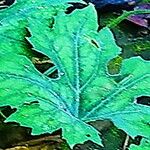
Trichosanthes laceribractea
Care Guide
💧 Water
☀️ Light Partial sun
Trichosanthes laceribractea comes from habitats with dappled light, such as forest understories or rocky sites that offer natural shade. It does best in partial sun but can also tolerate full-sun conditions.
🌡️ Temperature 20–37.8°C
Trichosanthes laceribractea is a plant that hails from tropical areas where the usual climate is hot and moist. Consequently, it is well-suited to thrive in conditions of high heat and humidity. It doesn't thrive well under varying temperature conditions and favors uniform temperatures, thus it's crucial to forestall temperature transitions indoors. This plant typically has a low tolerance for chilly weather and needs ample warmth to grow. If the ambient temperature falls drastically, the plant's growth might stall or it may even perish.
💨 Humidity
🪴 Soil 6-7
🌱 Fertilizer
When most of Trichosanthes laceribractea’s blooms have opened to full size, resume fertilizing. While the flowers are at peak production, feed the plant every three to four weeks, weather permitting. Then, once Trichosanthes laceribractea begins to produce fewer new blooms, stop fertilizing; there is no need to fertilize when the plant can no longer produce additional blooms.
🪴 Pot & Repot
✂️ Pruning
🌿 Propagating
🐛 Diseases & pets
☠️ Toxicity
Characteristics
- Plant Type
- Herb, Vine
- Life Cycle
- Annual, Perennial
- Genus
- Trichosanthes
- Family
- Cucurbitaceae
- Hardiness Zone
- 10-12
- Mature Height
- 3.05 m to 4.88 m
- Mature Spread
- 2.13 m to 3.05 m
- Leaf Color
- Green
- Leaf Type
- Semi-evergreen
- Flower Color
- White
- Flower Size
- 5.08 cm to 7.62 cm
- Bloom Time
- Summer
- Planting Time
- Spring, Summer
- Harvest Time
- Late summer, Fall
- Native Area
- Laos, Japan, China